Pickerel Weed Growing & Care Guide
Pickerel Weed is an exceptionally beautiful, robust vertical marginal species native to wetlands of the Americas. It is celebrated for its heart-shaped shiny green leaves and striking spikes of soft violet-blue flowers that bloom continuously from summer to autumn. An elite wildlife magnet, it provides critical shelter for fish and attracts hummingbirds and butterflies to pond margins.





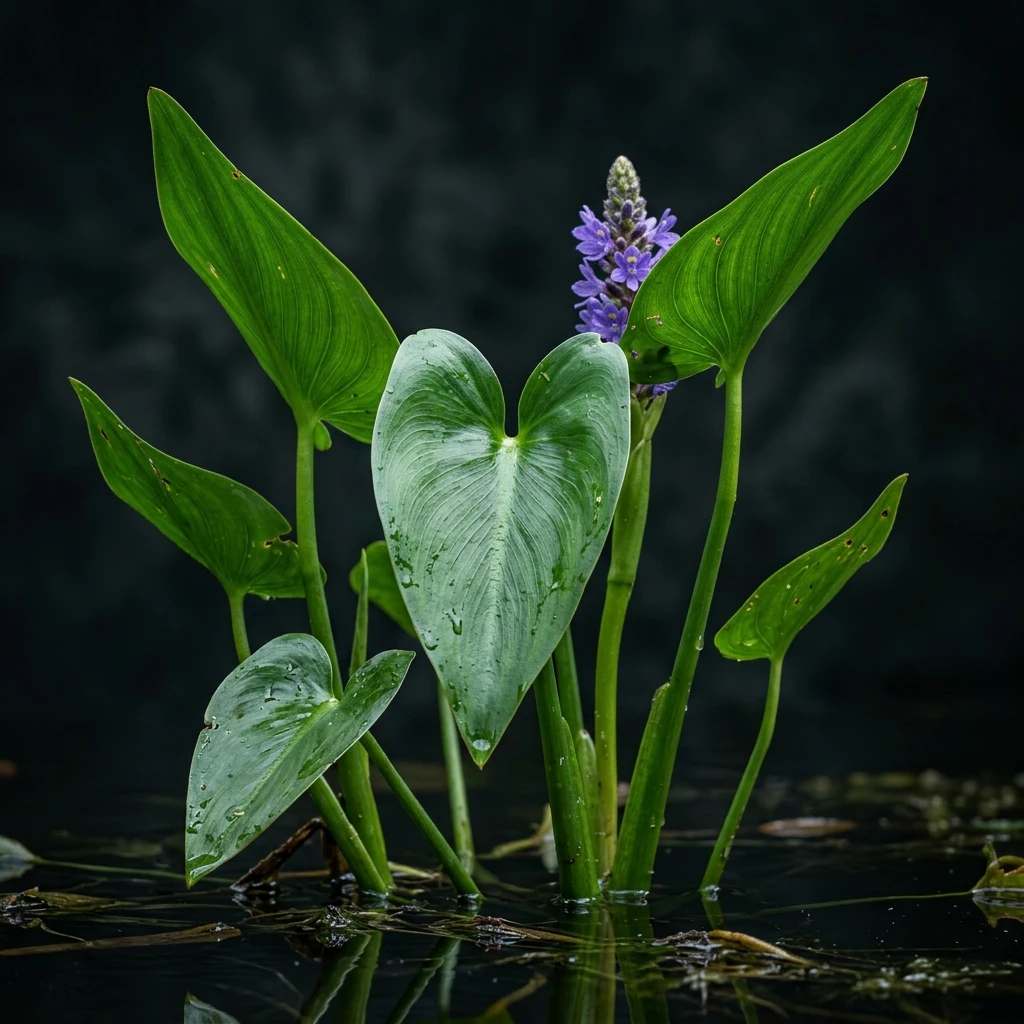
How to Identify Pickerel Weed
Pickerel Weed (Pontederia cordata) has key botanical markers. Recognizing these features is crucial for successful aquascaping and thriving growth.
-
✔
Visual Shape & Growth: Dense clumps of glossy, heart-shaped upright leaves with tall spikes of violet-blue flowers rising above.
-
✔
Leaf Morphology: Shiny, dark green heart-shaped to lance-shaped leaves (up to 7-10 inches long) on long, thick stems.
-
✔
Root & Anchoring Structure: Thick, fibrous creeping rhizomatous root system that anchors firmly in muddy shorelines.
Complete Cultivation & Spawning Guide
Follow our detailed scientific water parameters and care guides to keep your Pickerel Weed thriving.
Common Diseases & Treatment
Leaf Spot (Cercospora)
Symptoms: Small, dark brown spots appear on the heart-shaped leaves, merging into larger dead patches.
Root Rot
Symptoms: Creeping rhizomes turn soft, black, and decompose in stagnant, highly compacted anaerobic mud.
Frequently Asked Questions
Q: How did Pickerel Weed get its name?
A: It is named after the Pickerel fish (a type of pike), which is frequently found seeking shelter and spawning grounds inside the dense underwater stems of this plant.
Q: Can it grow in dry soil?
A: No. Pickerel Weed requires constantly saturated wet soil or standing water. Soil drying will cause the leaves to wilt, turn brown, and die.
Q: Is Pickerel Weed invasive?
A: It is a vigorous grower but easily managed. Planting it in submerged containers will restrict the rhizomes and keep it from spreading excessively.
Q: Are the seeds edible?
A: Yes! The nutritious seeds can be eaten raw, roasted like nuts, or boiled like rice. Young green leaf stalks can also be cooked as greens.