Red Tiger Lotus Growing & Care Guide
Red Tiger Lotus is a stunning, bulbous aquatic specimen native to West Africa, famous for its magnificent arrow-shaped leaves with reddish-purple variegation. Highly adaptable, it can be kept compact as a bushy underwater rosette or allowed to shoot large floating lily pads to the surface, where it occasionally blooms with pristine night-blooming blossoms.





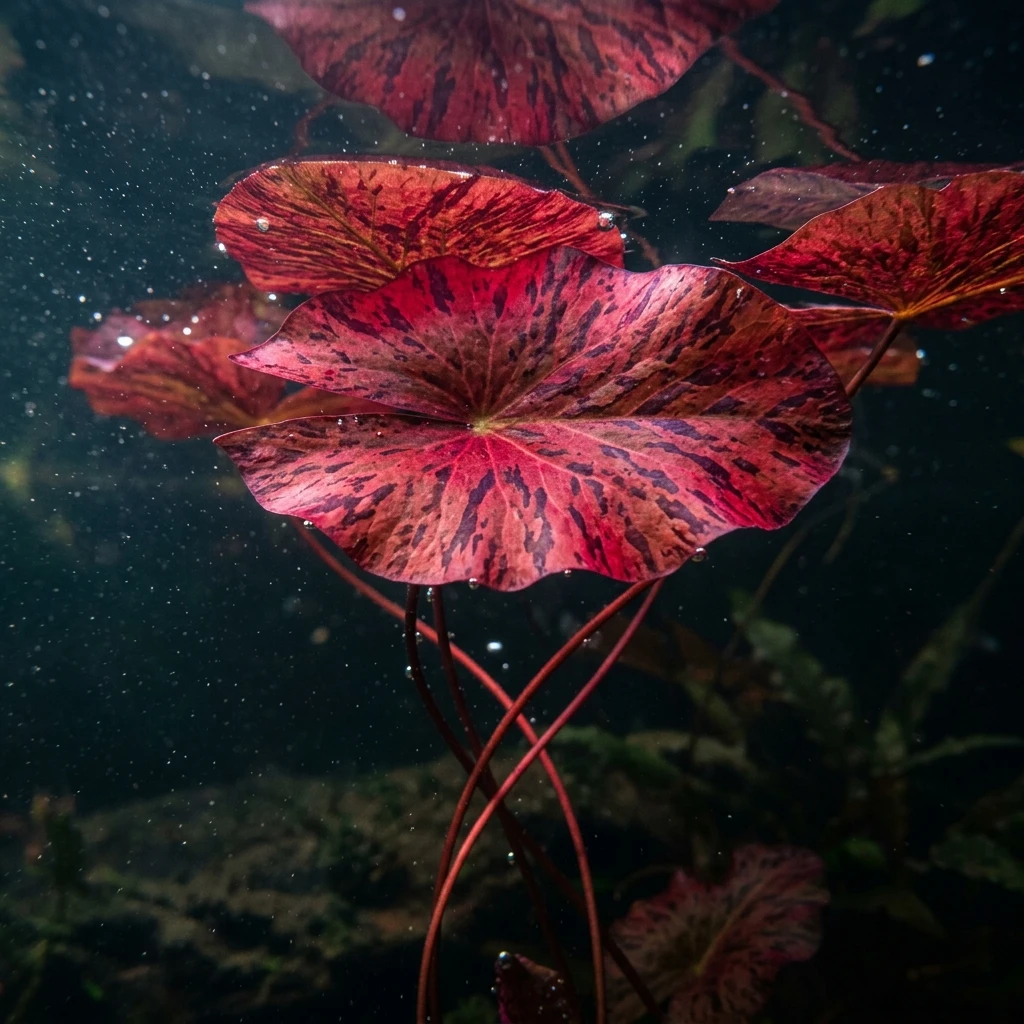
How to Identify Red Tiger Lotus
Red Tiger Lotus (Nymphaea zenkeri) has key botanical markers. Recognizing these features is crucial for successful aquascaping and thriving growth.
-
✔
Visual Shape & Growth: Broad, spade-shaped leaves with jagged edges and intense dark red/purple marbling.
-
✔
Leaf Morphology: Stunning red to copper-brown coloration with distinctive darker red or purplish stripes and spots.
-
✔
Root & Anchoring Structure: Propagates from a thick woody bulb/tuber that must not be fully buried in the substrate.
Complete Cultivation & Spawning Guide
Follow our detailed scientific water parameters and care guides to keep your Red Tiger Lotus thriving.
Common Diseases & Treatment
Bulb Rot
Symptoms: The woody bulb/tuber turns mushy, black, and develops an unpleasant smell, losing all its leaves.
Iron Deficiency (Chlorosis)
Symptoms: New leaves emerge pale green, yellow, or transparent, losing their iconic red marbling.
Frequently Asked Questions
Q: Why are my Tiger Lotus leaves turning green?
A: It is usually caused by insufficient light. Tiger Lotus needs moderate to high light levels and iron nutrients to maintain its brilliant red marbling.
Q: How do I prevent my Tiger Lotus from growing floating leaves?
A: Prune any leaves that shoot up towards the surface as soon as they emerge. This trains the plant to maintain compact, submerged growth.
Q: Do I need to bury the bulb completely?
A: No! Burying the bulb completely will suffocate it and cause bulb rot. Leave at least the top half of the bulb exposed above the substrate.
Q: Can it grow in a low-tech tank?
A: Yes, but growth will be slower and leaves may be more green-bronze than bright red. Root tabs and decent lighting are highly recommended.