Water Spangle Growing & Care Guide
Salvinia Minima, famously known as Water Spangles, is a beautiful, highly popular floating fern native to the Americas. Featuring tiny, double-rowed green leaves covered in unique fuzzy hairs, it forms dense, high-fidelity surface carpets that absorb excess nutrients and keep aquarium water clean and algae-free.





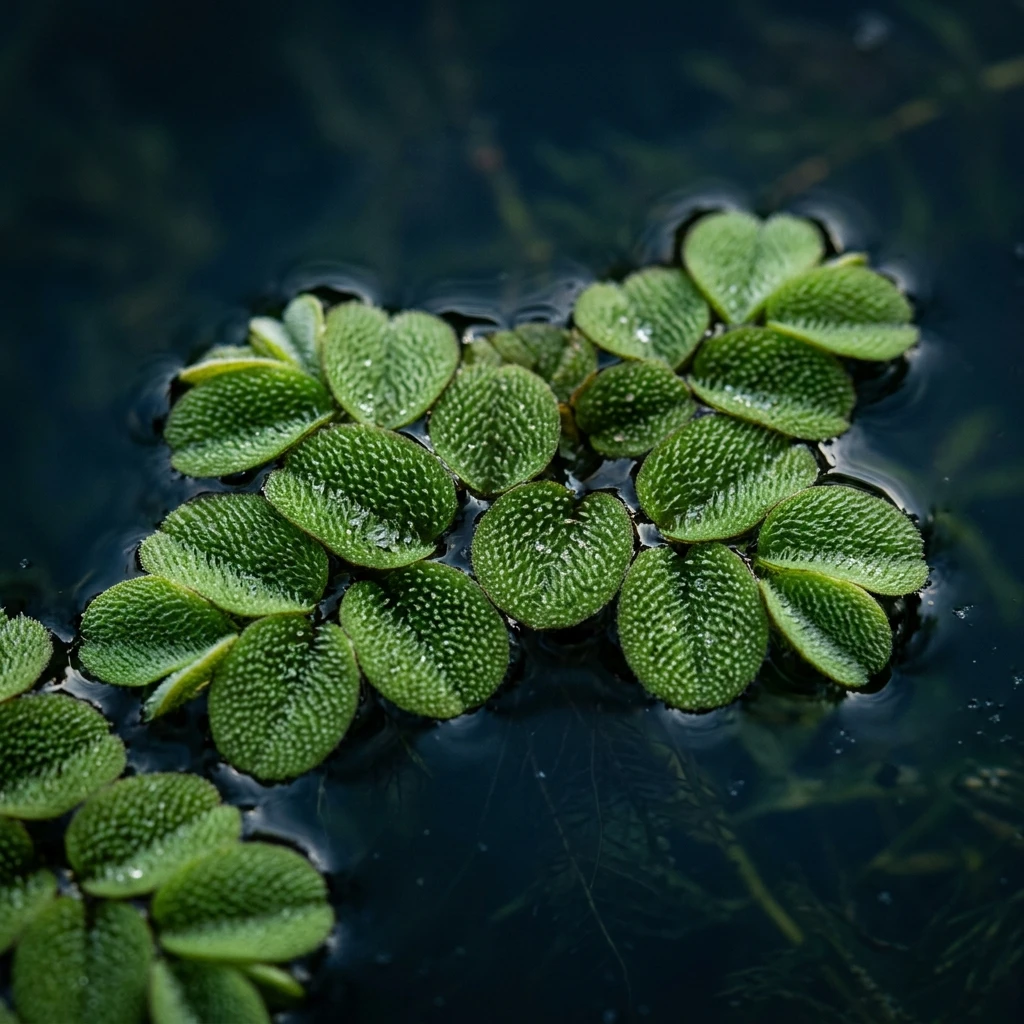
How to Identify Water Spangle
Water Spangle (Salvinia minima) is an iconic aquatic species. Recognizing its key structures is crucial for successful aquascaping and thriving growth.
-
✔
Visual Shape & Growth: Dense floating carpet of tiny, oval, bright green leaves covered in short velvet-like bristles.
-
✔
Leaf Morphology: Small, oval leaves growing in pairs, covered in unique fuzzy, crown-shaped hairs that repel water.
-
✔
Root & Anchoring Structure: Lacks true roots; has highly modified, fine feathery brown root-like leaves hanging beneath.
Complete Cultivation & Spawning Guide
Follow our detailed scientific water parameters and care guides to keep your Water Spangle thriving.
Common Diseases & Treatment
Sinking & Rotting (Wet Leaves)
Symptoms: Tiny spangles turn brown, lose their fuzzy hairs, sink, and decay.
Spangle Yellowing (Nitrogen Deficit)
Symptoms: The entire carpet turns pale green or yellow-white.
Frequently Asked Questions
Q: What makes Salvinia Minima leaves fuzzy?
A: The leaves are covered in specialized, water-repelling micro-hairs (trichomes) that trap a thin layer of air, keeping the plant buoyant and dry even if temporarily splashed.
Q: Why is my Salvinia Minima turning brown?
A: Browning is almost always caused by dripping condensation from a closed aquarium lid, excessive water agitation that drags the leaves underwater, or severe nitrogen starvation.
Q: How fast does it multiply?
A: Very fast. In a healthy tank with moderate light and nitrate availability, it can double its surface coverage every 3 to 5 days.
Q: Is Salvinia Minima toxic to land pets?
A: No, Salvinia Minima is entirely non-toxic and pet-friendly for cats, dogs, and all aquarium inhabitants.