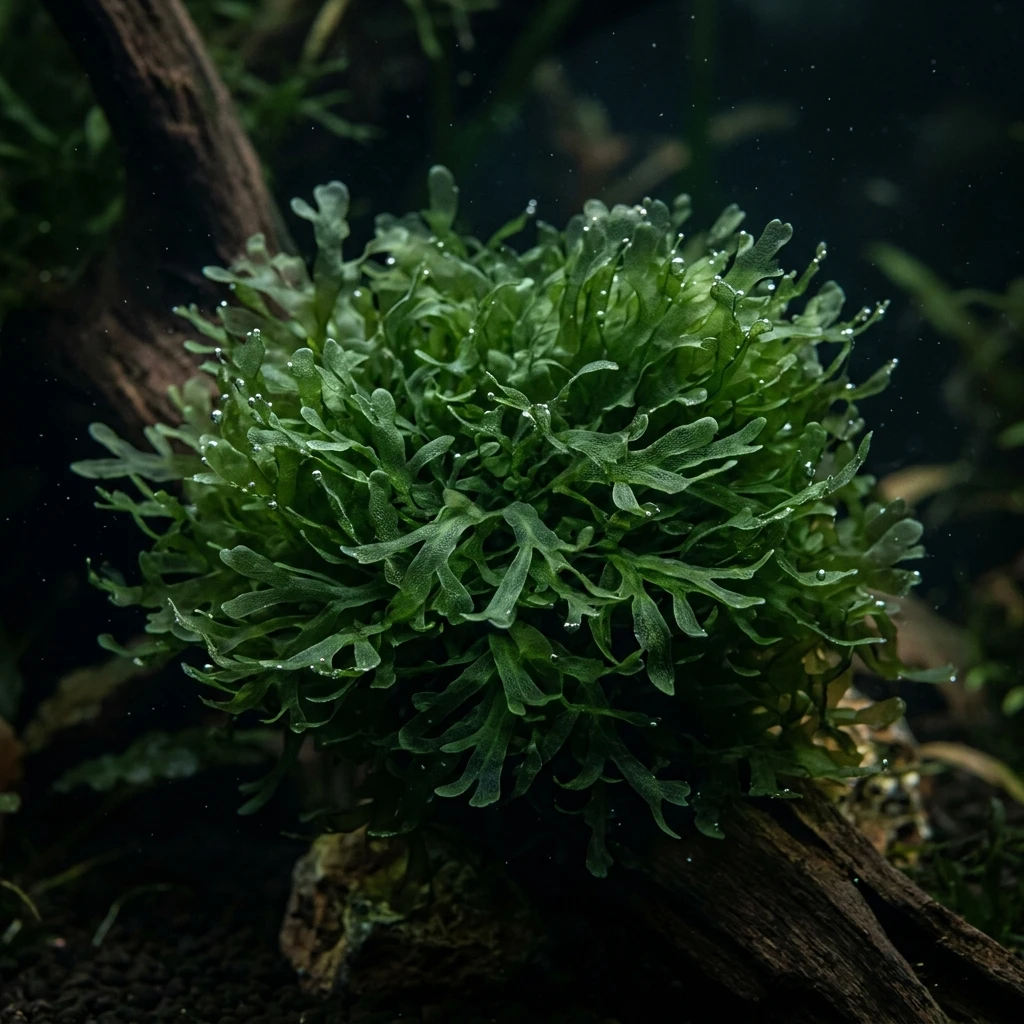
Susswassertang
Scientific Name: Lomariopsis lineata
Susswassertang, also known as Freshwater Seaweed, is a highly unique, whimsical liverwort-like species native to tropical Asia. Famous for its beautiful, semi-transparent waxy green leaf ribbons that form dense, billowy cushions, it is a premier choice for shrimp setups. Completely rootless, it develops delicate anchoring rhizoids that slowly bind to driftwood, adding a wild organic appearance.
Lighting Needs
Low to Moderate
Water Parameters
Aquatic (pH 6.0-7.8)
Optimal Substrate
Epiphytic (Driftwood / Rock)
Hardy Temperature
15°C - 26°C
Toxicity Level
Pet Friendly (Non-toxic)
How to Identify Susswassertang
Use our structural morphological markers to verify the identity of your Susswassertang in any local nursery or wild wetland:
-
✔
Overall Visual Shape: Whimsical billowy vertical cushions of bright-green semi-transparent wavy leaf ribbons resembling water seaweed.
-
✔
Leaf Morphology: Semi-transparent round waxy green thalli (leaf ribbons) without any visible midrib, branching dichotomously into soft cushions.
-
✔
Root & Anchoring Structure: Rootless; develops tiny brown anchoring rhizoids that slowly grip onto rough lava rocks or wood.
Complete Cultivation & Spawning Guide
Follow our detailed scientific water parameters and care guides to keep your Susswassertang thriving.
pH: 6.0 - 7.8, GH: 3 - 15 dGH. Extremely resilient, adapting easily to soft or hard water conditions.
Low. Grows perfectly without pressurized CO2, though supplemental carbon enhances leaf thickness and size.
Low to Moderate. High intensity light will coat its slow-growing leaves with green spot algae.
Simply tear or cut the delicate green cushions into smaller portions. Tie or glue the portions to new hardscape.
An water-column feeder. Relies on liquid macro and micro nutrients; substrate fertilizers are ineffective.
Do not bury in soil! Tie or glue the moss onto driftwood or rocks. Submerging in soil will rot the plant.
Optimal temperature is 15°C to 26°C (59°F - 78.8°F). Sensitive to heat; starts turning brown and rotting above 28°C.
Requires gentle to moderate current. Too strong current will break the brittle leaf cushions apart.
Its delicate, dense structure provides the ultimate hiding spots for newborn fry and molting dwarf shrimps.
Slow growth makes it susceptible to hair algae. Keep water clean and employ Siamense Algae Eaters or Amano shrimps.
Best attached to midground rocks or roots. Leave spacing of 3 to 4 inches from neighboring clumps to allow perfect spread.
Common Diseases & Treatment
🚨 Cushion Fragmentation (Crumbling)
Common Cause: The soft green leaf cushions become extremely brittle, breaking apart into tiny fragments.
Professional Cure: Caused by sudden water chemistry shifts or lack of potassium. Dose comprehensive liquid fertilizers weekly.
🚨 High Temp Meltdown
Common Cause: The semi-transparent thalli turn a dull, pale yellow-brown and dissolve.
Professional Cure: Water temperature is too high. Maintain water under 26°C using cooling fans or an aquarium chiller.
Frequently Asked Questions
❓ What is Susswassertang?
It was long thought to be a moss or liverwort, but genetic analysis revealed it is the aquatic gametophyte form of a tropical climbing fern Lomariopsis lineata, which has adapted to grow permanently submerged.
❓ Does it need to be planted in soil?
No. It is rootless. Burying it in gravel or sand will suffocate and rot the plant. Secure it onto lava rocks or driftwood using line or superglue gel.
❓ How do I propagate it?
Simply split the green cushion into smaller pieces using your fingers or scissors, and tie or glue the sections to new hardscape.
❓ Why is it turning brown?
It turns brown due to high water temperature (above 27°C), sudden chemical overdose (such as liquid carbon), or lack of potassium.