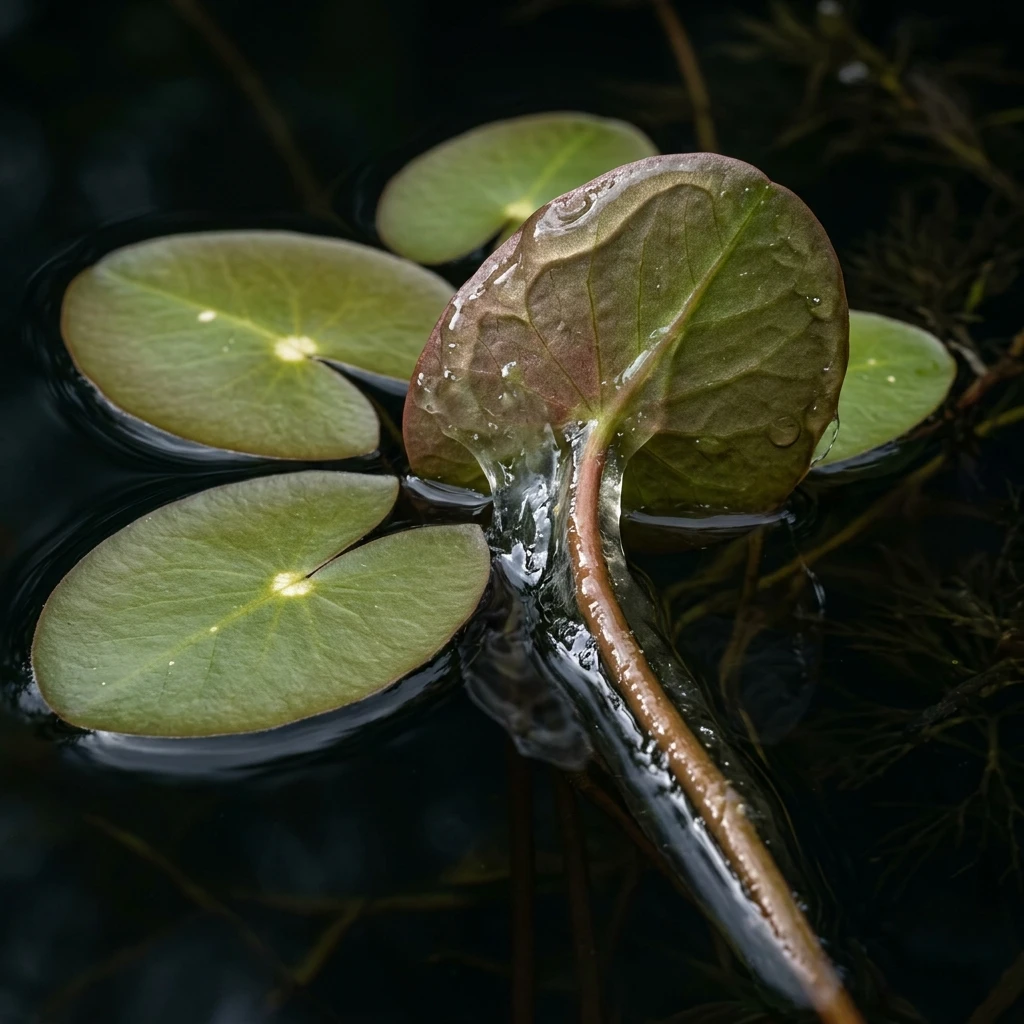
Water Shield
Scientific Name: Brasenia schreberi
Water Shield is an exceptionally unique, whimsical floating species native to slow-moving ponds globally. Famous for its beautiful elliptical leaves completely covered underneath in a thick, transparent jelly-like mucilage coating, it acts as a majestic natural water filter. Anchoring deeply in rich mud, it shoots up long leaf stalks that display floating shields on the surface.
Lighting Needs
Moderate to High
Water Parameters
Aquatic (pH 6.0-7.8)
Optimal Substrate
Nutrient-rich clay/mud
Hardy Temperature
15°C - 28°C
Toxicity Level
Pet Friendly (Non-toxic)
How to Identify Water Shield
Use our structural morphological markers to verify the identity of your Water Shield in any local nursery or wild wetland:
-
✔
Overall Visual Shape: Highly whimsical floating elliptic leaves completely covered in a thick transparent jelly-like mucilage coating underneath.
-
✔
Leaf Morphology: Alternate, oval peltate shiny green leaves with smooth margins and distinctive central leaf stalk connection.
-
✔
Root & Anchoring Structure: Thick creeping horizontal underground rhizomes anchored deeply in thick nutrient mud.
Complete Cultivation & Spawning Guide
Follow our detailed scientific water parameters and care guides to keep your Water Shield thriving.
Common Diseases & Treatment
Mucilage Degradation (Stress)
Symptoms: The protective clear jelly layer under the leaves thins out or disappears, leading to leaf decay.
Stem Elongation Rot
Symptoms: Stems turn soft, dark, and dissolve at the node joints.
Frequently Asked Questions
Q: What is the clear jelly under the leaves?
A: It is a natural, thick polysaccharide mucilage coating that serves as a highly effective physical barrier protecting the plant's delicate tissues from water pests, bacteria, and herbivorous insects.
Q: Can I grow Water Shield in a small fish tank?
A: It is best suited for large, tall aquariums, paludariums, or outdoor garden ponds due to its long, floating leaf stalks that need surface room.
Q: Does it require deep mud?
A: Yes. It is a heavy root feeder that requires a thick substrate bed (at least 2.5 inches) of nutrient-rich clay or mud to spread its creeping rhizomes.
Q: What temperature does it prefer?
A: It is highly versatile, growing happily in temperatures from 15°C to 28°C (59°F - 82.4°F), and is exceptionally cold hardy.