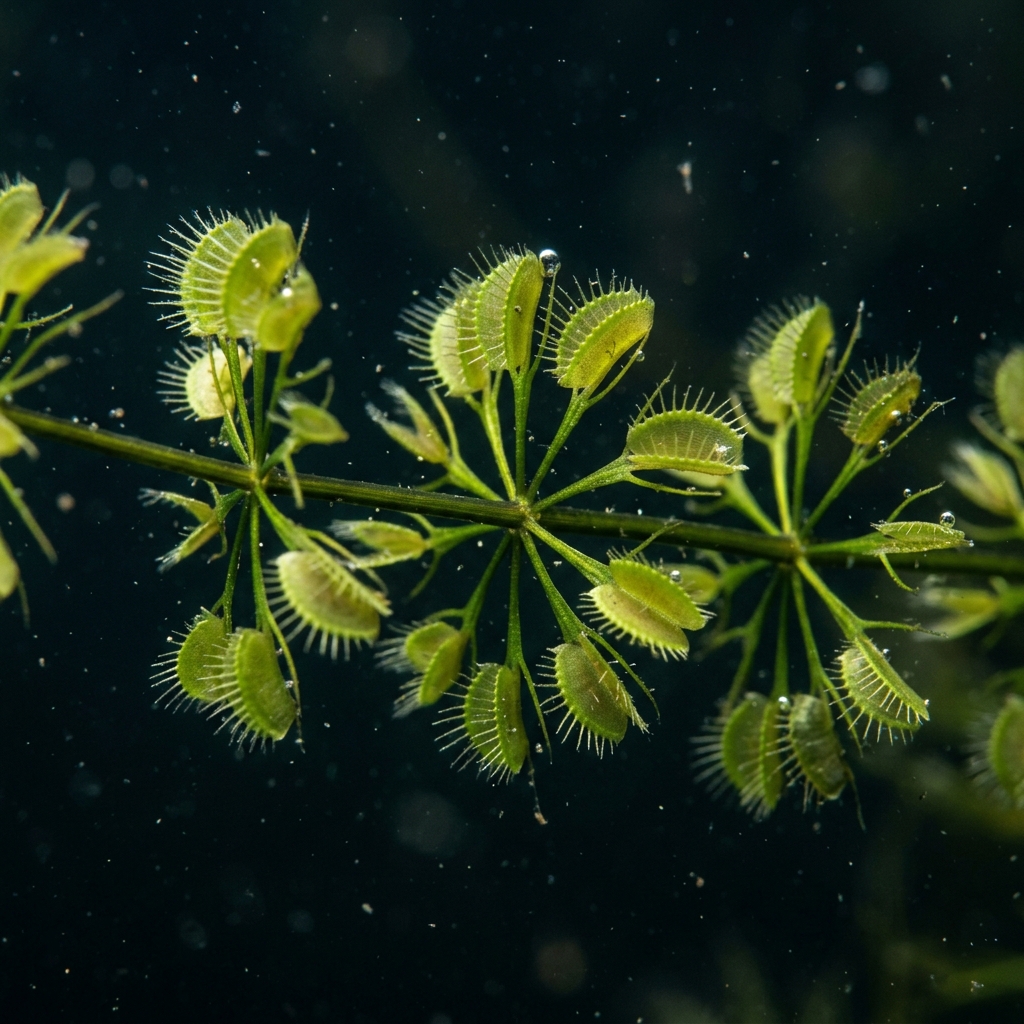
Water Wheel Plant
Scientific Name: Aldrovanda vesiculosa
Water Wheel Plant is an exceptionally rare, highly endangered rootless floating carnivorous species native to pristine wetlands of Europe, Asia, and Australia. Famed for its spectacular, wheel-like whorls of green leaf traps that function like miniature underwater Venus flytraps, it snaps shut in a jaw-dropping 10 milliseconds to capture water prey, serving as the ultimate high-tech showcase.
Lighting Needs
Moderate to High
Water Parameters
Aquatic, Soft Acidic (pH 5.5-6.8)
Optimal Substrate
Floating (Rootless)
Hardy Temperature
18°C - 26°C
Toxicity Level
Pet Friendly (Non-toxic)
How to Identify Water Wheel Plant
Use our structural morphological markers to verify the identity of your Water Wheel Plant in any local nursery or wild wetland:
-
✔
Overall Visual Shape: Extraordinary wheel-like whorls of green leaf traps resembling miniature water-borne Venus flytraps.
-
✔
Leaf Morphology: Radially arranged whorls of 8 green leaf traps (each trap has two halves with trigger hairs that snap shut in 10ms).
-
✔
Root & Anchoring Structure: Completely rootless; floats freely below the water surface, relying on prey capture for nitrogen.
Complete Cultivation & Spawning Guide
Follow our detailed scientific water parameters and care guides to keep your Water Wheel Plant thriving.
Common Diseases & Treatment
Trap Degeneration (Excess Fertilizer)
Symptoms: Traps shrivel, fail to open, and lose their trigger hair sensitivity, leading to starvation.
Trap Browning (High pH Shock)
Symptoms: Stems and radial traps turn brown, rot, and dissolve within days.
Frequently Asked Questions
Q: How fast does the trap snap shut?
A: It is one of the fastest moving plants in the world. The trap door snaps closed in less than 10 to 20 milliseconds, which is faster than a Venus flytrap.
Q: What water parameters does it need?
A: It is extremely demanding, requiring soft, acidic water (GH < 4, pH 5.5-6.8), consistent gas CO2 injection, and zero excess mineral buildups.
Q: What does it eat in an aquarium?
A: It feeds on microscopic aquatic prey, particularly copepods, daphnia, ostracods, and mosquito larvae that get sucked into the traps.
Q: Why are the traps turning black?
A: Traps turn black and rot after digesting prey 2-3 times, which is a normal life cycle. Simply trim old black segments from the bottom stem.