White Water Lily Growing & Care Guide
White Water Lily is an iconic, large-flowered aquatic perennial native to Europe and North Africa. It is a legendary addition to ponds and deep water gardens, prized for its large, flat floating pads and cup-shaped, pristine white flowers with brilliant golden-yellow centers that open in full morning sun.





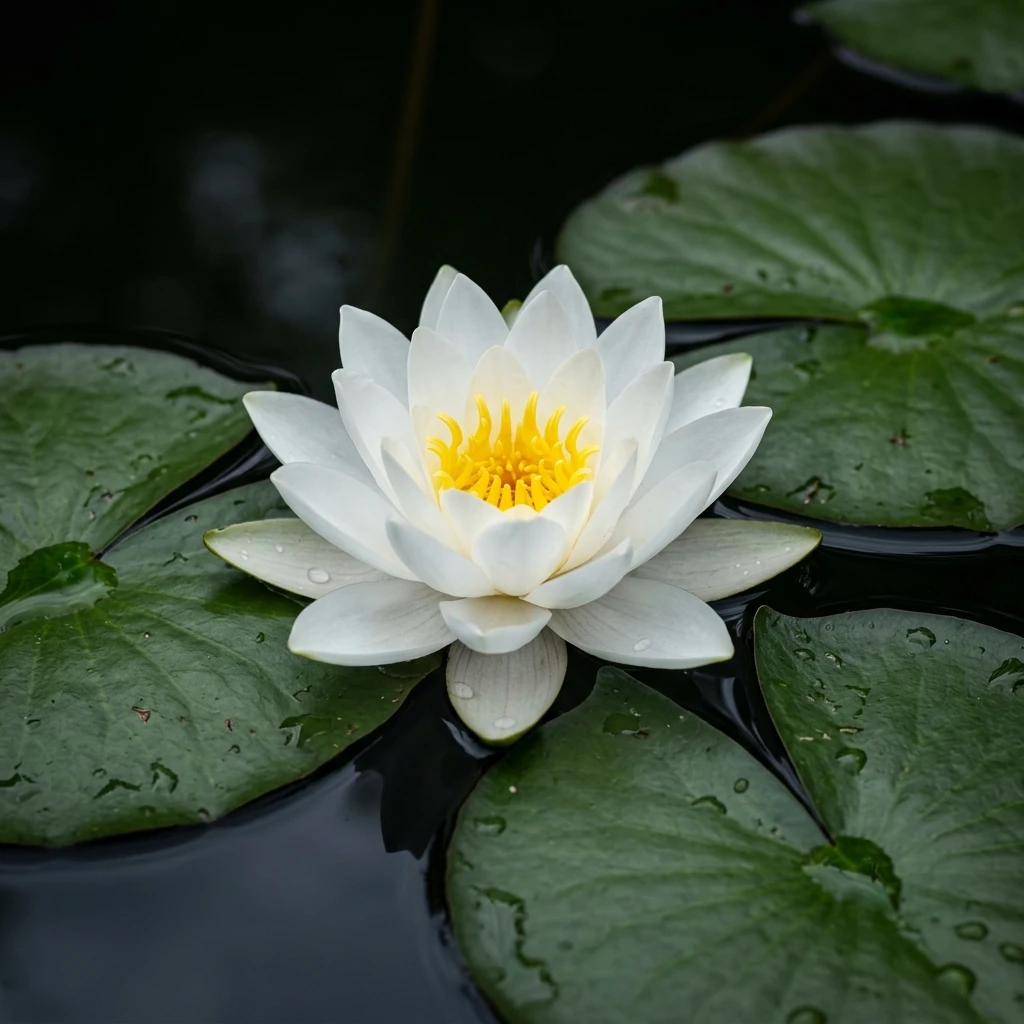
How to Identify White Water Lily
White Water Lily (Nymphaea alba) has key botanical markers. Recognizing these features is crucial for successful aquascaping and thriving growth.
-
✔
Visual Shape & Growth: Large flat circular floating green pads, with large cup-shaped white flowers floating on the surface.
-
✔
Leaf Morphology: Leathery, dark green round leaves (up to 12 inches wide) with a deep, narrow v-shaped notch at the base.
-
✔
Root & Anchoring Structure: Thick, creeping blackish rhizomes that anchor deeply in deep pond substrate or container mud.
Complete Cultivation & Spawning Guide
Follow our detailed scientific water parameters and care guides to keep your White Water Lily thriving.
Common Diseases & Treatment
Crown Rot
Symptoms: The central growing point turns black and mushy, causing newly emerging leaves to rot immediately.
Black Spot (Fungal)
Symptoms: Circular black spots develop on the upper leaf surface, causing the pad to dry, turn yellow, and dissolve.
Frequently Asked Questions
Q: How deep should I plant my White Water Lily?
A: Ideal planting depth is 12 to 30 inches of water over the top of the container. Shallow planting can overheat the root system.
Q: Why are my lily leaves turning yellow?
A: This is normal for older outer leaves. If young leaves turn yellow, it indicates nutrient deficiency, particularly nitrogen or iron. Add fertilizer tabs.
Q: Is the White Water Lily toxic?
A: Yes, the roots and leaves contain nupharin, which is toxic to dogs, cats, and horses if ingested in large quantities.
Q: Can it grow in a running stream?
A: No. Water lilies hate fast water currents and splashing waves. They require calm, still water to thrive and float.