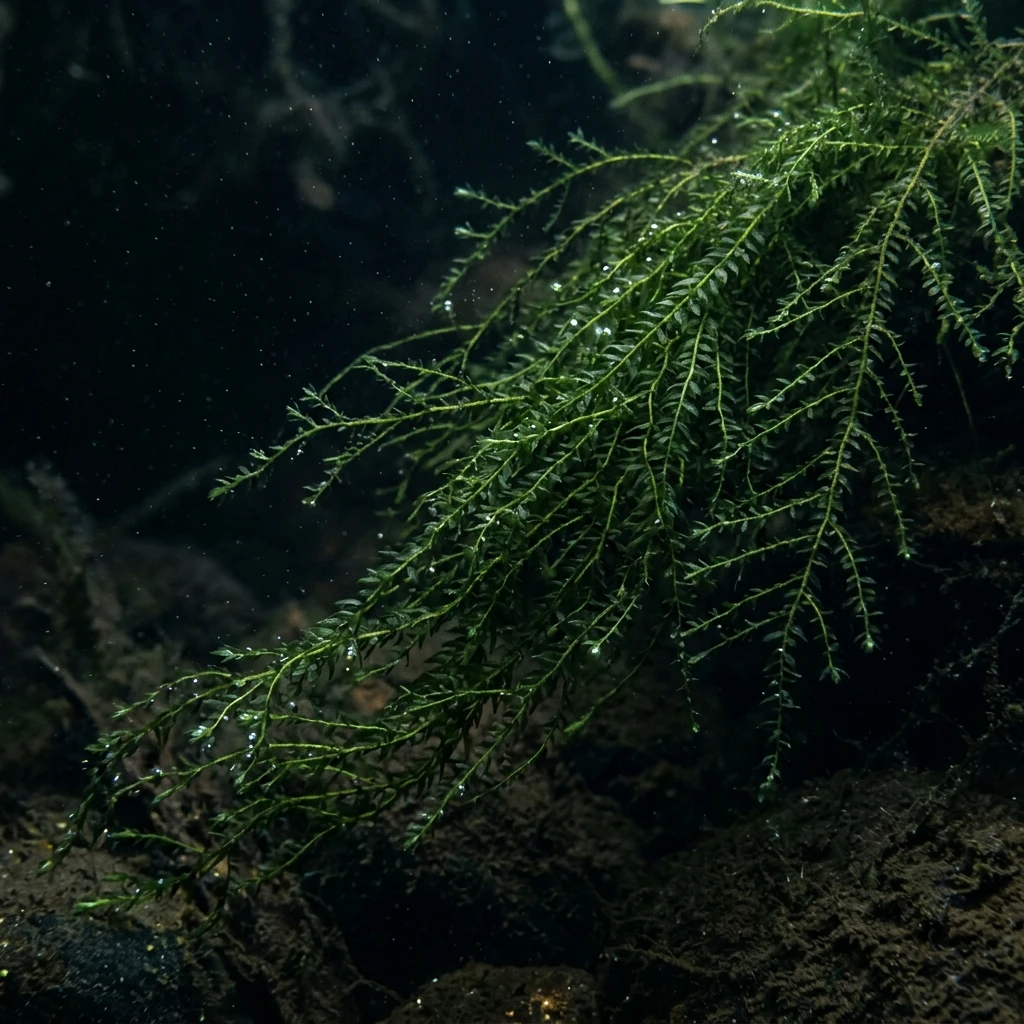
Willow Moss
Scientific Name: Fontinalis antipyretica
Willow Moss is a majestic, vertical trailing aquatic moss native to cold, flowing forest streams across the Northern Hemisphere. Celebrated for its stately cascading growth pattern that resembles the weeping branches of a willow tree, it features elongated dark olive-green leaves. It is a premier architectural midground or background anchor, particularly favored in coldwater setups.
Lighting Needs
Low to Moderate
Water Parameters
Aquatic (pH 6.0-7.5)
Optimal Substrate
Epiphytic (Driftwood / Rock)
Hardy Temperature
10°C - 24°C
Toxicity Level
Pet Friendly (Non-toxic)
How to Identify Willow Moss
Use our structural morphological markers to verify the identity of your Willow Moss in any local nursery or wild wetland:
-
✔
Overall Visual Shape: Stately vertical trailing fronds with elongated olive-green scale-like leaves cascading downwards like a willow tree.
-
✔
Leaf Morphology: Narrow, scale-like dark olive-green leaves arranged in three rows around highly elongated, branching trailing stems.
-
✔
Root & Anchoring Structure: Thick brown horizontal anchoring rhizoids that bind strongly to river rocks and submerged roots.
Complete Cultivation & Spawning Guide
Follow our detailed scientific water parameters and care guides to keep your Willow Moss thriving.
Common Diseases & Treatment
High Temp Leaf Melting
Symptoms: Moss fronds turn pale brown, dry up, and die in the water column.
Detritus Suffocation
Symptoms: Fine feathery leaves get coated with brown dust or organic mulm, suffocating the plant.
Frequently Asked Questions
Q: What temperature does Willow Moss prefer?
A: It is a native coldwater plant that highly prefers cool water under 24°C (75.2°F). In tanks warmer than 26°C, it will quickly turn brown and dissolve.
Q: How do I create a weeping willow tree effect?
A: Glue or tie small clumps of Willow Moss to the top ends of branching spiderwood or driftwood. As it grows, the heavy elongated stems will cascade downwards beautifully.
Q: Can it survive in ponds?
A: Yes! It is extremely hardy in outdoor garden ponds, making it an excellent spawning medium for goldfish and koi in spring.
Q: How fast does it grow?
A: Under cool water, moderate light, and good current, it is a moderate to fast grower, easily cascading 1 to 2 inches per month.