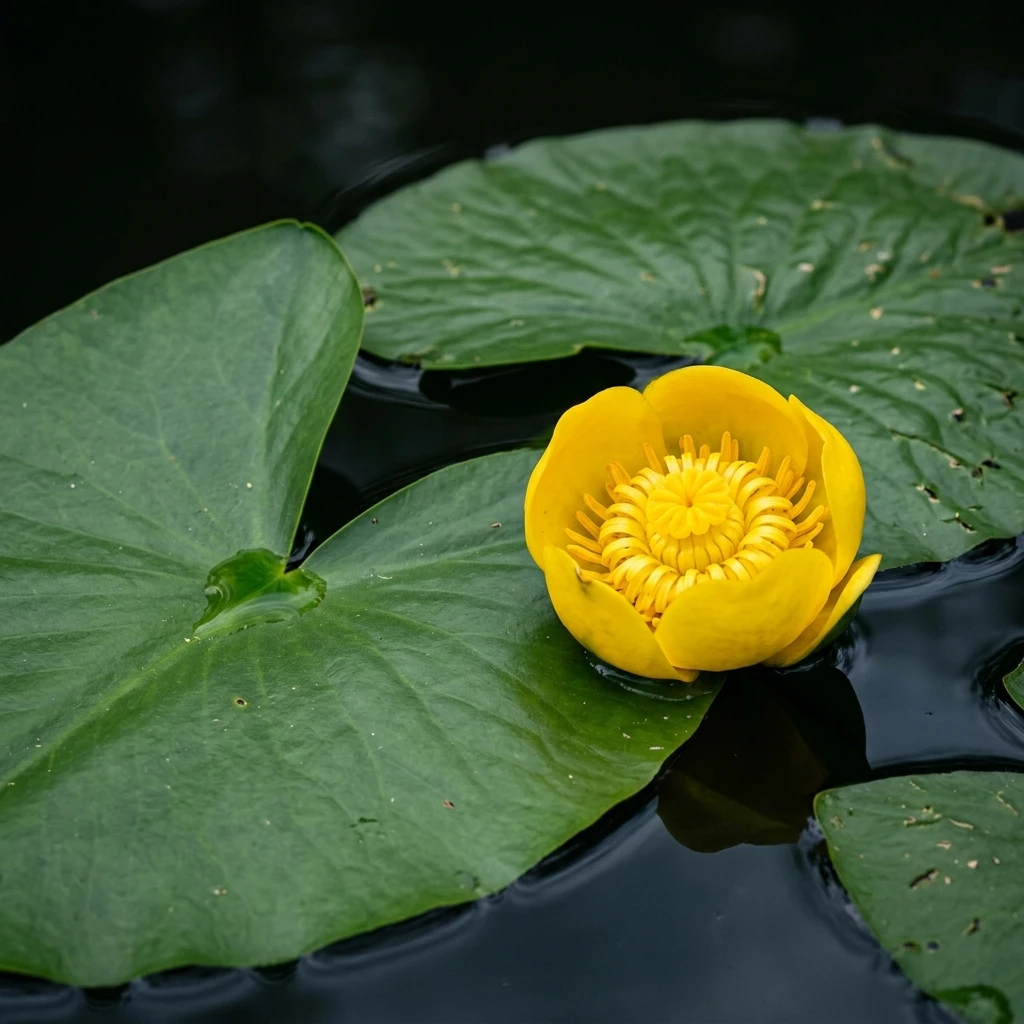
Nuphar lutea

Yellow Water Lily Growing & Care Guide

Yellow Water Lily, also known as Brandybottle, is an exceptionally hardy, ancient vertical aquatic species native to temperate regions of Europe and North America. It features beautiful, heart-shaped floating leaves and unique, bottle-shaped bright yellow flowers that rise slightly above the water, smelling faintly of alcohol and thriving even in shaded or slow-moving water where other lilies struggle.


Lighting Icon
Lighting Partial Shade to Full Sun
Watering Icon
Water Parameter Aquatic (pH 5.5-7.5)
Substrate Icon
Substrate Clay / muddy organic silt
Temperature Icon
Water Temp 10°C - 25°C
Toxicity Warning Icon
Toxicity Toxic to Pets (Contains Nupharin)
Botanical macro photography of Yellow Water Lily (Nuphar lutea) - Plant AI care database

How to Identify Yellow Water Lily

Yellow Water Lily (Nuphar lutea) has key botanical markers. Recognizing these features is crucial for successful aquascaping and thriving growth.

  • Visual Shape & Growth: Bottle-shaped bright yellow flowers held on thick stems above heart-shaped floating green leaves.
  • Leaf Morphology: Large heart-shaped floating leaves (up to 12 inches long) with wavy edges and thick, spongy stems.
  • Root & Anchoring Structure: Massive, creeping horizontal rhizomes resembling thick scaly ropes that anchor deeply in deep pond mud.
💡 Plant AI Tip: Take a photo with Plant AI to identify aquatic weeds and diagnose fungal spot diseases in 1 second.

Complete Cultivation & Spawning Guide

Follow our detailed scientific water parameters and care guides to keep your Yellow Water Lily thriving.

pH: 5.5 - 7.5. Remarkably tolerant of acidic, nutrient-rich, or highly organic muddy pond conditions.
Low. Obtains its carbon needs directly from the atmosphere via stomata on the upper surface of its floating leaves.
Partial shade to full sun. Far more shade-tolerant than true Nymphaea water lilies, blooming happily in woodland ponds.
Cut off old, decaying, or damaged leaves at the base of the stem. Clean dead organic debris to prevent pond siltation.
A heavy root feeder. Relies on organic pond silt. In clean ponds, insert slow-release clay fertilizer tabs near the roots.
Requires deep, muddy organic silt or heavy clay. Plant creeping rhizomes horizontally, leaving the growing tip exposed.
Optimal temperature is 10°C to 25°C (50°F - 77°F). Extremely cold hardy; survives freezing winters under deep ice easily.
Tolerates slow-moving water currents better than true water lilies, though still water remains optimal for flower display.
Provides magnificent underwater habitat and shade for coldwater fish like trout, koi, and native pond species.
Broad leaves cover the pond surface, starving hair algae of light. Pond snails graze older leaves.
Best planted in large containers or directly in pond mud. Submerge 12 to 40 inches. Space plants 4 to 6 feet apart.

Are your Yellow Water Lily leaves developing holes or is the crown turning soft?

Check for water lily beetle larvae, improve oxygenation near the pond floor, and insert clay fertilizer tabs.

Diagnose My Aquatics

Common Diseases & Treatment

Water Lily Beetle Damage

Symptoms: Brown trenches and ragged holes chewed across the floating leaves by small black beetle larvae.

Action: Manually wash larvae off the leaves into the water for fish to eat, or prune heavily damaged leaves.

Rhizome Decay

Symptoms: Rhizomes turn soft, dark brown, and decompose under low-oxygen mud conditions.

Action: Caused by poor oxygen levels at the bottom of the pond. Improve pond aeration using an air stone or fountain.

Frequently Asked Questions

Why is it called Brandybottle?

The name comes from the bottle-shaped yellow flowers and the unique, alcoholic, brandy-like scent they emit to attract pollinators.

Does it need a lot of sunlight?

No. Unlike other water lilies, the Yellow Water Lily is highly shade-tolerant and will grow and bloom even in partially shaded woodland ponds.

Is it invasive?

In some small garden ponds, its massive, fast-growing rhizomes can crowd out other species. Plant in containers to control spreading.

Can it grow in deep water?

Yes, it can handle water depths up to 4 or 5 feet, making it ideal for deeper areas of ponds where other marginals cannot grow.

Master advanced aquascaping. Start today!

Get Started for Free