Anderson's Holly Fern Care & Identification Guide
The magnificent Anderson's Holly Fern (Polystichum andersonii) is a highly rare and fascinating evergreen giant, native to the damp, shaded coniferous forests of the Pacific Northwest. Characterized by its broad, deeply divided fronds and golden-brown chaffy scales, its most remarkable feature is the production of small viviparous buds (plantlets) near the frond tips. When the arching leaf tips touch the forest floor, these buds root and grow into new ferns. To keep this unique botanical marvel thriving, it requires consistent moisture, cool shaded conditions, and highly organic, porous woodland soil.





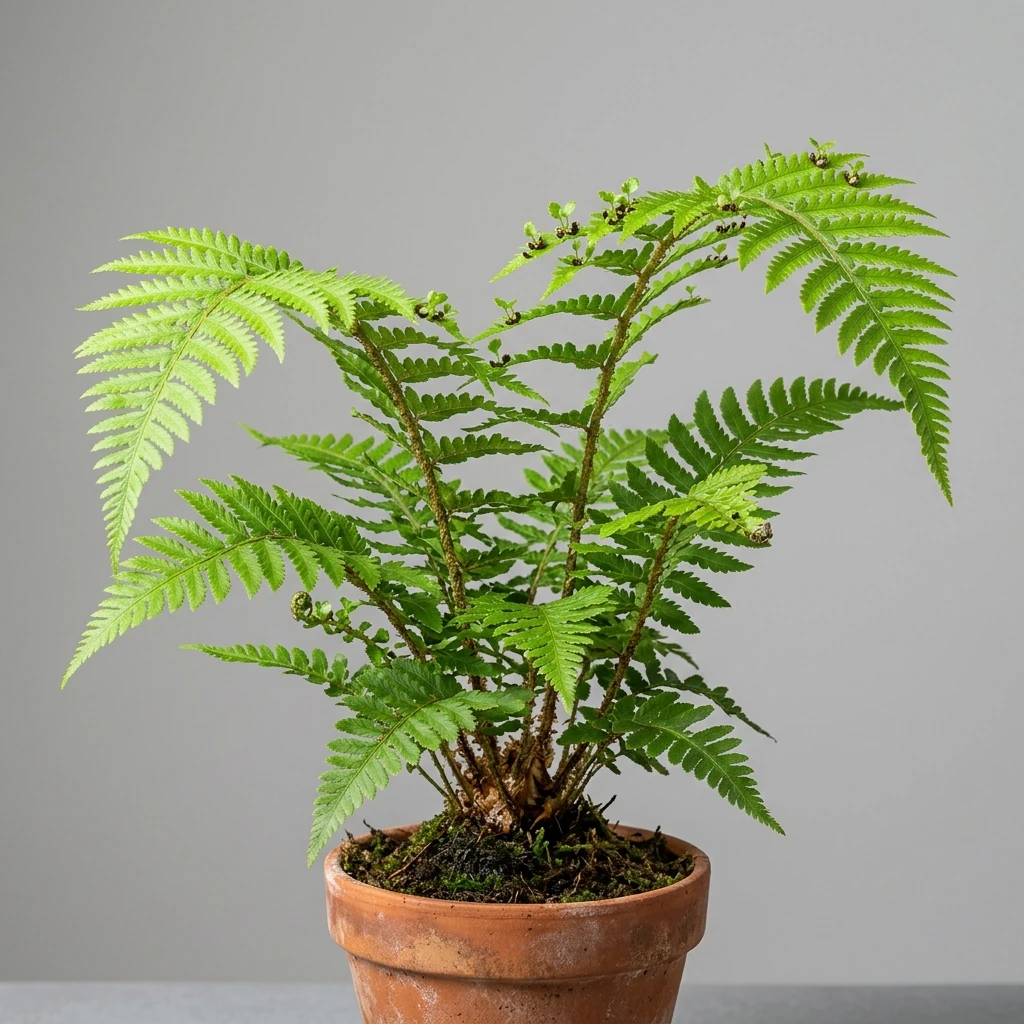
How to Identify Anderson's Holly Fern
Identify Anderson's Holly Fern immediately by its elegant and distinctive frond structure. Native to humid forest floors or mossy rocks, it features exquisite leaf patterns optimized to thrive under dappled canopy light.
-
✓
Distinctive Features: Large, deeply divided fronds up to 3 feet long, featuring unique viviparous buds near the leaf tips.
-
✓
Typical Coloration: Rich forest green, with the leaf stalks densely covered in shaggy, golden-brown papery scales.
-
✓
Potential Confusions: Similar to Braun's Holly Fern, but uniquely distinguished by the presence of small green plantlets directly growing on the upper leaf tips.
11-Step Professional Care Guide
Frequently Asked Questions
What are the small green growths on my Anderson's Holly Fern leaf tips?
Those are viviparous buds! They are natural baby plantlets that grow directly on the mother frond. In the wild, the fronds bend to the ground, allowing these buds to root and propagate.
How do I propagate the buds on the leaf tips?
Gently press the leaf tip carrying the bud onto damp soil (either in the same pot or a small adjacent pot) and secure it with a wire clip. Keep it moist; once rooted, cut the main stem.
Is the Anderson's Holly Fern safe for pets?
Yes, Polystichum andersonii is completely non-toxic and safe for all domestic pets.
Does this fern shed its leaves in winter?
No, it is evergreen in most climates, maintaining its glossy green, shaggy-stemmed fronds through the snow, which adds beautiful winter structure to shaded gardens.
Keep Your Anderson's Holly Fern Silky Green & Growing!
Use the Plant AI App to identify ferns immediately from your camera, diagnose crispy leaves, set precise moisture & watering alarms, and ask our AI Botanist expert care questions.