Bird's Nest Fern Care & Identification Guide
The magnificent Bird's Nest Fern (Asplenium nidus) is a highly spectacular tropical epiphytic classic, celebrated for its architectural, apple-green rosette that forms a perfect nest shape. Originating from rainforest canopies and mossy tree trunks, this grand fern acts as a natural funnel, capturing falling organic debris and rainwater in its central crown. To keep this jungle classic thriving, it requires bright filtered light, structured peaty-bark medium, and a regulated watering routine where water is poured directly into the central funnel during warm weather, but ensure it never pools in cold dormant phases to prevent heart rot.





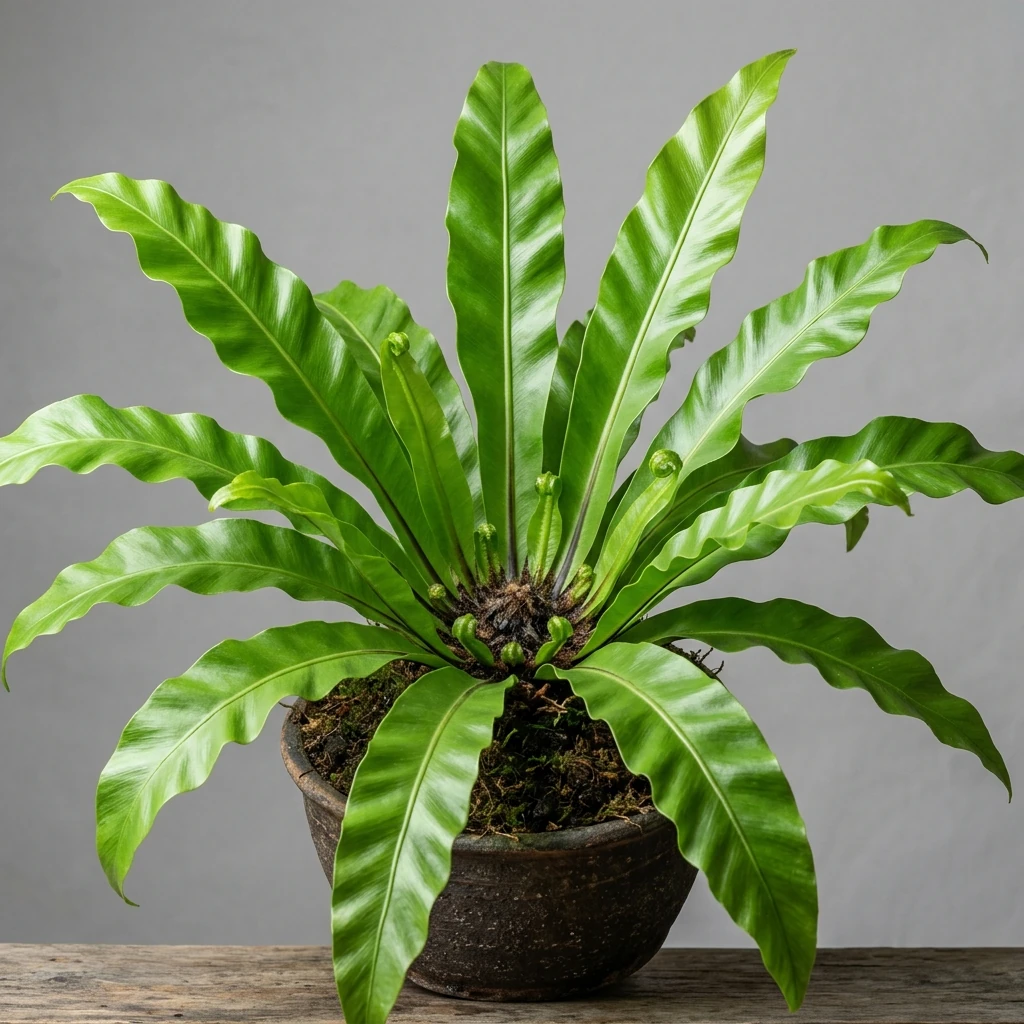
How to Identify Bird's Nest Fern
Identify Bird's Nest Fern immediately by its elegant and distinctive frond structure. Native to humid forest floors or mossy rocks, it features exquisite leaf patterns optimized to thrive under dappled canopy light.
-
✓
Distinctive Features: Grand, architectural rosette of undivided, lance-shaped bright green fronds with wavy margins rising from a fuzzy black center.
-
✓
Typical Coloration: Vibrant apple-green foliage with a highly polished waxy shine and a prominent dark brown to black central midrib.
-
✓
Potential Confusions: Often confused with Hart's Tongue Fern, but distinguished by its massive rosette growth habit and tropical epiphytic nature.
11-Step Professional Care Guide
Frequently Asked Questions
Why is my Bird's Nest Fern leaves flat and losing their rosette shape?
Lack of adequate bright indirect light can cause the new growth to be thin and spread out rather than form a tight rosette. Move it to a brighter, filtered location.
Is the Bird's Nest Fern safe for pets?
Yes, Asplenium nidus is completely non-toxic and pet-safe for cats, dogs, and all other pets.
How do I water my Bird's Nest Fern correctly?
Pour water directly into the center of the rosette funnel during warm weather. In winter, water the soil directly to prevent cold water from standing in the leaf heart and causing rot.
Why are the tips of the leaves drying and turning brown?
Dry tips are a classic indicator of low humidity or underwatering. Maintain relative humidity above 50% using a humidifier or a pebble tray.
Keep Your Bird's Nest Fern Silky Green & Growing!
Use the Plant AI App to identify ferns immediately from your camera, diagnose crispy leaves, set precise moisture & watering alarms, and ask our AI Botanist expert care questions.