Canary Island Fern Care & Identification Guide
The magnificent Canary Island Fern (Davallia canariensis), also known as the Canary Hare's Foot, is a highly spectacular and robust evergreen native of the Canary Islands, North Africa, and Southwest Europe, celebrated for its shaggy, golden-brown creeping rhizomes and dark red-bronze stems. Clinging to rocky cliffs and ancient tree trunks in the wild, it has evolved excellent tolerance to cooler temperatures and brief dry spells compared to delicate tropical ferns. To cultivate this resilient beauty successfully, it requires filtered indirect light, gritty organic soil, and a moderated watering schedule.





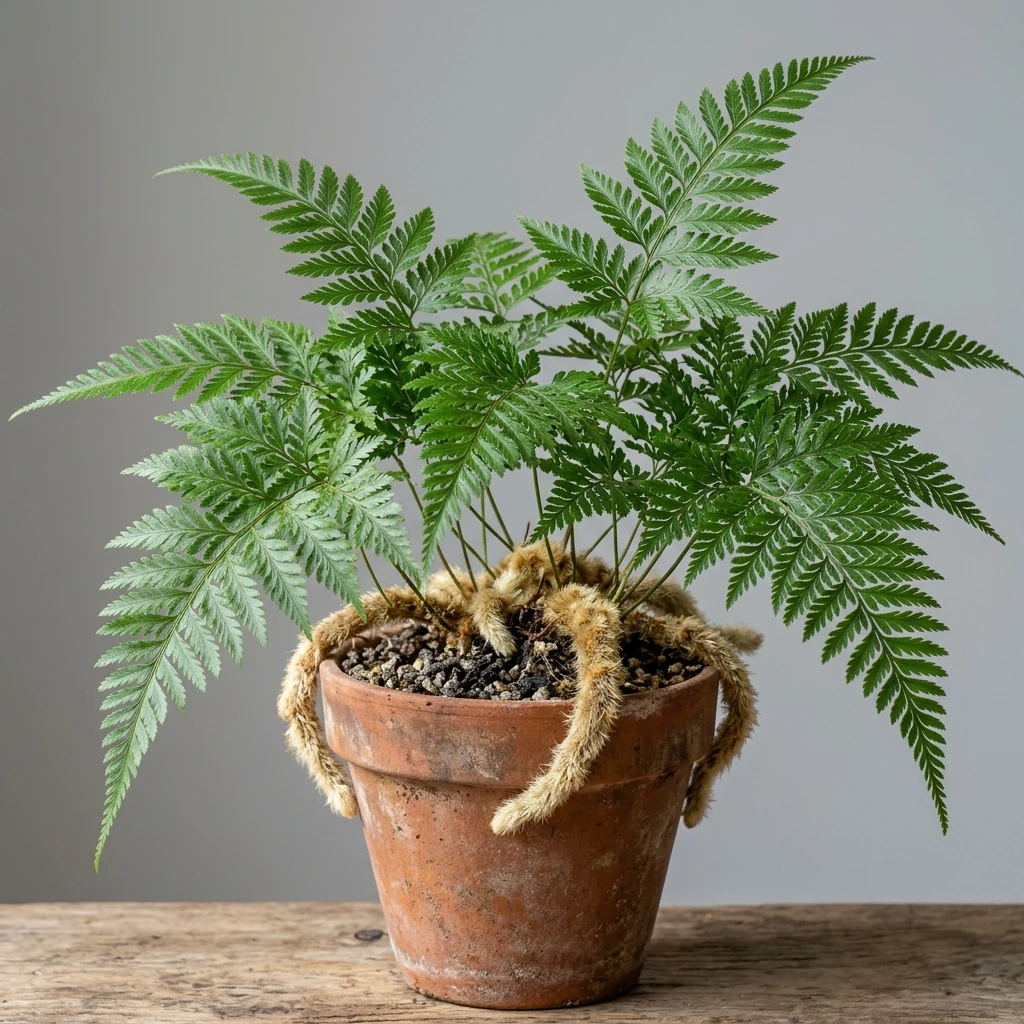
How to Identify Canary Island Fern
Identify Canary Island Fern immediately by its elegant and distinctive frond structure. Native to humid forest floors or mossy rocks, it features exquisite leaf patterns optimized to thrive under dappled canopy light.
-
✓
Distinctive Features: Broad, triangular, twice-divided fronds with a thick, leathery texture suspended on reddish-bronze wiry stems.
-
✓
Typical Coloration: Lively olive-green foliage accented by dense, shaggy golden-brown and silvery scales along the creeping stems.
-
✓
Potential Confusions: Similar to standard Hare's Foot Fern, but distinguished by its broader, twice-divided leaves, shaggy scaled stems, and superior cold-hardiness.
11-Step Professional Care Guide
Frequently Asked Questions
Why is it called the Canary Island Fern?
Because of its native home! In the wild, Davallia canariensis is a famous native species of the Canary Islands, where it clings to wet limestone rocks and ancient tree trunks.
How cold-hardy is the Canary Island Fern?
It is exceptionally cold-hardy for a Hare's Foot fern! It can survive winter frosts down to -5°C (23°F) with light protection, making it popular in cool temperate climates.
Is the Canary Island Fern safe for pets?
Yes, Davallia canariensis is completely non-toxic and pet-safe.
Can I grow this tough fern in a windy location?
Yes, its tough, leathery fronds are significantly more wind-tolerant than other delicate tree ferns, making it a great landscape choice for patio breeze areas.
Keep Your Canary Island Fern Silky Green & Growing!
Use the Plant AI App to identify ferns immediately from your camera, diagnose crispy leaves, set precise moisture & watering alarms, and ask our AI Botanist expert care questions.