Chain Fern Care & Identification Guide
The magnificent Giant Chain Fern (Woodwardia fimbriata) is a colossal evergreen giant native to the damp redwood forests and shaded canyon slopes of western North America. Celebrating outstanding structural elegance, its massive, thick, leathery fronds can grow up to 6-9 feet tall, forming an imposing vase-shaped dome. It gets its iconic name from the highly distinct chain-like pattern of its spore cases (sori) arranged neatly along the midribs on the undersides of its leaflets. It thrives in high humidity, deep woodland shade, and moist, highly organic acidic loam.





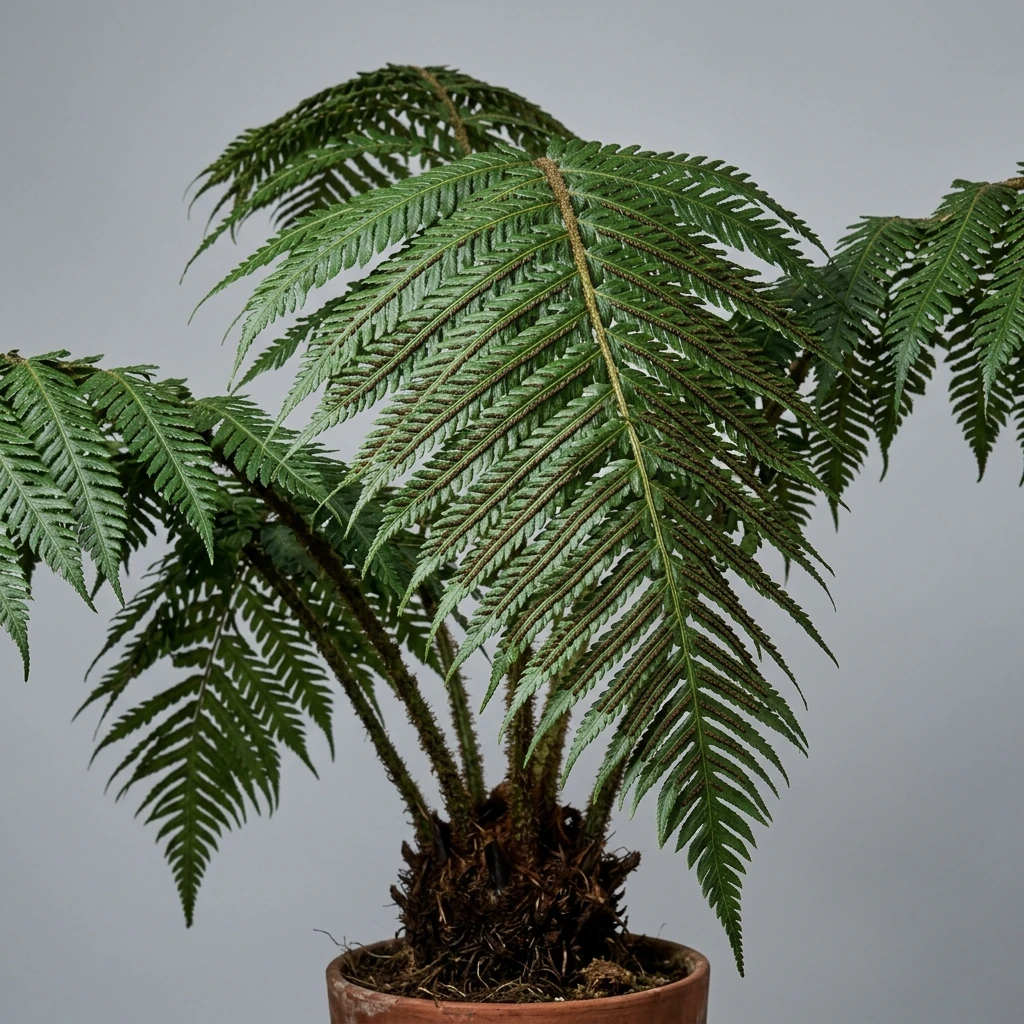
How to Identify Chain Fern
Identify Chain Fern immediately by its elegant and distinctive frond structure. Native to humid forest floors or mossy rocks, it features exquisite leaf patterns optimized to thrive under dappled canopy light.
-
✓
Distinctive Features: Gargantuan, erect leathery bipinnate fronds up to 9 feet tall, with spore cases resembling metal chains.
-
✓
Typical Coloration: Deep, lustrous forest green foliage with pale green to striking reddish-bronze new croziers in spring.
-
✓
Potential Confusions: Similar to Western Sword Fern, but instantly distinguished by its colossal mature size and the unique chain-link pattern of sori.
11-Step Professional Care Guide
Frequently Asked Questions
Why is it called the Chain Fern?
Because of its spores! The spore-producing cases (sori) are arranged in neat, oblong sunken rows along the veins, looking exactly like links of a chain.
How large can the Giant Chain Fern grow?
In moist coastal redwood forests, it is a giant! Its magnificent arching fronds can easily reach 6 to 9 feet tall in mature specimens.
Is the Giant Chain Fern pet-safe?
Yes, Woodwardia fimbriata is completely non-toxic and pet-safe for cats, dogs, and other household animals.
Can I grow the Giant Chain Fern indoors?
Yes, but it requires a very large pot, consistent moisture, and high humidity. It is best suited for large sunrooms, spacious entryways, or covered patios.
Keep Your Chain Fern Silky Green & Growing!
Use the Plant AI App to identify ferns immediately from your camera, diagnose crispy leaves, set precise moisture & watering alarms, and ask our AI Botanist expert care questions.