Christmas Fern Care & Identification Guide
The magnificent Christmas Fern (Polystichum acrostichoides) is a highly robust and iconic evergreen native of eastern North America, celebrated for its legendary ability to remain green and vibrant throughout the freezing winter. Traditionally used as holiday decorations, this tough beauty features glossy, leathery fronds that grow in a neat, vase-shaped clump. Each individual leaflet has a distinctive stocking-shaped ear at the base. To keep this cold-hardy classic thriving, it requires partial to full shade, highly porous peaty-sandy soil, and a moderate watering regimen that prevents wet crowns.





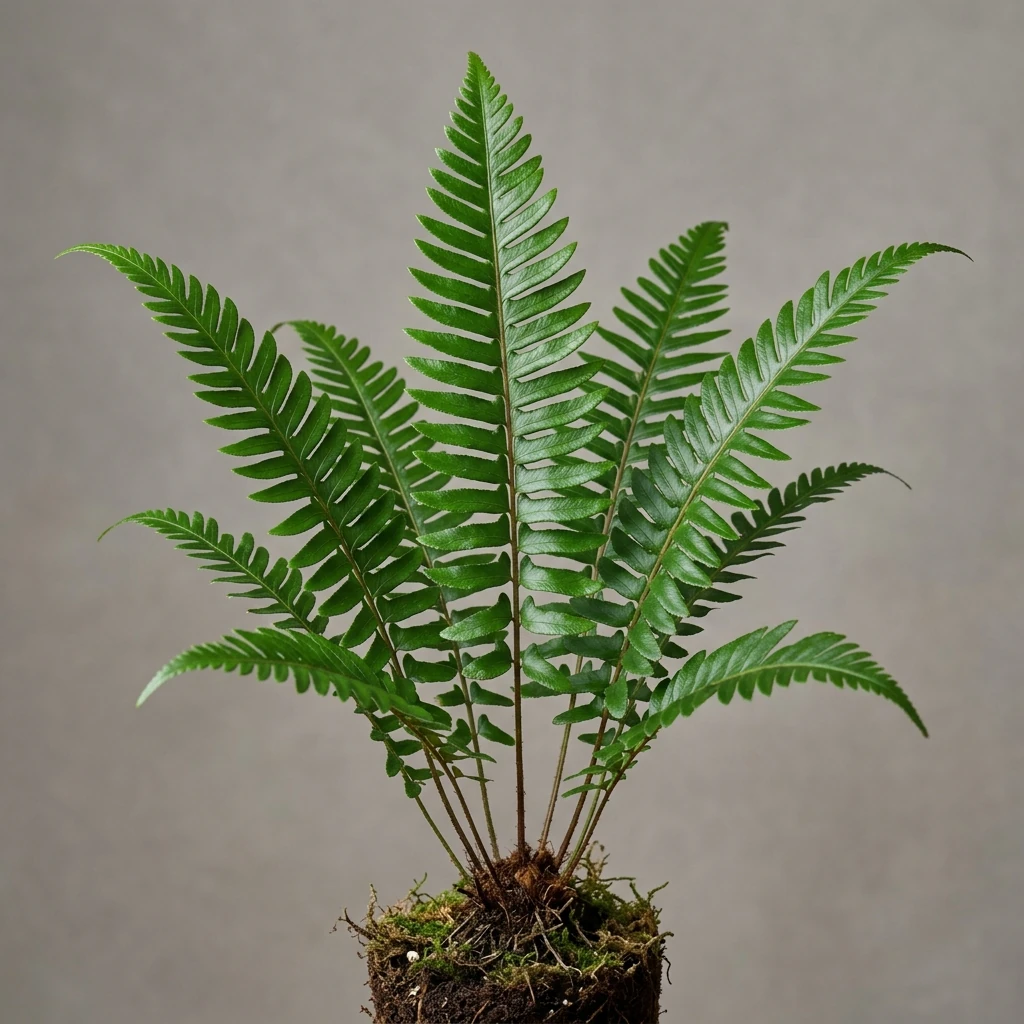
How to Identify Christmas Fern
Identify Christmas Fern immediately by its elegant and distinctive frond structure. Native to humid forest floors or mossy rocks, it features exquisite leaf patterns optimized to thrive under dappled canopy light.
-
✓
Distinctive Features: Polished, leathery, dark green fronds with leaflets featuring a prominent stocking-shaped lobe at the base.
-
✓
Typical Coloration: Rich, deep forest green foliage, with pale brown protective scales at the base of the stalks.
-
✓
Potential Confusions: Often confused with Sword Fern, but easily distinguished by its stocking-shaped leaflet lobes, tough evergreen texture, and superior winter hardiness.
11-Step Professional Care Guide
Frequently Asked Questions
Why is it called the Christmas Fern?
The name comes from its evergreen habit! The fronds remain green and fresh all through the winter, and early American settlers used them as popular Christmas decorations.
How do I identify a Christmas Fern leaflet?
Look at the base of the leaflet where it joins the stem—you will see a prominent ear-like lobe that makes the leaflet resemble the shape of a Christmas stocking or mitten!
Is the Christmas Fern toxic to cats and dogs?
No, Polystichum acrostichoides is completely non-toxic and pet-safe.
Does the Christmas Fern grow well indoors?
Yes, but it prefers cool indoor environments and dislikes hot, dry heating drafts. Use a pebble tray to boost humidity and keep it in a cool, shaded room.
Keep Your Christmas Fern Silky Green & Growing!
Use the Plant AI App to identify ferns immediately from your camera, diagnose crispy leaves, set precise moisture & watering alarms, and ask our AI Botanist expert care questions.