Madagascar Staghorn Care & Identification Guide
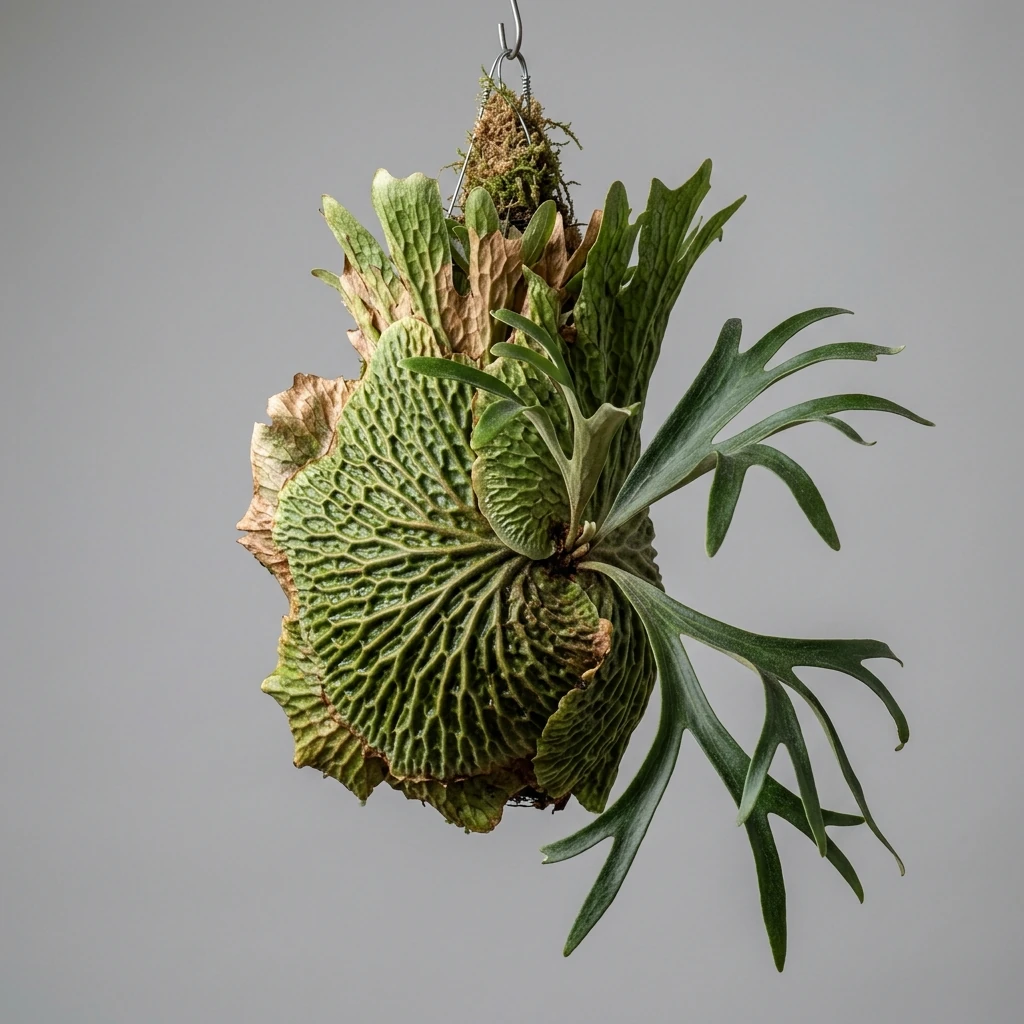
The magnificent Madagascar Staghorn (Platycerium madagascariense) is an exceptionally rare, highly spectacular, and challenging botanical masterpiece, celebrated for its unique brain-like honeycombed shield fronds. Originating from tropical Madagascar, this striking fern features deeply ruffled, textured green shield fronds with pocket-like chambers. In the wild, it shares a famous symbiotic relationship with ants, which live in the leaf chambers and provide organic fertilizer. Extremely sensitive to dry air and stagnant soggy roots, it requires strict warm greenhouse conditions, high humidity, and superior root aeration.





How to Identify Madagascar Staghorn
Identify Madagascar Staghorn immediately by its elegant and distinctive frond structure. Native to humid forest floors or mossy rocks, it features exquisite leaf patterns optimized to thrive under dappled canopy light.
-
✓
Distinctive Features: Deeply textured, brain-like honeycombed green shield fronds with pocket-like overlapping chambers.
-
✓
Typical Coloration: Rich emerald green foliage with deeply defined, bright green raised vein netting.
-
✓
Potential Confusions: Unmistakable due to its brain-like honeycombed shield fronds. Far more textured and pocketed than any other Staghorn.
11-Step Professional Care Guide
Frequently Asked Questions
Why does my Madagascar Staghorn have brain-like honeycombed leaves?
This is a natural evolutionary feature! The deeply honeycombed shield fronds form pocket-like chambers that, in the wild, house symbiotic ants which protect the fern and provide nitrogen fertilizer.
Is the Madagascar Staghorn difficult to care for?
Yes, it is considered the most challenging Platycerium to grow. It requires strictly warm temperatures, high humidity (above 65%), and purified water with superior aeration.
Is the Madagascar Staghorn safe for pets?
Yes, despite its rare and exotic appearance, it is completely non-toxic and safe for cats and dogs.
How often should I water my Madagascar Staghorn?
Water when the moss backing feels dry but not crispy. It is highly sensitive to drying out, yet will rot instantly if kept soggy. Balance is key.
Keep Your Madagascar Staghorn Silky Green & Growing!
Use the Plant AI App to identify ferns immediately from your camera, diagnose crispy leaves, set precise moisture & watering alarms, and ask our AI Botanist expert care questions.