Royal Fern Care & Identification Guide
The magnificent Royal Fern (Osmunda regalis), also known as the Flowering Fern, is a colossal and highly spectacular deciduous species native to acidic bogs and riverbanks across the globe, celebrated for its unique locust-tree-like foliage and majestic crown. Unlike any other fern, its highly divided leaflets resemble the leaves of a locust tree, and its fertile fronds carry separate golden-brown spore clusters at their tips, resembling panicles of flowers. Its dense root mass is historically harvested as the premium orchid substrate known as Osmunda fiber. It requires wet boggy soil.





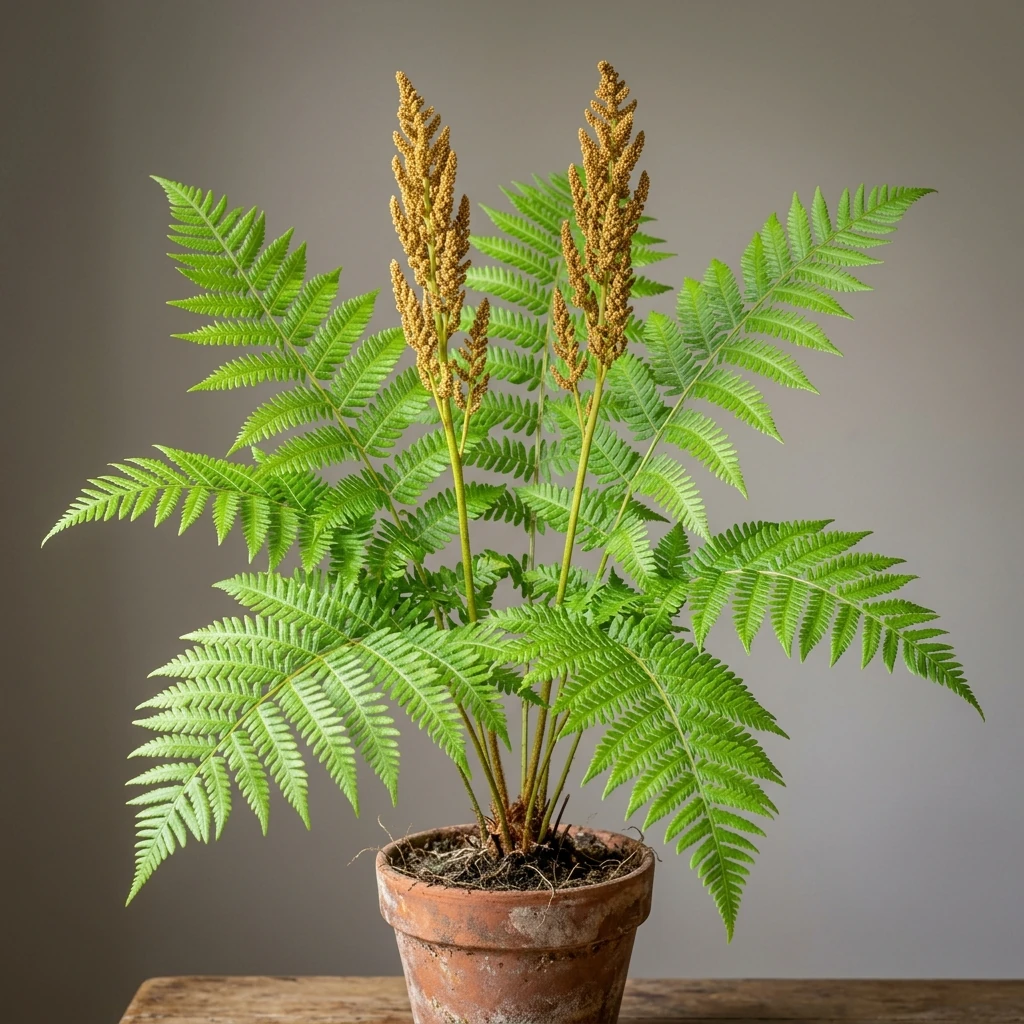
How to Identify Royal Fern
Identify Royal Fern immediately by its elegant and distinctive frond structure. Native to humid forest floors or mossy rocks, it features exquisite leaf patterns optimized to thrive under dappled canopy light.
-
✓
Distinctive Features: Giant crown of locust-tree-like bipinnate leaflets with golden-brown flowering-like spore panicles at the tips.
-
✓
Typical Coloration: Soft bright apple-green leaves turning to a spectacular, glowing copper-gold in autumn.
-
✓
Potential Confusions: Easily mistaken for a young locust tree when not in spore; distinguished by the golden spore panicles at the leaf tips.
11-Step Professional Care Guide
Frequently Asked Questions
Why is it called the Flowering Fern?
Because of its spores! The fertile fronds produce tight, golden-brown spore clusters at the very tips of the leaves, which resemble clusters of dried flowers.
What is Osmunda fiber?
It is a piece of history! The dense, tough black root mass of the Royal Fern (Osmunda regalis) is incredibly durable and aerated, historically harvested as the ultimate premium growing medium for tropical orchids.
Is the Royal Fern safe for cats and dogs?
Yes, Osmunda regalis is completely non-toxic and pet-safe.
Why is my Royal Fern turning bright yellow-gold?
This is its natural autumn transition! In late autumn, before going dormant for winter, the royal green leaves change to a magnificent copper-gold.
Keep Your Royal Fern Silky Green & Growing!
Use the Plant AI App to identify ferns immediately from your camera, diagnose crispy leaves, set precise moisture & watering alarms, and ask our AI Botanist expert care questions.