Slender Brake Fern Care & Identification Guide
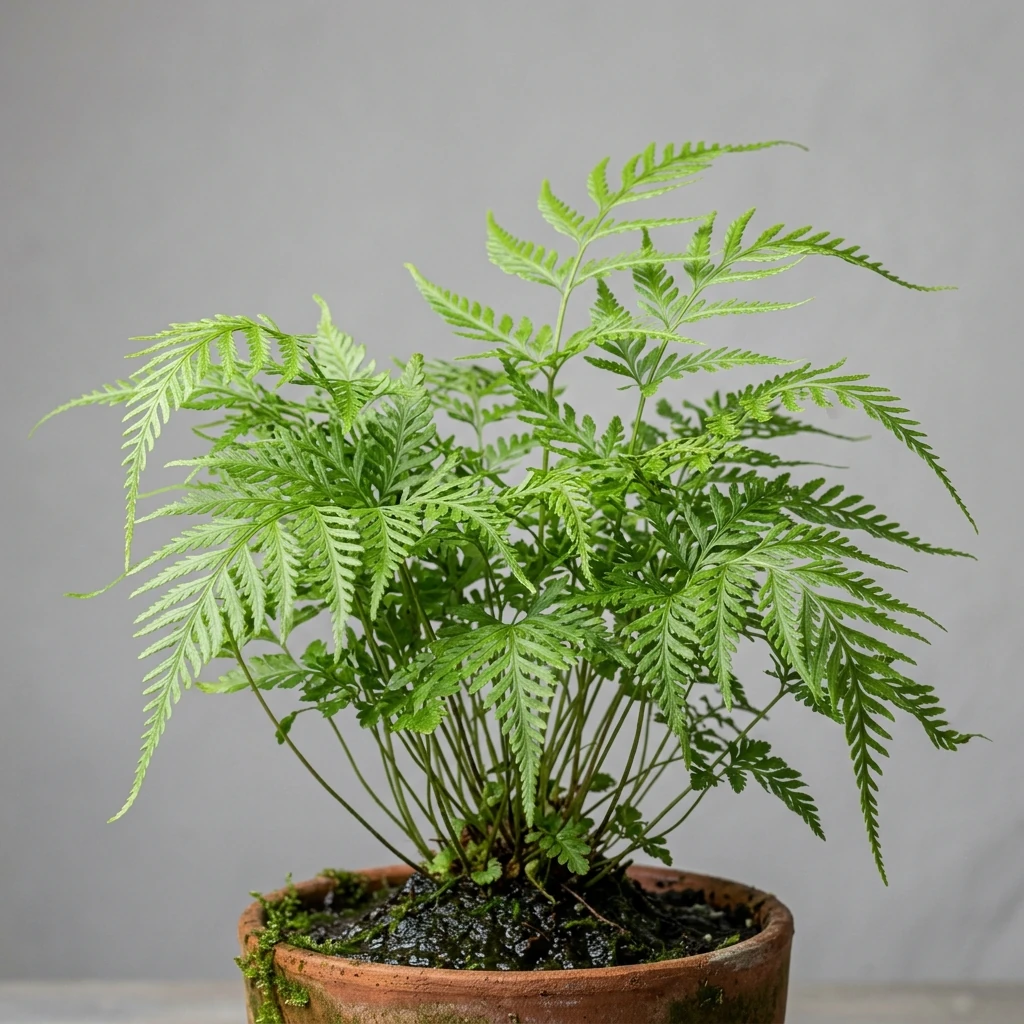
The magnificent Slender Brake Fern (Pteris ensiformis) is an exceptionally elegant and highly spectacular evergreen miniature, celebrated for the fascinating dimorphism (two-way structure) of its fronds. Native to rock crevices and damp forest floors in East Asia, its stiffly upright fertile (spore-bearing) fronds stand tall to catch the wind, while its sterile fronds remain arching and low to form a protective base. To grow this rock-clinging gem, it requires consistent moisture, highly organic peaty soil, and shaded conditions.





How to Identify Slender Brake Fern
Identify Slender Brake Fern immediately by its elegant and distinctive frond structure. Native to humid forest floors or mossy rocks, it features exquisite leaf patterns optimized to thrive under dappled canopy light.
-
✓
Distinctive Features: Delicate, narrow comb-like fronds with tiny, rounded leaflets neatly paired along a glossy green stalk.
-
✓
Typical Coloration: Soft grass-green leaflets contrasting sharply with highly polished dark ebony-black stems.
-
✓
Potential Confusions: Similar to Sword Brake Fern, but distinguished by its smaller, more delicate fronds and alternating leaflet arrangement.
11-Step Professional Care Guide
Frequently Asked Questions
Why does my Slender Brake Fern have two types of leaves?
This is a natural characteristics of the species! It exhibits dimorphism, where the tall, narrow upright leaves are fertile (spore-bearing) and designed to disperse spores in the wind, while the shorter, wider leaves are sterile and focus on photosynthesis.
Is the Slender Brake Fern safe for pets?
Yes, it is completely non-toxic and pet-safe for cats, dogs, and all other household pets.
Does this fern prefer alkaline limestone soil?
Yes! In the wild, it clings to wet limestone rocks. Adding a little dolomitic lime or crushed shells to its peaty potting mix helps keep the pH slightly alkaline, which it loves.
Can I grow this miniature fern in a terrarium?
Yes! Its small size, compact growth habit, and high humidity preference make it an absolute favorite for closed and open glass terrariums.
Keep Your Slender Brake Fern Silky Green & Growing!
Use the Plant AI App to identify ferns immediately from your camera, diagnose crispy leaves, set precise moisture & watering alarms, and ask our AI Botanist expert care questions.