Squirrel's Foot Fern Care & Identification Guide
The magnificent Squirrel's Foot Fern (Davallia mariesii) is a highly spectacular and robust semi-evergreen species, native to rocky cliffs, mossy stone slopes, and ancient tree trunks in East Asia. Celebrating its thick, reddish-brown shaggy creeping rhizomes that resemble the furry tail of a squirrel, it is highly prized in Japanese traditional horticulture for micro-bonsai and moss ball displays (Kokedama). Extremely cold-hardy, it can survive winter dormancy, requiring bright indirect light, porous gritty peaty soil, and moderate watering.





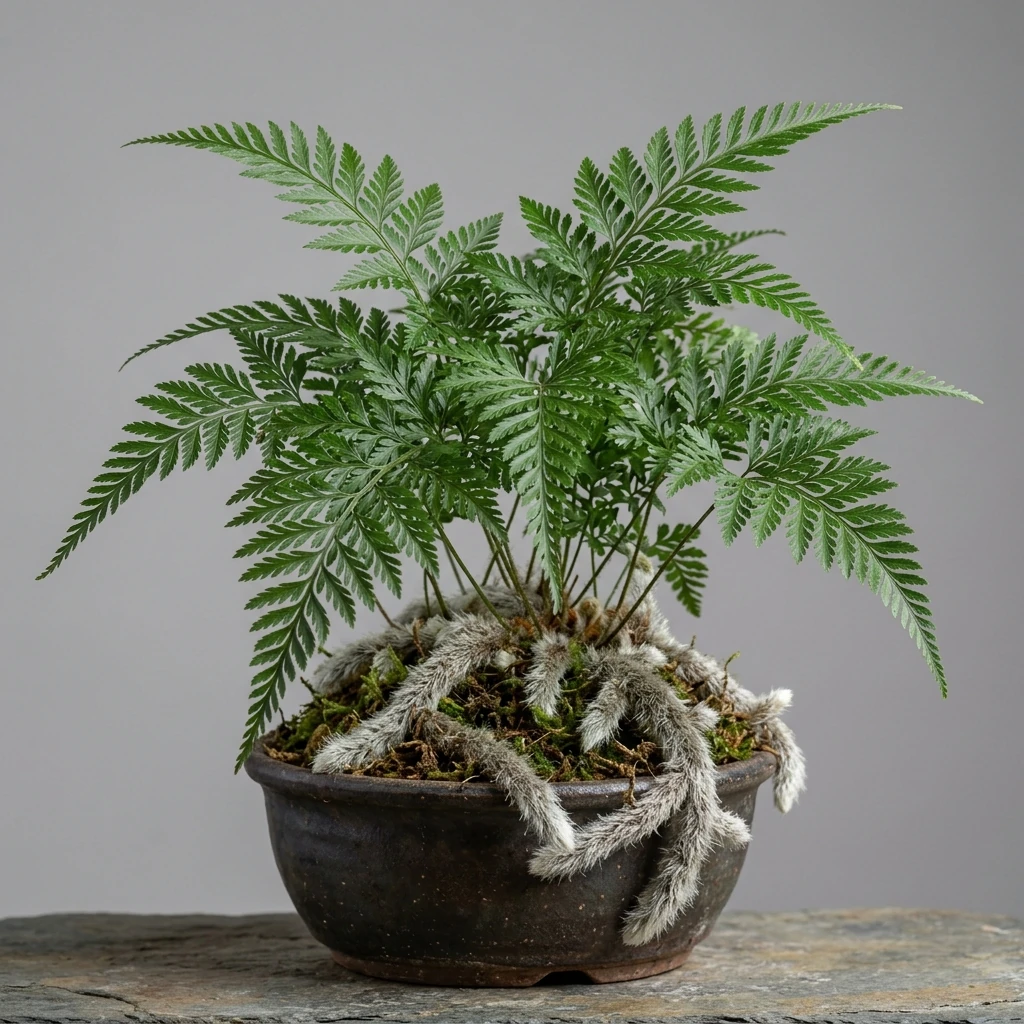
How to Identify Squirrel's Foot Fern
Identify Squirrel's Foot Fern immediately by its elegant and distinctive frond structure. Native to humid forest floors or mossy rocks, it features exquisite leaf patterns optimized to thrive under dappled canopy light.
-
✓
Distinctive Features: Slender, creeping rhizomes covered in dense, reddish-brown shaggy soft scales, crawling over rock or pot margins.
-
✓
Typical Coloration: Bright emerald green lace foliage contrasting with the rich copper-brown soft tail-like rhizomes.
-
✓
Potential Confusions: Similar to standard Rabbit's Foot, but distinguished by its smaller, more delicate fronds, reddish-brown scales, and superior cold-hardiness.
11-Step Professional Care Guide
Frequently Asked Questions
Why is it called the Squirrel's Foot Fern?
Because of its creeping rhizomes! The reddish-brown crawling claws are exceptionally soft and shaggy, resembling the furry tail or paws of a squirrel.
Can I grow the Squirrel's Foot Fern in a Kokedama moss ball?
Yes! In Japan, Davallia mariesii is the absolute golden choice for Kokedama. Its creeping rhizomes happily crawl over the outer moss ball surface, creating a beautiful organic dome.
Is the Squirrel's Foot Fern safe for household pets?
Yes, it is completely non-toxic and pet-safe for cats, dogs, and all other household pets.
Does this fern shed its leaves in winter?
It is semi-evergreen or deciduous in freezing temperatures. If kept outdoors in winter frost, it will drop its leaves and enter winter dormancy, sprouting fresh fiddleheads in spring.
Keep Your Squirrel's Foot Fern Silky Green & Growing!
Use the Plant AI App to identify ferns immediately from your camera, diagnose crispy leaves, set precise moisture & watering alarms, and ask our AI Botanist expert care questions.