Tasmanian Tree Fern Care & Identification Guide
The magnificent Tasmanian Tree Fern (Dicksonia antarctica) is a legendary, exceptionally robust evergreen titan, native to the cool, moist, and ancient rainforests of Tasmania and Victoria. Characterized by its massive, thick trunk formed from fibrous root sheaths and a sprawling canopy of soft, feathery green fronds, it is the absolute champion of cold-hardy tree ferns. Capable of surviving temperatures down to -10°C, it is highly prized in European and American shaded landscape designs, requiring deep shaded conditions, consistent moisture, and highly organic forest loam.





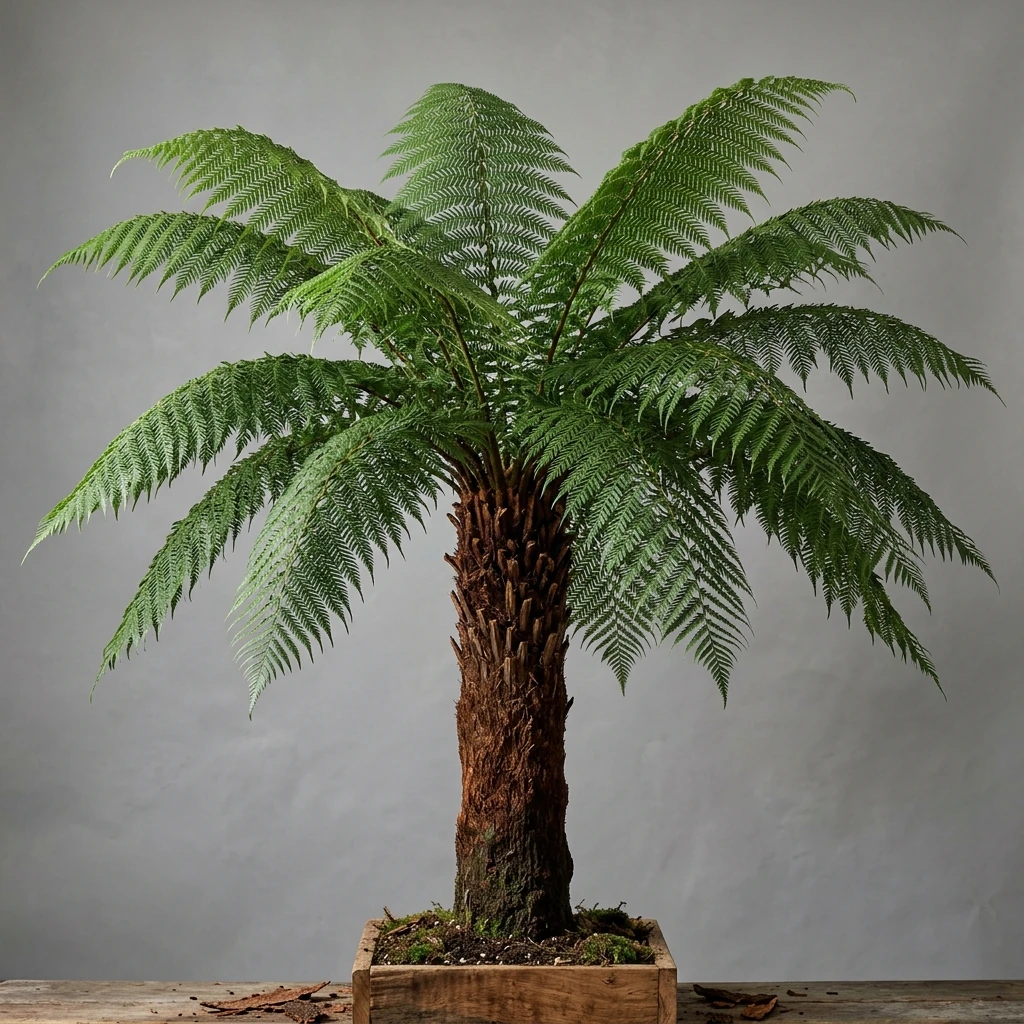
How to Identify Tasmanian Tree Fern
Identify Tasmanian Tree Fern immediately by its elegant and distinctive frond structure. Native to humid forest floors or mossy rocks, it features exquisite leaf patterns optimized to thrive under dappled canopy light.
-
✓
Distinctive Features: Massive, thick trunk covered in deep red-brown fibrous roots, supporting a grand structural canopy.
-
✓
Typical Coloration: Lustrous emerald green foliage, with the crown dense with golden-brown and copper scales.
-
✓
Potential Confusions: Same species as Soft Tree Fern, but distinguished by its larger mature size, highly weathered fibrous trunk, and extreme wilderness heritage.
11-Step Professional Care Guide
Frequently Asked Questions
Can the Tasmanian Tree Fern grow in freezing temperatures?
Yes! Dicksonia antarctica is highly cold-tolerant, capable of surviving short-term winter freezes down to -10°C (14°F). If severe cold is expected, pack the crown with straw and wrap the trunk in burlap.
Why is the trunk of this tree fern so thick?
The trunk is not a wood stem—it is an ancient sheath made of thousands of fibrous aerial roots. This thick, sponge-like structure absorbs and retains moisture, keeping the plant alive in dry forest spells.
Is the Tasmanian Tree Fern safe for pets?
Yes, it is completely non-toxic and pet-safe for cats, dogs, and all other pets.
How often should I water the trunk?
Water the fibrous trunk daily during hot summer days. The trunk behaves like a sponge; keeping it damp ensures the top crown receives continuous hydration.
Keep Your Tasmanian Tree Fern Silky Green & Growing!
Use the Plant AI App to identify ferns immediately from your camera, diagnose crispy leaves, set precise moisture & watering alarms, and ask our AI Botanist expert care questions.