Tuberous Sword Fern Care & Identification Guide
The magnificent Tuberous Sword Fern (Nephrolepis cordifolia 'Tuberosa') is a highly resilient and vigorous evergreen species, renowned for its upright, sword-like fronds and prominent underground water-storing tubers. Widely used as a reliable groundcover in warm climates or as a lush container plant indoors, it features neatly arranged, slightly overlapping green pinnules. Extremely adaptable, it possesses outstanding survival skills, allowing it to bounce back from neglect by utilizing its tuber water reserves. It requires well-drained, porous peaty soil, filtered light, and a moderated watering schedule.





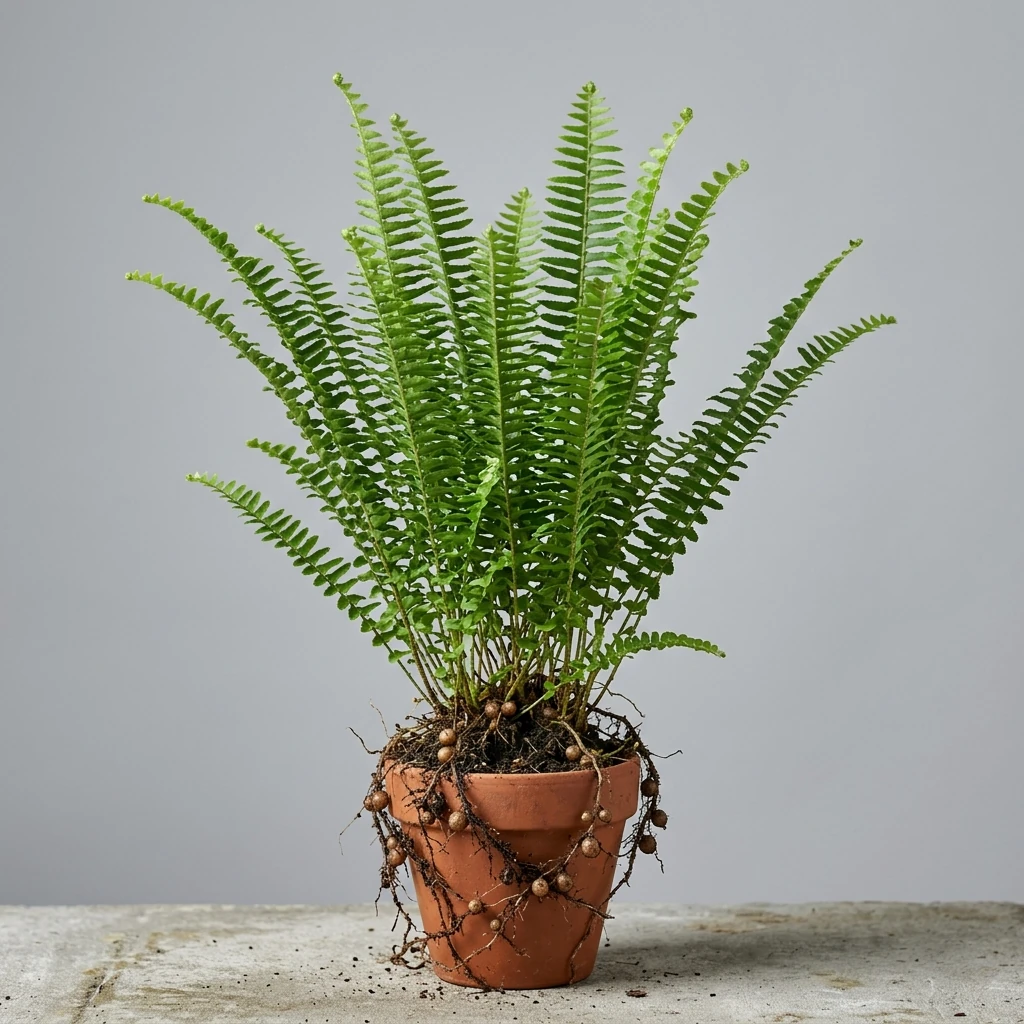
How to Identify Tuberous Sword Fern
Identify Tuberous Sword Fern immediately by its elegant and distinctive frond structure. Native to humid forest floors or mossy rocks, it features exquisite leaf patterns optimized to thrive under dappled canopy light.
-
✓
Distinctive Features: Erect, narrow sword-like fronds with closely set, slightly overlapping leaflets, and round tubers on the roots.
-
✓
Typical Coloration: Lively, bright grass-green, with pale golden-brown scales covering the upright leaf stalks.
-
✓
Potential Confusions: Similar to standard Sword Fern, but distinguished by its narrower fronds, more upright habit, and characteristic root tubers.
11-Step Professional Care Guide
Frequently Asked Questions
What are the small round bulbs on the roots of my fern?
Those are water-storage tubers! They act as underground canteens, storing water and nutrients, enabling the Tuberous Sword Fern to survive periods of drought.
How cold-hardy is the Tuberous Sword Fern?
It is moderately hardy. It can survive in outdoor shaded gardens down to zone 9 (approx. 25°F or -4°C) with light frost, though it may die back and resprout from its tubers in spring.
Is the Tuberous Sword Fern safe for household pets?
Yes, it is completely non-toxic and safe for dogs, cats, and all other household pets.
Why are my fern's fronds turning pale yellow?
Pale yellow fronds are usually caused by excessive direct sunlight or overwatering. Move it to a shaded, indirect spot and ensure its soil is free-draining.
Keep Your Tuberous Sword Fern Silky Green & Growing!
Use the Plant AI App to identify ferns immediately from your camera, diagnose crispy leaves, set precise moisture & watering alarms, and ask our AI Botanist expert care questions.