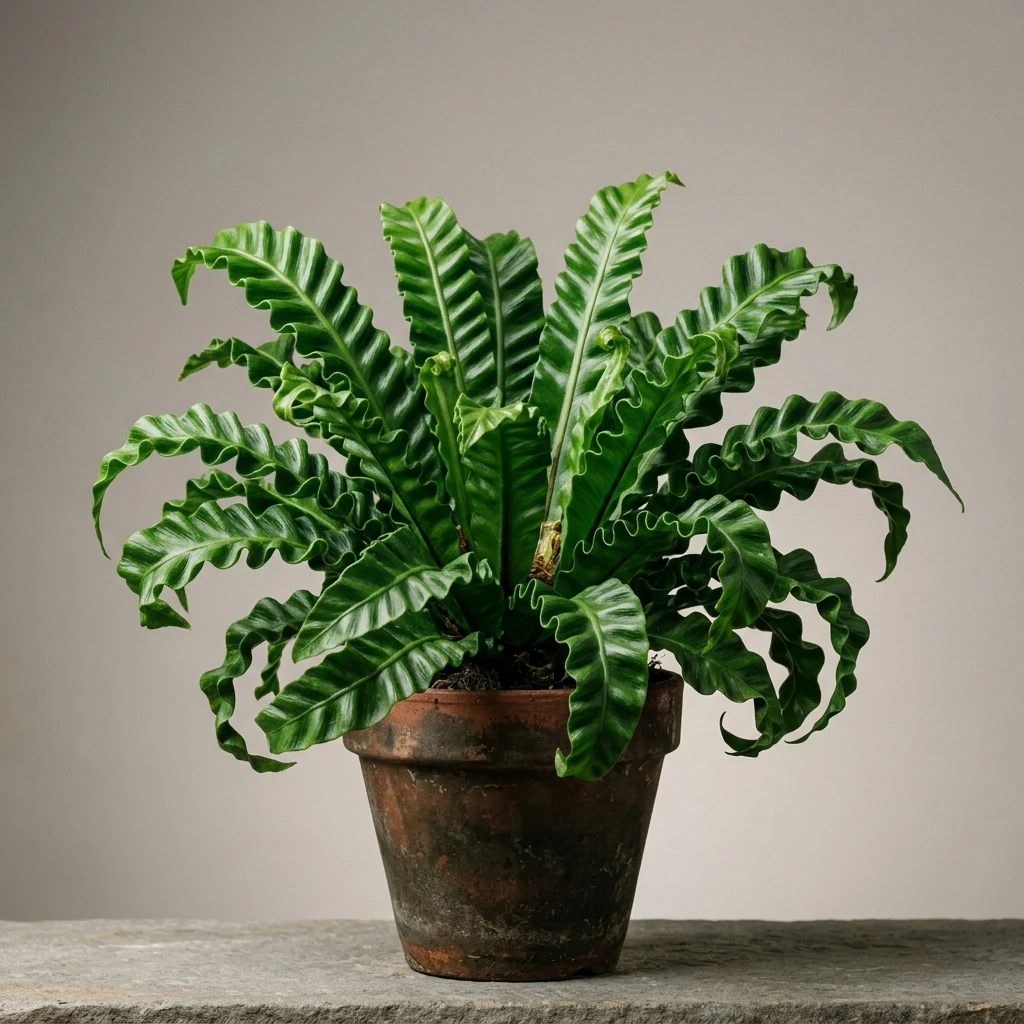
Asplenium nidus 'Victoria'

Victoria Bird's Nest Care & Identification Guide

The magnificent Victoria Bird's Nest (Asplenium nidus 'Victoria') is an exceptionally elegant and highly spectacular tropical cultivar, celebrated for its wavy, ruffled, and ribbon-like foliage. Originating as a highly prized mutation of the common bird's nest fern, its glossy, undivided leather fronds grow in a tight rosette before expanding and curling at the edges, resembling a royal victorian ruffle. To preserve its striking structural shape, it requires stable tropical warmth, high humidity, porous peaty-bark soil, and consistent moisture.


Sunlight Icon
Sunlight Bright Direct
Watering Icon
Watering Moderate
Soil Mix Icon
Soil Mix Peat Mix
Temperature Icon
Temperature 16°C - 24°C
Toxicity Warning Icon
Toxicity Non-toxic
Botanical photography of Victoria Bird's Nest (Asplenium nidus 'Victoria') - Plant AI care database

How to Identify Victoria Bird's Nest

Identify Victoria Bird's Nest immediately by its elegant and distinctive frond structure. Native to humid forest floors or mossy rocks, it features exquisite leaf patterns optimized to thrive under dappled canopy light.

  • Distinctive Features: Broad, erect, glossy leather fronds that form a tight rosette, ending in spectacular ruffled, ribbon-like edges.
  • Typical Coloration: Vibrant lime-green foliage with a highly polished waxy shine and a prominent dark brown to black central midrib.
  • Potential Confusions: Similar to standard Bird's Nest Fern, but instantly recognized by the dramatic, ruffled ribbon-like curling at every leaf margin.

11-Step Professional Care Guide

💧 【Watering & Moisture】 Keep soil consistently damp. Water thoroughly when the top 0.5 inches of soil feels dry. Never let the root ball go dry.

☀️ 【Sunlight & Exposure】 Requires bright, filtered indirect light or partial morning sun. Filtered sunlight is essential to highlight the beautiful glossy green leaves.

🪴 【Ideal Soil Mix】 Prefers a highly organic, porous woodland potting mix. Blend 50% peat moss, 30% perlite, and 20% organic compost or leaf mold.

🌡️ 【Temperature & Ventilation】 Strictly tropical warmth: 18°C to 28°C (64°F - 82°F). Highly sensitive to cold drafts below 12°C (54°F). Requires excellent continuous air circulation.

✂️ 【Pruning & Grooming】 Cut away old, dry outer fronds near the base. Do not damage or prune the growing central fuzzy black heart of the nest.

🧪 【Fertilization】 Apply a water-soluble balanced liquid fertilizer diluted to one-quarter strength once every 6 weeks from spring to summer.

🏺 【Potting & Container】 Decorative ceramic or terracotta pots with drainage. Hanging baskets look stunning. Use pots with excellent drainage holes.

🌱 【Propagation】 Propagated strictly by sowing its fertile spores under warm, humid, sterile glass dome settings. Spores take months to germinate.

🐛 【Common Pests】 Scale insects can occasionally settle along the midribs of the fronds. Wipe off manually with neem oil.

🦠 【Common Diseases】 Extreme risk of heart rot if cold water pools in the center crown during dark, stagnant winter phases. Maintain good air movement.

🎓 【Botanist Advice】 The Victoria Bird's Nest is a true showstopper. Display it in a warm, bright living room or sheltered patio where its unique ruffled ribbon leaves can drape elegantly!

Frequently Asked Questions

Q: Why is it called the Victoria Bird's Nest?

A: Because of its foliage! The glossy leather fronds grow in a tight rosette before expanding and curling at the edges, resembling a royal victorian ruffle.

Q: Why are the leaf margins of my Victoria Bird's Nest not curling?

A: Lack of adequate bright indirect light can cause the new growth to be thin and less ruffled. Move it to a brighter, filtered location.

Q: Is the Victoria Bird's Nest safe for household pets?

A: Yes, it is completely non-toxic and pet-safe for cats, dogs, and all other household pets.

Q: How often should I water my Victoria Bird's Nest?

A: Water when the moss backing feels dry but not crispy. It is highly sensitive to drying out, yet will rot instantly if kept soggy. Balance is key.

Is your Victoria Bird's Nest showing yellow or dry crispy leaves?

Don't let dehydration or root rot kill your ferns. Upload a photo now to get an instant AI botanical diagnosis and save your plants today!

Diagnose Victoria Bird's Nest Now
Instant Identification

Keep Your Victoria Bird's Nest Silky Green & Growing!

Use the Plant AI App to identify ferns immediately from your camera, diagnose crispy leaves, set precise moisture & watering alarms, and ask our AI Botanist expert care questions.

No more dying plants. Grow healthy greens today!

Get Started for Free