Wall-Rue Fern Care & Identification Guide
The magnificent Wall-Rue Fern (Asplenium ruta-muraria) is an exceptionally unique and highly spectacular species celebrated for its extreme resilience and moss-like wall-clinging habit. Native to ancient stone walls, castle brick mortar, and limestone cliffs across the globe, this tiny rock-clinging gem has evolved the ability to grow in highly alkaline, dry, and poor substrates. To replicate its historic medieval wall home, it requires gritty alkaline soil, exceptional drainage, bright filtered light, and a moderated watering schedule.





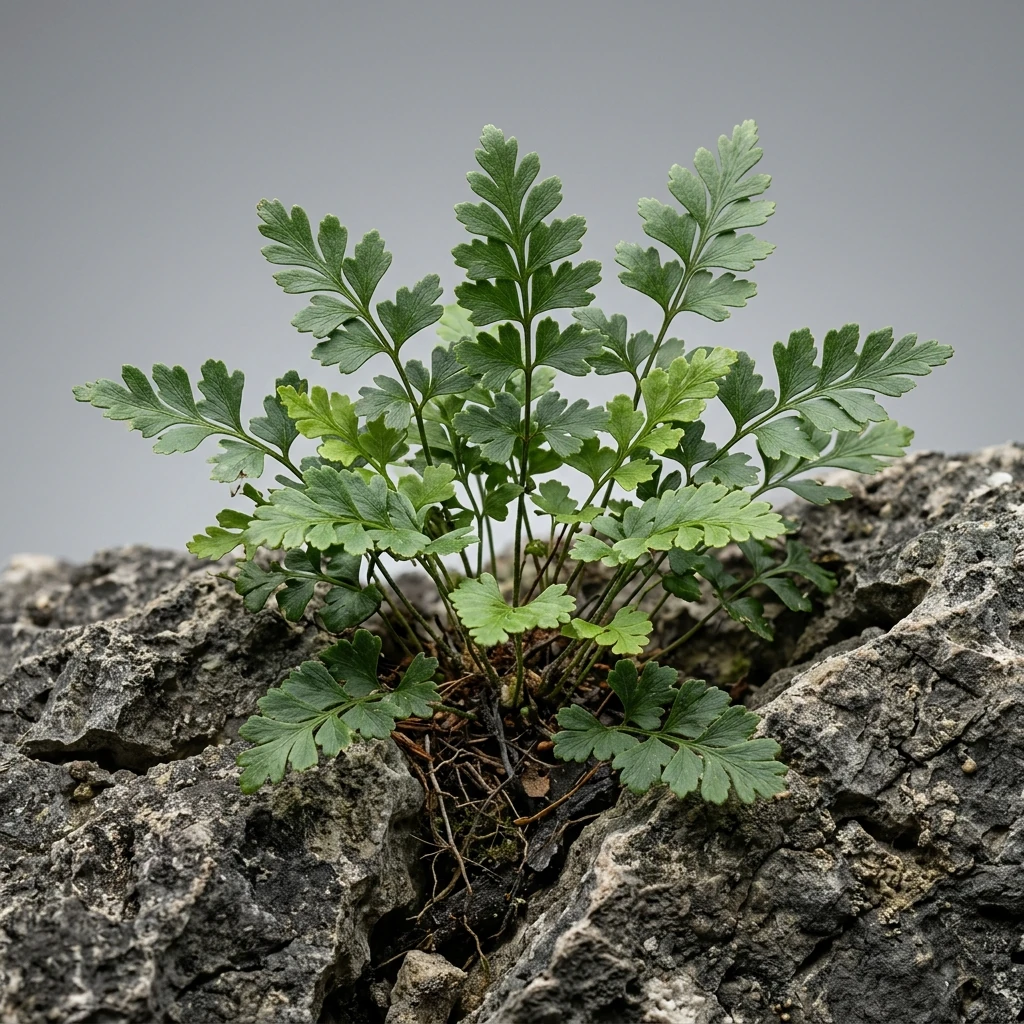
How to Identify Wall-Rue Fern
Identify Wall-Rue Fern immediately by its elegant and distinctive frond structure. Native to humid forest floors or mossy rocks, it features exquisite leaf patterns optimized to thrive under dappled canopy light.
-
✓
Distinctive Features: Miniature, moss-like tufts of leathery, twice-divided leaves that resemble tiny rue or wild strawberry leaves.
-
✓
Typical Coloration: Dull grayish-green to blue-green foliage, with pale green to light brown short stalks.
-
✓
Potential Confusions: Unmistakable due to its miniature size (under 4 inches) and wild strawberry-like leaf shapes. Completely different from standard feathery ferns.
11-Step Professional Care Guide
Frequently Asked Questions
Why does my Wall-Rue Fern grow in brick mortar?
This is a natural evolutionary characteristics! In the wild, it is highly calcareous, frequently growing in limestone cracks and ancient mortar. Adding dolomite lime or crushed limestone to its potting mix helps it thrive.
How drought-tolerant is the Wall-Rue Fern?
For a miniature fern, it is highly resilient! It can tolerate the soil drying out completely between waterings, wicking away moisture from surrounding stonework.
Is the Wall-Rue Fern safe for domestic pets?
Yes, it is completely non-toxic and pet-safe for cats, dogs, and all other pets.
What is the maximum size of the Wall-Rue Fern?
It is a true dwarf miniature gem, typically reaching only 2 to 4 inches in height, forming tiny moss-like evergreen tufts on walls.
Keep Your Wall-Rue Fern Silky Green & Growing!
Use the Plant AI App to identify ferns immediately from your camera, diagnose crispy leaves, set precise moisture & watering alarms, and ask our AI Botanist expert care questions.