Agapanthus Care & Identification Guide
Known as the Lily of the Nile, Agapanthus produces spectacular, rounded clusters of blue or white funnel-shaped flowers floating on tall, stiff stalks. Thriving in heat and sun, these striking South African perennials are famous for their tough, rootbound resilience and architectural beauty. It is widely celebrated by botanists for its distinct environmental adaptability and structural appeal.





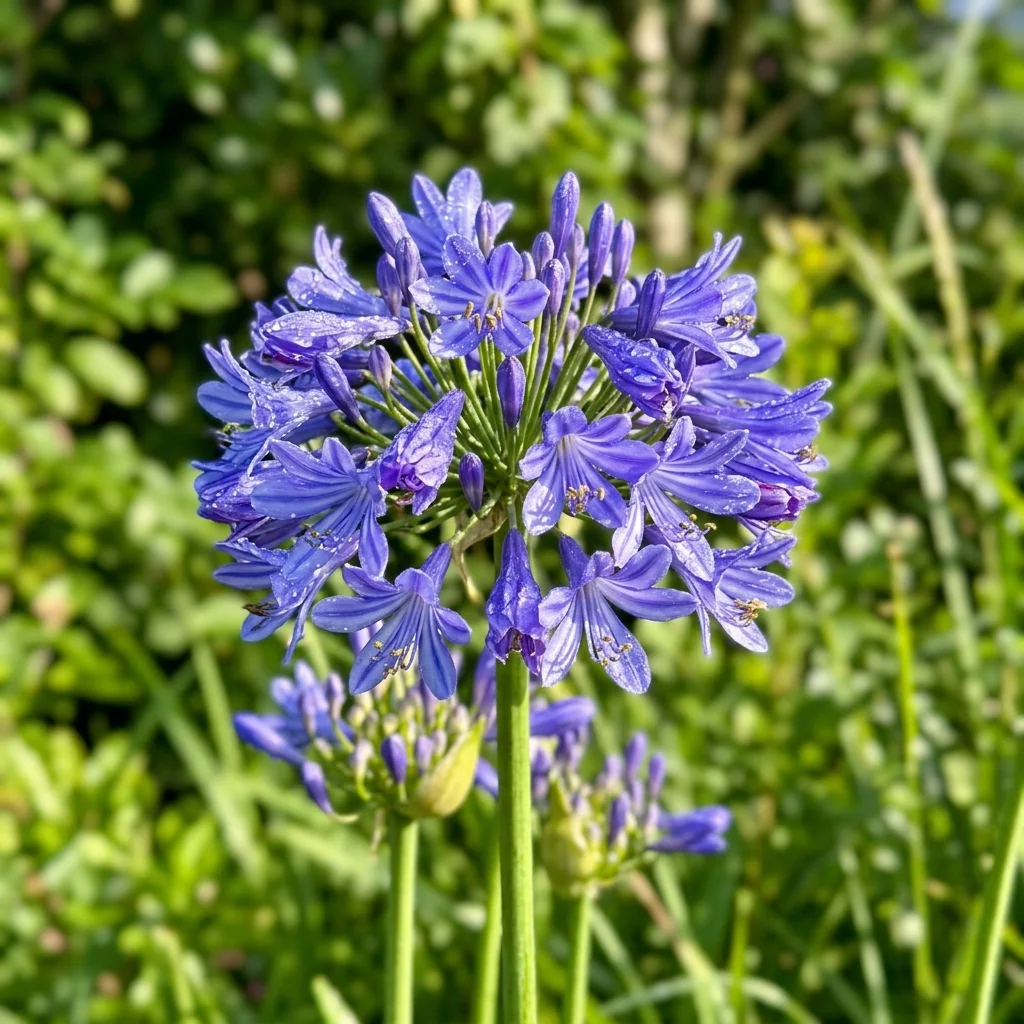
How to Identify Agapanthus
A clump-forming evergreen or deciduous perennial featuring dense fountains of arching, strap-like leathery leaves and giant spherical flower globes.
-
✔
Key Visual Features: Glossy, dark-green strap-like arching leaves overlapping at the base, and tall, leafless stiff vertical stalks topped with large round flower heads.
-
✔
Color Variations: Striking shades of sky blue, deep royal violet, indigo, bicolors, and pristine, snowy white.
-
✔
Common Confusions: Often confused with Agapanthus lookalikes like standard Lilies or Amaryllis when not in bloom, but easily distinguished by its dense clump of thick, strap-like leathery foliage and giant, round spherical flower heads composed of dozens of small funnel-shaped blossoms.
Complete Care & Cultivation Guide
Follow our detailed scientific care guide to keep your Agapanthus thriving and gorgeous all year round.
Common Diseases & Treatment
Agapanthus Gall Midge
Symptoms: Emerging flower buds turn swollen, distorted, fail to open, and rot internally due to tiny larvae.
Root Rot (Fungal)
Symptoms: Strap-like evergreen leaves turn yellow, wilt, and drop; fleshy roots turn soft, mushy, and decay under wet, heavy soil.
Frequently Asked Questions
Why is my Agapanthus producing lush green leaves but refusing to bloom?
You might have given it too much room! Agapanthus actually loves being 'rootbound' (roots tightly packed in a pot). The physical pressure on its massive fleshy root system acts as a physiological trigger that stimulates flower production. Avoid repotting them too frequently; keep them in tight containers to force spectacular blooming.
Is Agapanthus toxic to domestic dogs, cats, and humans?
Yes! The entire plant, especially the fleshy roots and thick leaves, contains toxic saponins. Chewing them causes severe oral irritation, excessive drooling, mouth blisters, vomiting, and diarrhea in pets. In humans, the clear sap from cut stems can cause painful skin redness and contact dermatitis. Always wear garden gloves when pruning.
How do I overwinter Agapanthus in cold, freezing climates?
It depends on whether you have evergreen or deciduous varieties! Deciduous Agapanthus are hardier; cover their crown with a thick 6-inch layer of straw mulch. For evergreen varieties in cold zones (USDA Zone 7 and below), plant them in pots and move them indoors to a cool, bright, frost-free room for winter.
When and how should I divide my massive Agapanthus clumps?
Divide them in early spring or autumn immediately after blooming! Use a sharp spade to slice through the dense, tangled, fleshy root mass, ensuring each division has at least two healthy green shoots and plenty of roots. Replant them immediately and water deeply to settle.