Angel Trumpet Care & Identification Guide
A breathtaking, dramatic woody shrub, the Angel Trumpet (Brugmansia) is legendary for its colossal, nodding, trumpet-shaped flowers that hang gracefully like large bells. Releasing an intensely sweet, exotic perfume at dusk, this fast-growing tropical showstopper commands attention, but its spectacular beauty hides an extremely potent, deadly toxicity that demands careful, isolated placement. It is widely celebrated by botanists for its distinct environmental adaptability and structural appeal.





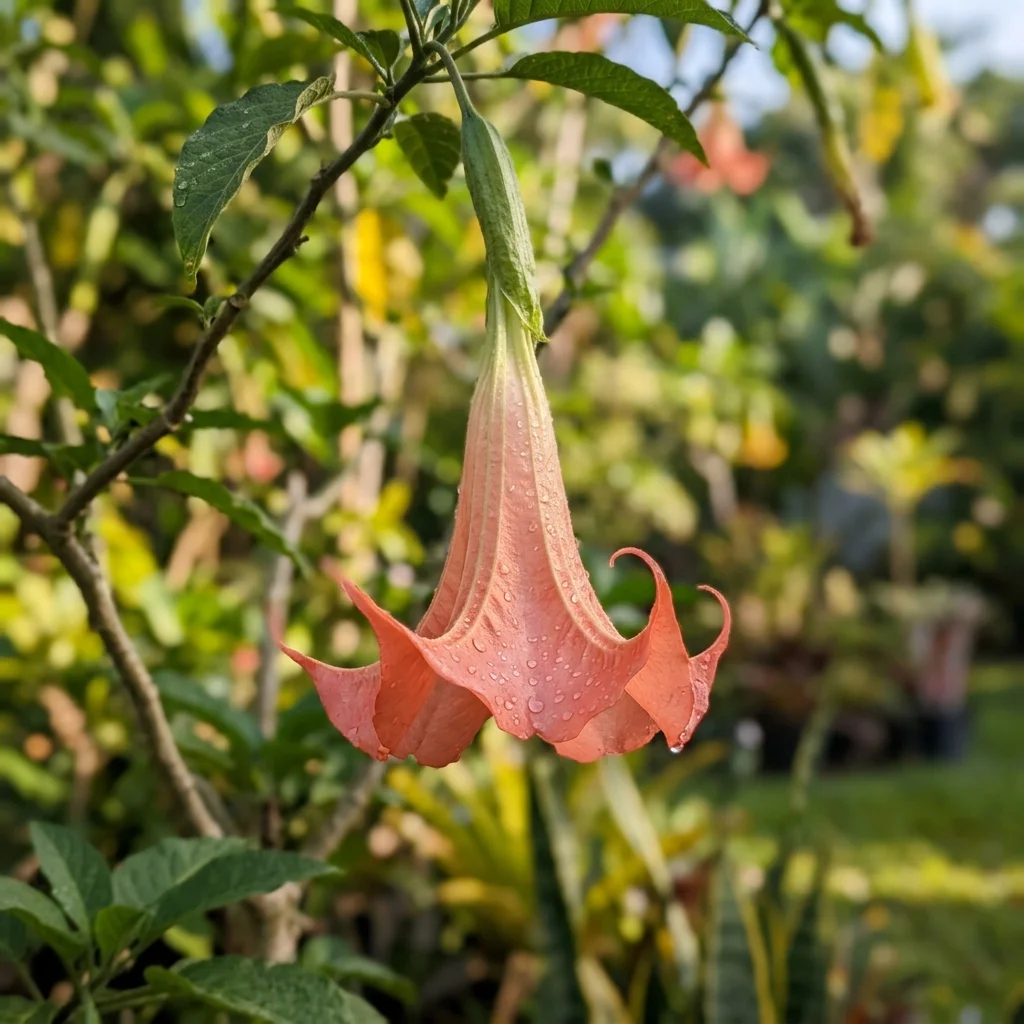
How to Identify Angel Trumpet
A large, fast-growing woody tropical shrub or small tree famous for its colossal, dangling, bell-to-trumpet-shaped fragrant blossoms.
-
✔
Key Visual Features: Large, soft, fuzzy oval-shaped green leaves with wavy margins; massive, pendulous tubular-trumpet flowers hanging straight down, reaching up to 20 inches in length.
-
✔
Color Variations: Pure snowy white, pastel peach, warm apricot, glowing yellow, soft rose-pink, and rare multi-colored double-belled varieties.
-
✔
Common Confusions: Can be confused with Datura (Devil's Trumpet) or Solandra, but Brugmansia is identified by its large woody tree-like growth habit and colossal flowers that hang straight down, whereas Datura flowers are smaller and point straight up.
Complete Care & Cultivation Guide
Follow our detailed scientific care guide to keep your Angel Trumpet thriving and gorgeous all year round.
Common Diseases & Treatment
Tomato Spotted Wilt Virus (TSWV)
Symptoms: Viral infection spread by thrips, causing ring spots, dark streaking on stems, distorted leaves, and stunted flower production.
Root Rot (Phytophthora)
Symptoms: Fungal root rot caused by wet, poorly draining soils, leading to rapidly yellowing, wilting foliage that drops despite wet soil.
Frequently Asked Questions
How dangerous is the Angel Trumpet plant?
It is extremely dangerous and potentially lethal! Every part of the Brugmansia plant—especially the seeds, leaves, and roots—contains highly toxic tropane alkaloids (scopolamine, hyoscyamine, and atropine). Ingestion causes severe hallucinations, paralysis, rapid heart rate, coma, and death. Always wear gloves when handling and keep far away from children and pets.
Why does my Angel Trumpet smell sweet only at night?
To attract night-flying sphinx moths! The intoxicating, sweet fragrance of Brugmansia is controlled by a circadian rhythm that peaks at dusk and night. This evolutionary strategy conserves energy during the day and maximizes scent emission when its primary pollinators are active.
How much water and fertilizer does Brugmansia need?
An absolute mountain! Angel Trumpets are incredibly fast-growing woody plants that produce massive leaves and giant blooms. In summer, they need daily (sometimes twice-daily) deep watering. They are also 'heavy feeders' and require weekly applications of high-potassium fertilizer to keep blooming.
What is the difference between Brugmansia (Angel's) and Datura (Devil's)?
Direction of the blooms! While closely related, Brugmansia grows into a woody tree or large shrub with massive, nodding flowers that hang straight downward. Datura is a low-growing, herbaceous annual or perennial with smaller, erect trumpet flowers that point straight upward toward the sky.