Aster Care & Identification Guide
Serving as the grand finale of the autumn garden, Asters erupt in a dense blanket of star-shaped, yellow-centered blossoms in late summer. They provide a vital ecological lifeline, offering high-energy nectar for preparing pollinators when other flowers have vanished. It is widely celebrated by botanists for its distinct environmental adaptability and structural appeal.





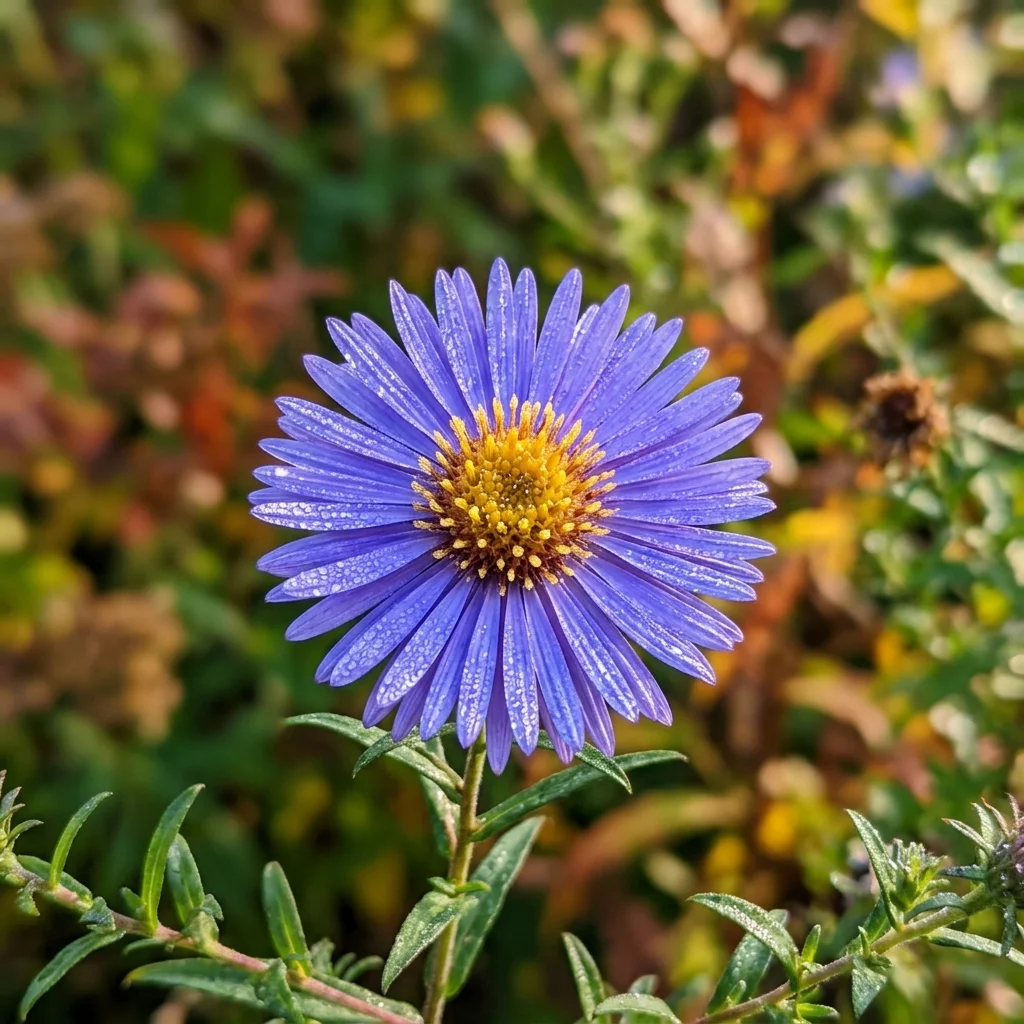
How to Identify Aster
A bushy, clump-forming herbaceous perennial producing a dense blanket of star-shaped, yellow-centered daisy-like blossoms in late summer and autumn.
-
✔
Key Visual Features: Stiff, branching stems with lance-shaped alternate leaves, and massive clusters of small, star-like flowers with narrow ray petals.
-
✔
Color Variations: Cool autumn tones: vibrant purple, deep lavender-blue, lilac pink, magenta, and clean white, all surrounding a bright golden central disc.
-
✔
Common Confusions: Can resemble wild Daisies or Fleabane, but Fleabane blooms much earlier in spring/summer and has far narrower, more numerous ray petals, while Asters bloom strictly in late summer/autumn.
Complete Care & Cultivation Guide
Follow our detailed scientific care guide to keep your Aster thriving and gorgeous all year round.
Common Diseases & Treatment
Aster Yellows (Phytoplasma)
Symptoms: Flower petals turn ugly green and leafy; plant becomes severely dwarfed and chlorotic due to leafhopper vectors.
Aster Rust (Fungal)
Symptoms: Bright orange-brown powdery pustules scatter on the undersides of leaves, causing yellowing and drop.
Frequently Asked Questions
Why are Asters considered the lifesavers of late-autumn gardens?
Asters are essential ecological champions! They bloom from late August into October when almost all other flowers have died. This makes them a critical, life-saving source of high-quality nectar and pollen for pollinating insects (like honeybees and Monarch butterflies) preparing for winter.
Are Asters safe for curious dogs and cats in the garden?
Yes! Asters are 100% non-toxic and pet-safe. They are excellent choices for family gardens and naturalistic borders where pets can run freely without any risk of poisoning.
How do I prevent my Asters from getting tall, floppy, and splitting open?
Pinch them back! To keep Asters compact and mounded with hundreds of blooms, pinch the growing tips of the stems back by half in early summer (before July 4th). This stimulates dense bushy branching and prevents flopping.
Why are my Aster flowers turning green, leafy, and deformed?
This is Aster Yellows, a systemic infection caused by a phytoplasma and spread by leafhopper insects. It damages the flower's genetics, turning petals into green leafy tissues. The disease is incurable; immediately destroy the plant to protect others.