Bellflower Care & Identification Guide
Famous for its cheerful cup- or bell-shaped blossoms that cluster along sprawling or erect stems, the Bellflower adds soft cottage charm to borders and rock gardens. Thriving in cool, damp summer breezes, it is a highly versatile perennial loved for its gentle, non-toxic nature. It is widely celebrated by botanists for its distinct environmental adaptability and structural appeal.





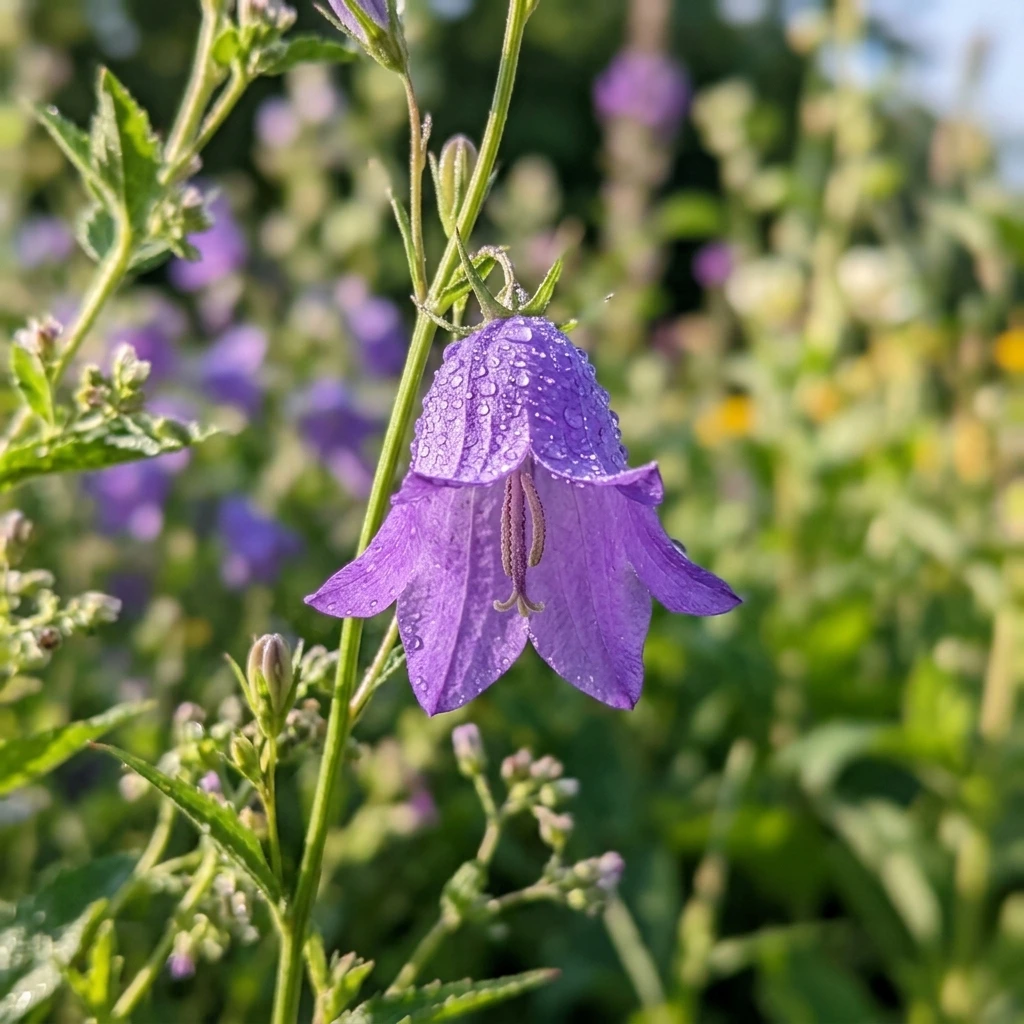
How to Identify Bellflower
A creeping or upright herbaceous perennial producing dense sheets or tall spikes of delicate, bell-shaped nodding blossoms.
-
✔
Key Visual Features: Heart-shaped or lance-shaped finely toothed leaves, and delicate nodding cup-shaped or star-shaped blossoms clustered closely along stems.
-
✔
Color Variations: Charming pastel shades of lavender blue, deep violet-purple, soft rose pink, and pristine white.
-
✔
Common Confusions: Often confused with Harebells or Canterbury Bells (which are also part of the Campanula genus), but easily recognized by its distinct cup-to-bell shaped five-lobed flowers and delicate, spreading clump growth habit.
Complete Care & Cultivation Guide
Follow our detailed scientific care guide to keep your Bellflower thriving and gorgeous all year round.
Common Diseases & Treatment
Rust (Fungal)
Symptoms: Bright orange-yellow powdery pustules scatter on the undersides of leaves, causing foliage to yellow and drop prematurely.
Powdery Mildew
Symptoms: A dusty white flour-like coating spreads across leaves and flower buds, causing stunting and leaf curling.
Frequently Asked Questions
Why is my Bellflower suddenly wilting and turning brown in mid-summer?
Bellflowers are cool-season perennials that hate intense heat! When summer temperatures consistently exceed 28°C (82°F), they suffer physiological heat stress, causing them to wilt and go dormant early. Provide them with rich afternoon shade, keep the soil evenly moist with mulch, and avoid scorching afternoon sun.
Is the Bellflower safe to plant in gardens with curious cats and dogs?
Yes! Bellflowers are 100% non-toxic and completely pet-safe. If your curious dog or cat chews on the leaves or blossoms, it will cause absolutely no harm. In fact, many species (like Campanula rapunculus) have edible roots and leaves traditionally used in European spring salads!
How do I stimulate my Bellflowers to bloom continuously all summer?
Practice regular 'deadheading'! As soon as individual bell-shaped flowers fade and turn brown, pinch or snip them off. This prevents the plant from wasting energy on seed production, forcing it to redirect its nutrients into developing new flower buds for continuous displays.
What is the best way to propagate sprawling Bellflower varieties?
Division or softwood cuttings! Sprawling rock garden Bellflowers root easily where their creeping stems touch the soil. In spring, simply dig up a section of the rooted creeping stem, slice it off, and replant it. Alternatively, take 4-inch softwood stem cuttings in early summer and root them in damp sand.