Bougainvillea Care & Identification Guide
Exuding Mediterranean charm, the Bougainvillea is a vigorous, climbing woody vine famous for its explosive cascades of paper-thin, electric-hued bracts. Thriving in heat and drought, it demands abuse over coddling to show its true colors. It is widely celebrated by botanists for its distinct environmental adaptability and structural appeal.





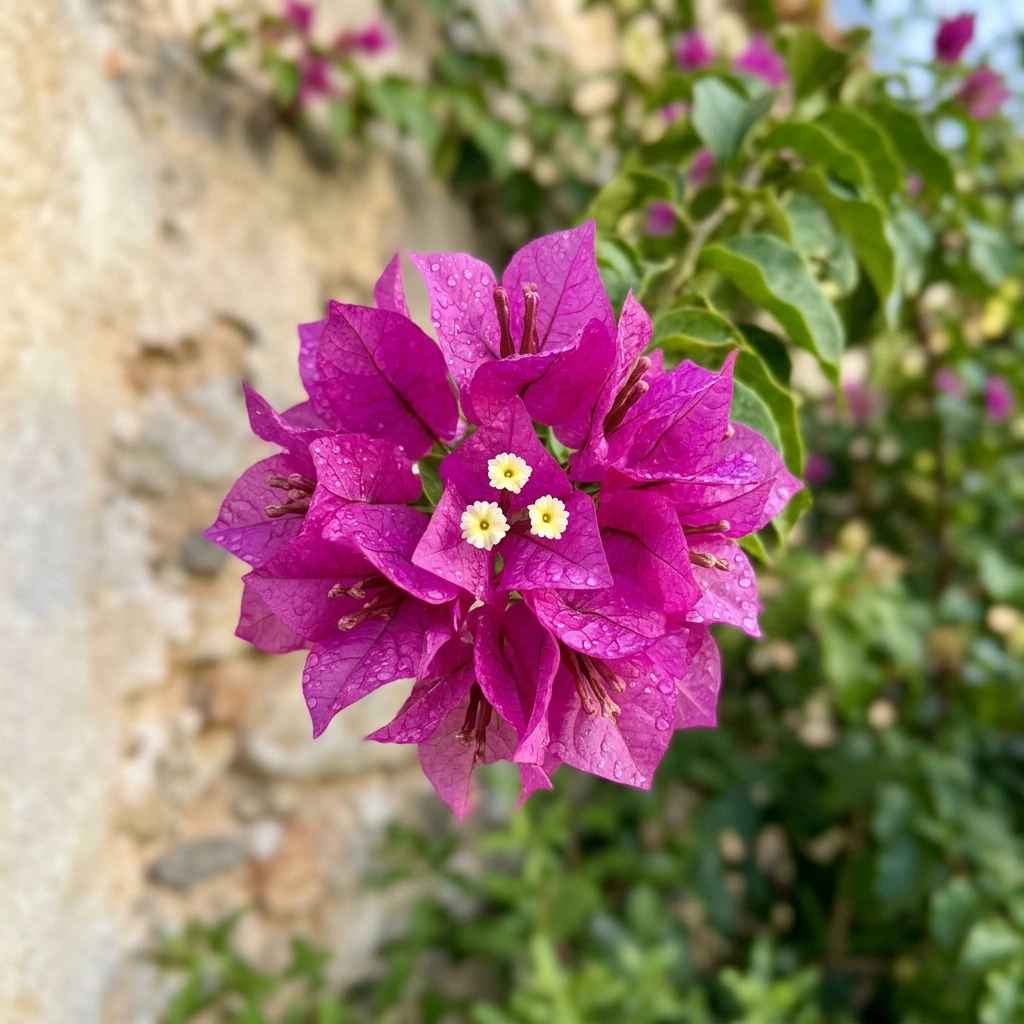
How to Identify Bougainvillea
A vigorous, scrambling, thorny woody climber producing dense, cascading sheets of paper-thin, brilliantly colored leaf-like bracts.
-
✔
Key Visual Features: Heart-shaped green leaves, woody climbing stems equipped with sharp curved thorns, and paper-thin, three-parted flower bracts.
-
✔
Color Variations: Electric neon hues including magenta-purple, hot pink, fiery orange, golden yellow, bronze, and clean white.
-
✔
Common Confusions: The papery, three-parted bracts with a tiny white tube flower in the center are highly unique and virtually unmistakable with any other climber.
Complete Care & Cultivation Guide
Follow our detailed scientific care guide to keep your Bougainvillea thriving and gorgeous all year round.
Common Diseases & Treatment
Bacterial Leaf Spot
Symptoms: Small water-soaked circular spots scatter across colorful bracts and leaves, eventually turning dark brown and dry.
Root Rot (Fungal)
Symptoms: Stunted growth and premature drop of leaves; stems turn soft and root system decays in soggy soil.
Frequently Asked Questions
Why is my Bougainvillea growing giant green leaves and thorns but no colorful flowers?
You are loving it to death! Bougainvilleas require 'drought stress' and full, blazing sun to bloom. Overwatering or applying high-nitrogen fertilizers forces aggressive green leaf and sharp thorn growth at the expense of colorful bracts. Let the soil dry completely until leaves slightly wilt before watering again.
Are the colorful paper-like petals of the Bougainvillea its true flowers?
No! The spectacular, paper-thin colorful structures are modified leaves called 'bracts'. They exist to attract pollinators. The true flowers are the tiny, creamy-white tubular blossoms nested inside the center of the three bracts.
Is the Bougainvillea safe to plant in a garden with curious domestic pets?
Bougainvillea has low chemical toxicity but poses high physical danger. The woody vines are covered in extremely sharp, stiff thorns that can cause deep puncture wounds, scratches, and eye injuries in dogs and cats. Its milky sap can also cause mild skin dermatitis and vomiting if chewed.
How do I prune my Bougainvillea to maximize its colorful displays?
Bougainvilleas only bloom on 'new wood' (fresh spring growth). Prune them heavily in late winter or early spring just as dormancy ends. Pinching back the soft green tips of new shoots also stimulates branching, leading to far more dense flower clusters.