Bromeliad Care & Identification Guide
An architectural and vibrant tropical marvel, Bromeliads are famous for their stunning rosettes of stiff, strap-like leaves and central flower spikes that boast electric, long-lasting colors. Adapting beautifully as indoor house plants, they draw water through a unique central reservoir, bringing an instant touch of exotic jungle luxury and modern botanical style to any space. It is widely celebrated by botanists for its distinct environmental adaptability and structural appeal.





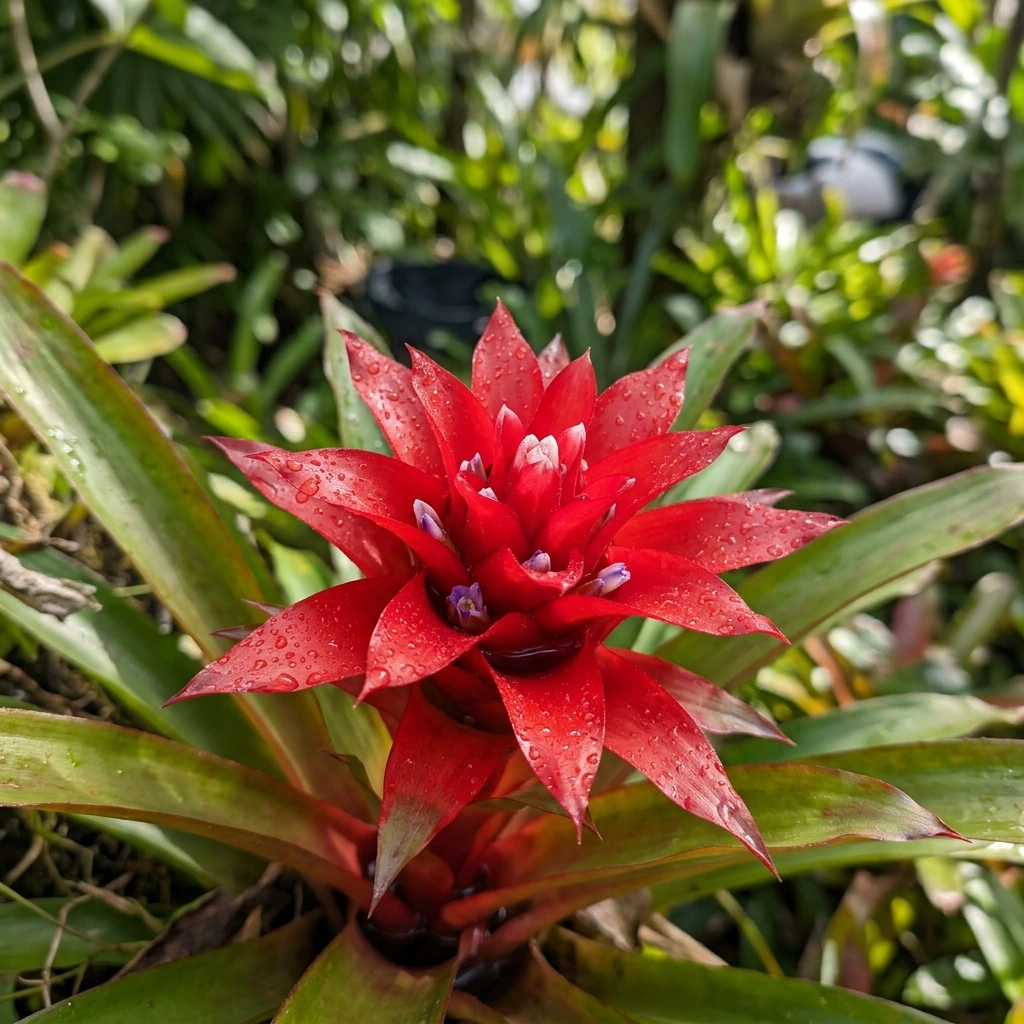
How to Identify Bromeliad
An exotic, rosette-forming tropical epiphyte characterized by stiff, sword-shaped leaves arranged in a circular chalice that collects water, topped with a dramatic, waxy central floral spike.
-
✔
Key Visual Features: Stiff, leathery, strap-like leaves with smooth or finely spined margins that overlap closely at the base to form a watertight central reservoir; waxy, long-lasting bracts.
-
✔
Color Variations: Leaf bands of silver, green, and deep maroon, with central flower bracts in electric shades of scarlet red, hot pink, vivid orange, bright yellow, and deep purple.
-
✔
Common Confusions: Can be confused with Agave or small Dracaena, but Bromeliads are easily identified by their hollow central cup structure that holds water, soft fleshy non-spiny leaves, and waxy, tropical central inflorescence spikes.
Complete Care & Cultivation Guide
Follow our detailed scientific care guide to keep your Bromeliad thriving and gorgeous all year round.
Common Diseases & Treatment
Heart Rot (Phytophthora)
Symptoms: A devastating fungal rot causing the leaves at the center of the rosette to turn black, soft, mushy, and pull out easily.
Root Rot (Pythium)
Symptoms: Soggy, rotted roots resulting from planting in heavy soil that holds excessive moisture, causing foliage to wilt.
Frequently Asked Questions
How do I water my Bromeliad?
Through its central cup! In nature, Bromeliads are epiphytes that catch water in their overlapping leaf rosette. Keep this central 'tank' or 'urn' about half-full of fresh rainwater or distilled water. Empty and flush this cup once a week to prevent bacteria and mosquitoes. Keep the potting soil only lightly damp.
Do Bromeliads die after they flower?
Yes, they are monocarpic! Once a Bromeliad blooms, that specific mother plant will slowly stop growing and die over a period of many months. However, before it dies, it will produce baby offsets called 'pups' around its base. You can gently slice these pups off when they are 1/3 the size of the mother to grow new plants.
Is the Bromeliad safe for my cats and dogs?
Yes! Bromeliads are completely non-toxic to dogs, cats, and horses. They are one of the safest and most visually spectacular tropical house plants you can grow in a pet-friendly home, though their stiff leaves might still be a target for pets to play with.
Why is my Bromeliad losing its color?
Not enough light! While Bromeliads hate hot, direct sunlight, they require bright, indirect, filtered light to maintain their intense foliage pigments and colorful bracts. If placed in a dark corner, the vibrant pink, red, or orange hues will fade to a dull green.