Daylily Care & Identification Guide
The ultimate carefree perennial, the Daylily (Hemerocallis) is beloved by gardeners worldwide for its rugged adaptability, lush grass-like foliage, and spectacular trumpet-shaped blossoms. While each individual flower lasts for only a single day, a single established plant produces a non-stop, weeks-long parade of summer color. It is widely celebrated by botanists for its distinct environmental adaptability and structural appeal.





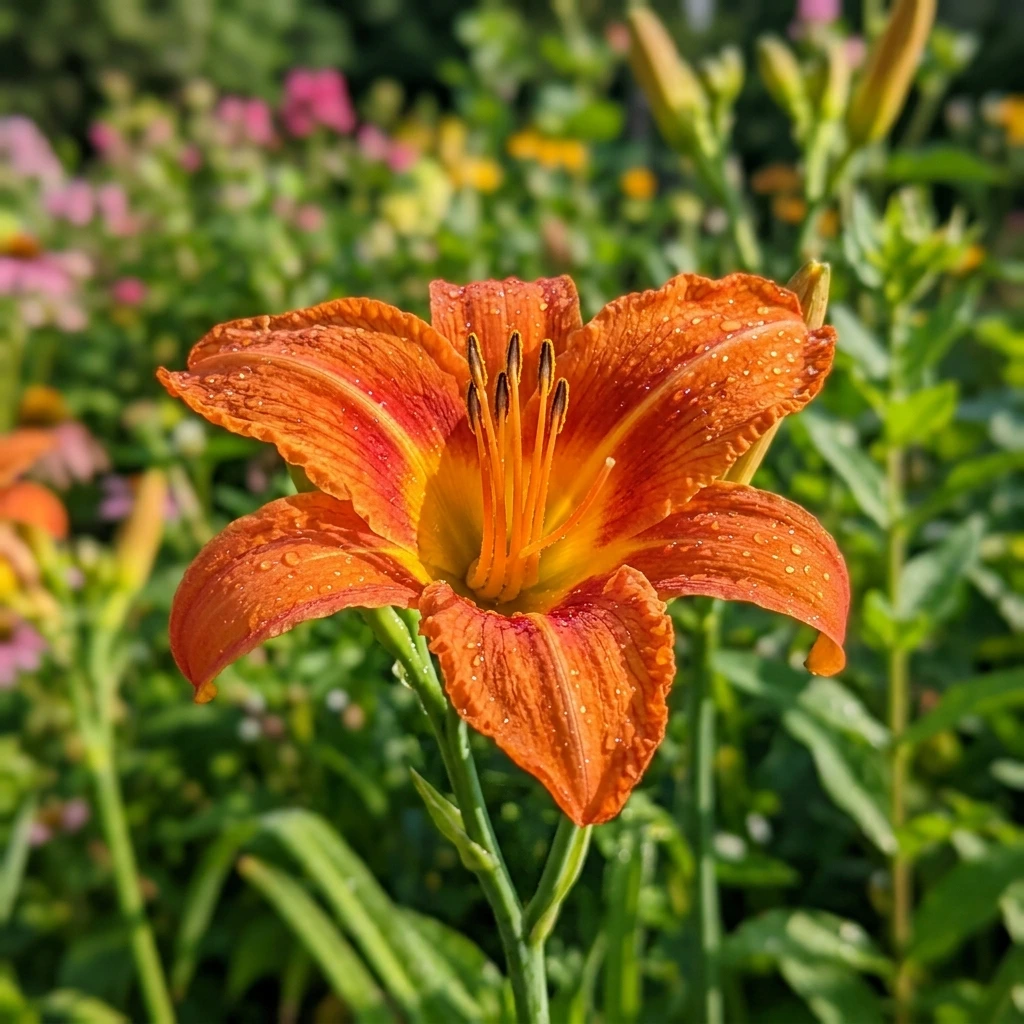
How to Identify Daylily
A clump-forming perennial characterized by dense mounds of arching, grass-like leaves and tall, leafless stalks (scapes) bearing multiple large, trumpet-shaped blossoms.
-
✔
Key Visual Features: Long, narrow, arching, strap-like green leaves that form a lush, fountain-like mound; flower stems are completely leafless and branched at the top.
-
✔
Color Variations: An incredibly vast color range including yellow, orange, red, pink, purple, cream, and stunning multi-toned blooms with contrasting eye zones.
-
✔
Common Confusions: Often confused with True Lilies (Lilium), but Daylilies are easily distinguished by their fountain-like mound of grass-like basal leaves and leafless flower stalks (true lilies have leafy, single, upright stems with whorled leaves).
Complete Care & Cultivation Guide
Follow our detailed scientific care guide to keep your Daylily thriving and gorgeous all year round.
Common Diseases & Treatment
Daylily Rust (Fungal)
Symptoms: Orange-yellow powdery pustules appearing on the undersides of the strap-like leaves, causing them to turn brown, dry out, and die.
Leaf Streak (Fungal)
Symptoms: Central yellow stripe along the leaf midrib that turns brown and shrivels, starting from the leaf tips.
Frequently Asked Questions
Why does the Daylily have the scientific name Hemerocallis?
The name comes from two Greek words: hemera, meaning 'day', and kallos, meaning 'beauty'. This perfectly describes the plant's unique botanical habit: each beautiful, trumpet-shaped bloom opens early in the morning and dies by sunset, lasting only 24 hours. However, a single mature plant produces dozens of buds that open sequentially for weeks!
Are Daylilies toxic to cats, like true Lilies are?
No! This is an important distinction! True lilies (members of the Lilium and Erythronium genera) are extremely toxic to cats, causing sudden, fatal kidney failure from even a speck of pollen. Daylilies belong to the genus Hemerocallis and are non-toxic to dogs and cats, making them a safe choice for pet-friendly yards.
What are the black, swollen, deformed flower buds on my Daylily?
This is caused by the Daylily Gall Midge! The microscopic larvae of this tiny fly feed inside the developing flower buds, causing them to become swollen, distorted, and unable to open, rotting into a mushy liquid. Treatment: Hand-pick and destroy all swollen, infected buds immediately. Do not compost them.
How do I divide overgrown Daylily clumps?
Daylilies are exceptionally vigorous growers. Every 3 to 5 years, the clumps become overcrowded, leading to fewer flowers. In early spring or late summer after blooming, dig up the entire root ball, use a sharp spade to divide the fleshy root system into smaller sections with 3-4 leafy fans each, and replant.