Gloxinia Care & Identification Guide
A luxurious and hypnotic indoor aristocrat, Gloxinia (Sinningia speciosa) is world-famous for its massive, bell-shaped blossoms that boast a plush, velvety texture. Surrounded by a rosette of broad, fuzzy green leaves, its rich, saturated flowers bloom in magnificent clusters during summer. Thriving as a pet-safe houseplant, it requires a dormant resting period as a tuber in winter, rewarding patient indoor gardeners with a royal, colorful display year after year. It is widely celebrated by botanists for its distinct environmental adaptability and structural appeal.





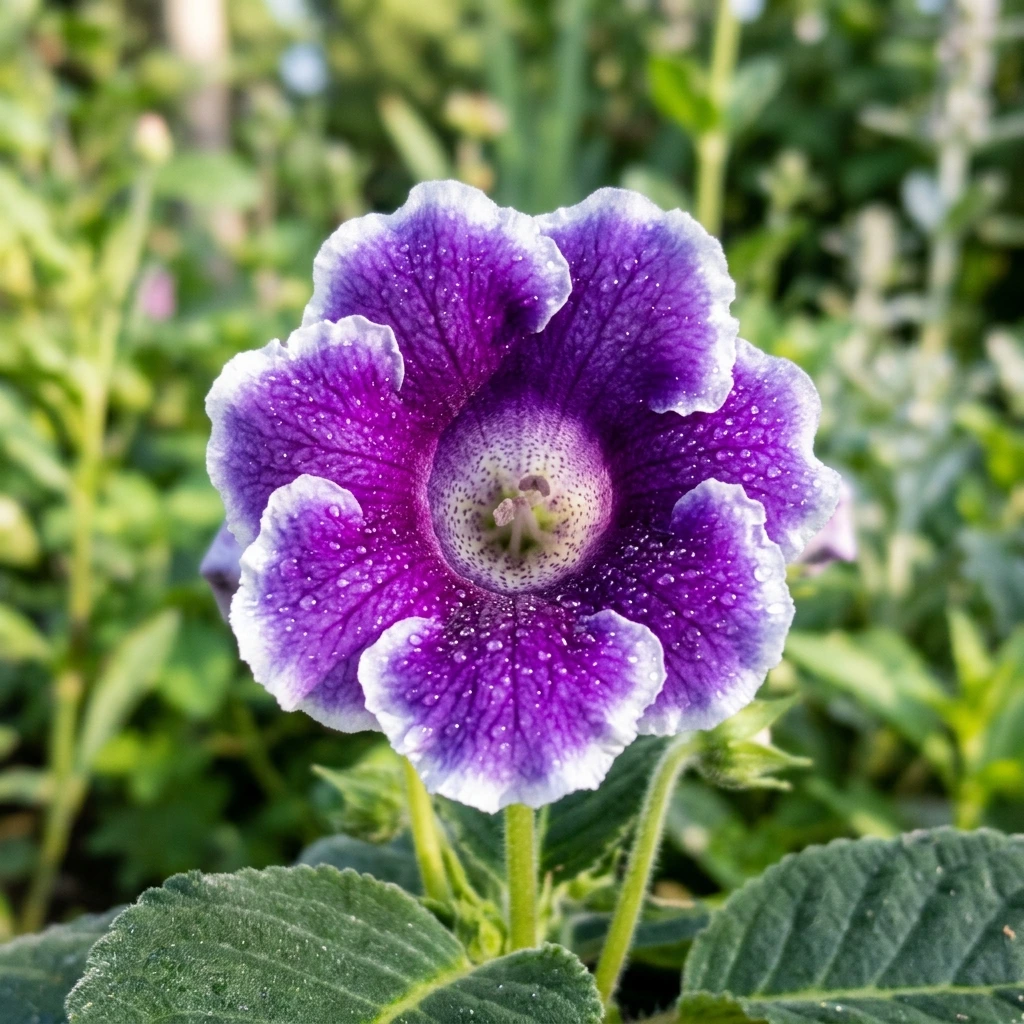
How to Identify Gloxinia
A compact, low-growing herbaceous tuberous perennial forming a neat rosette of large, fuzzy, thick leaves, topped with massive, waxy bell-shaped flowers.
-
✔
Key Visual Features: Broadly oval, thick, dark-green velvety leaves with scalloped margins and prominent light-green veins; colossal, trumpet-to-bell-shaped upright flowers with ruffled lobes.
-
✔
Color Variations: Saturated crimson-red, deep royal purple, velvet indigo, soft rose-pink, and pure white, often featuring stunning white-edged borders or intense freckled throats.
-
✔
Common Confusions: Can be confused with African Violets due to fuzzy leaves, but Gloxinia is easily distinguished by its truly colossal (up to 3 inches wide) single bell-shaped flowers and thick, woody underground tubers.
Complete Care & Cultivation Guide
Follow our detailed scientific care guide to keep your Gloxinia thriving and gorgeous all year round.
Common Diseases & Treatment
Gray Mold (Botrytis cinerea)
Symptoms: Fuzzy, gray-brown fungal mold coating leaves, flower buds, and stems in cool, stagnant, humid air, causing tissues to turn soft and mushy.
Tuber Rot (Fungal)
Symptoms: Soft, decaying, watery collapse of the underground tuber caused by soggy, compacted, cold potting soil.
Frequently Asked Questions
How do I water my Gloxinia without killing it?
Water from the bottom or at the soil level only! Gloxinia leaves are covered in soft, velvety hairs that trap water droplets. If water sits on the foliage, it rapidly blocks respiration and invites devastating gray mold (Botrytis). Always water the soil directly beneath the leaves, or place the pot in a shallow tray of water for 15 minutes until the soil absorbs moisture.
Is Gloxinia safe for my pets?
Yes! Gloxinia is completely non-toxic to dogs, cats, and horses. It is one of the most stunning, high-impact flowering houseplants you can grow in a pet-friendly home, allowing you to enjoy massive, velvety tropical blooms without any safety concerns.
What do I do when my Gloxinia stops blooming and leaves turn yellow?
It is entering winter dormancy! Do not panic. Once the summer flowering cycle finishes, the plant will naturally yellow and its foliage will die back. Stop watering and fertilizing completely. Cut off the dry leaves and store the pot containing the tuber in a dark, cool room (15°C) for 2 to 3 months. In early spring, resume light watering and place it in bright indirect light to wake it up.
How do I propagate Gloxinia?
Through leaf cuttings! Like African Violets, you can easily grow new Gloxinias from a single healthy leaf. Slice a leaf with a 1-inch stem, insert it at a 45-degree angle into moist peat and perlite, keep it warm and humid, and a tiny baby tuber will form at the base of the leaf stem in a few weeks.