Hyacinth Care & Identification Guide
Prized for possessing one of the most intense, sweet, and intoxicating fragrances in the plant kingdom, the Hyacinth produces dense, cylindrical columns packed with tiny, bell-shaped waxy florets. Commonly forced indoors in beautiful hourglass glass water vases, they are iconic symbols of early spring. It is widely celebrated by botanists for its distinct environmental adaptability and structural appeal.





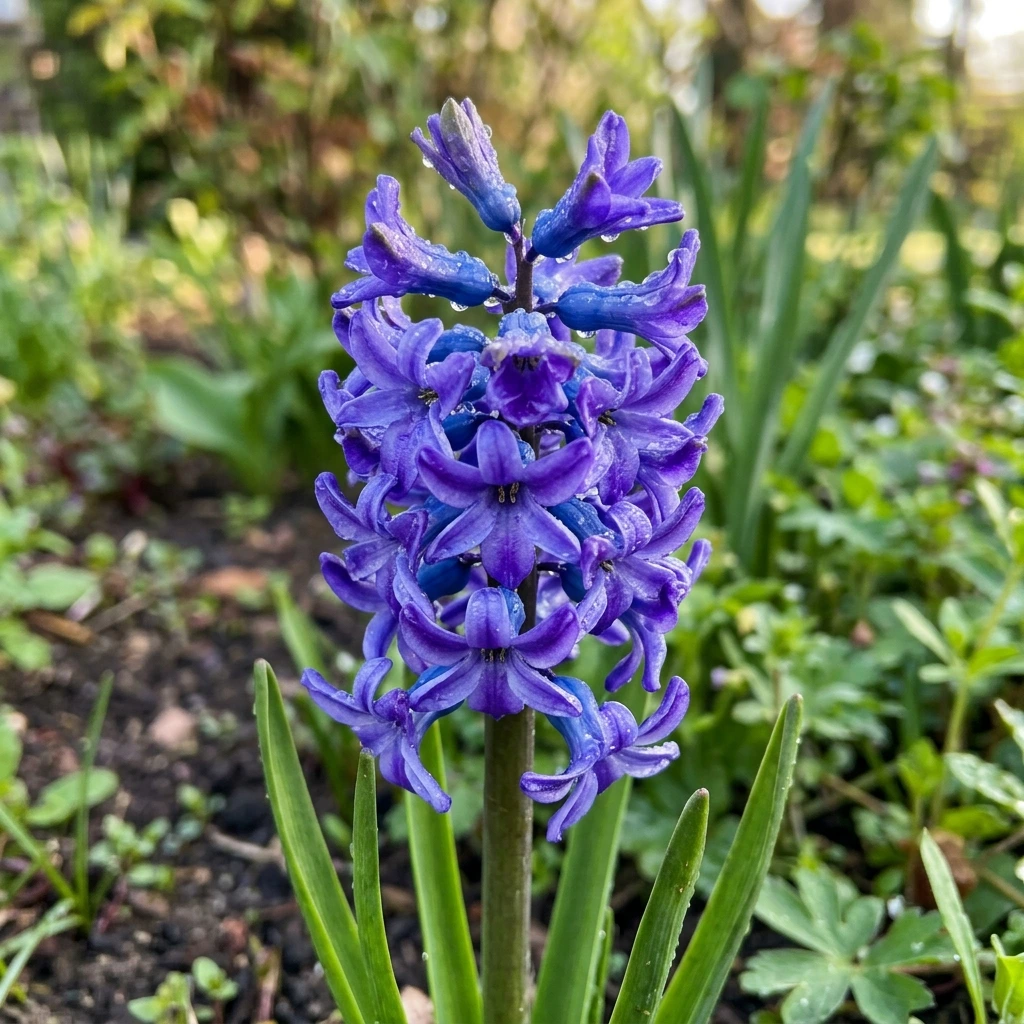
How to Identify Hyacinth
A highly fragrant spring bulb producing a single, dense cylindrical spike crowded with waxy, star-like reflexed florets.
-
✔
Key Visual Features: Fleshy, strap-like upright green leaves surrounding a thick, central hollow flower stem packed with waxy, bell-shaped florets.
-
✔
Color Variations: Brilliant cobalt-blue, deep violet, soft pink, rose-red, pure white, and pastel yellow.
-
✔
Common Confusions: Can be confused with Grape Hyacinths (Muscari), but distinguished by its much larger size, highly intense fragrance, and open, waxy star-shaped florets compared to Muscari's tiny bead-like closed cups.
Complete Care & Cultivation Guide
Follow our detailed scientific care guide to keep your Hyacinth thriving and gorgeous all year round.
Common Diseases & Treatment
Yellow Rot (Xanthomonas)
Symptoms: Bulbs rot internally into a yellow, foul-smelling slime; leaves emerge yellow, distorted, and die rapidly.
Penicillium Blue Mold
Symptoms: Stored bulbs develop dry sunken spots covered in a blue-green powdery mold, leading to weak growth or bud failure.
Frequently Asked Questions
Why do my hands itch after handling Hyacinth bulbs?
Hyacinth bulb scales contain microscopic needle-like crystals of calcium oxalate. When they rub against your skin, they act like tiny glass shards, causing itching and irritation. Wear protective gloves when handling bulbs.
How do I grow a Hyacinth in water using a glass vase?
Place the bulb in the top hourglass cup of a hyacinth vase, filling the bottom with water just below the bulb base. Store in a dark, cold room (5°C) for 10 weeks to grow roots, then move to a bright room to bloom.
Why did my Hyacinth flower stalk bloom extremely short?
This is known as 'short-stalking.' It is caused by an inadequate cold dormancy period. Hyacinth bulbs require at least 12 weeks of temperatures below 7°C (45°F) to develop the hormone needed to stretch the flower stem upward.
Will my forced water-grown Hyacinth bloom again next year?
Bulbs forced in water deplete all their stored energy and rarely bloom well again. It is best to discard them or plant them in the garden, where they may recover and produce smaller, wild-looking blooms after a couple of years.