Lantana Care & Identification Guide
An ultra-tough, sun-worshipping tropical powerhouse, Lantana is famous for its dense, rounded clusters of tiny, tubular flowers that morph through a kaleidoscope of colors on a single stem. Thriving in blazing heat, poor soils, and severe drought, this highly resilient shrub is a magnet for native butterflies and hummingbirds, but its rough, aromatic leaves and glossy black berries conceal a severe triterpene liver toxicity that demands pet-safe caution. It is widely celebrated by botanists for its distinct environmental adaptability and structural appeal.





How to Identify Lantana
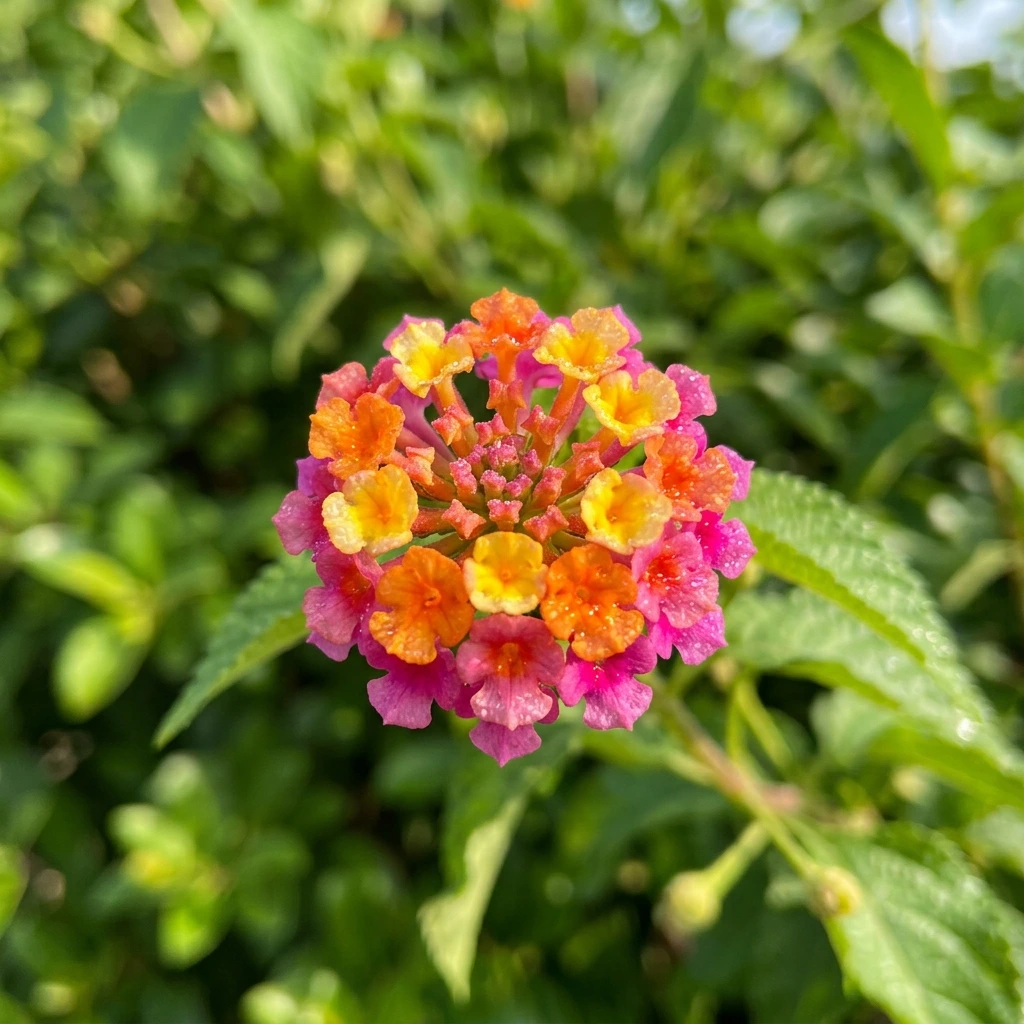
A sprawling, woody tropical evergreen shrub featuring rough, sandpapery leaves and small, rounded clusters of tiny, color-changing tubular flowers.
-
✔
Key Visual Features: Opposite, oval-shaped leaves with highly serrated margins and a rough, sandpapery (scabrid) upper surface that releases a strong, pungent herbal aroma when crushed.
-
✔
Color Variations: Stunning multi-colored clusters featuring transitions of bright yellow, neon orange, scarlet red, hot pink, purple, and pure white on a single flower head.
-
✔
Common Confusions: Can be confused with Verbena due to flower shape, but Lantana is easily identified by its woody, shrub-like growth habit, distinctly rough sandpapery leaves, and multi-colored flower heads.
Complete Care & Cultivation Guide
Follow our detailed scientific care guide to keep your Lantana thriving and gorgeous all year round.
Common Diseases & Treatment
Sooty Mold (Fungal)
Symptoms: A black, powdery coating covering the leaves, caused by mold growing on the sticky honeydew excreted by whiteflies or aphids.
Root Rot (Pythium)
Symptoms: Decay and rotting of the root system caused by planting in heavy, clay soils that retain cold water during winter.
Frequently Asked Questions
Why do Lantana flowers change color on the same cluster?
It is a sign for pollinators! A single Lantana cluster contains younger flowers in the center and older flowers on the outer ring. Once a flower is successfully pollinated, it undergoes a physiological shift, changing color (e.g., from yellow to red). This change signals to butterflies that the flower no longer has nectar, directing them to the unpollinated yellow flowers.
How dangerous is Lantana to dogs and cats?
It is highly toxic! All parts of the Lantana camara plant—especially the rough leaves and the green, unripe berries—contain triterpene acids called lantadene A and B. Ingestion causes liver toxicity, vomiting, bloody diarrhea, dark urine, and a dangerous condition called photosensitization, where the pet's skin becomes highly sensitive to sunlight, leading to painful sunburns and sloughing. Keep pets away.
Is Lantana invasive?
Yes, in warm, frost-free regions! Because of its extreme toughness and the fact that birds widely spread its seeds, Lantana camara is classified as a highly invasive weed in tropical regions like Florida, Hawaii, and parts of Australia. Choose sterile, non-invasive cultivars for your garden if you live in these warm climates.
Does Lantana repel mosquitoes?
Yes! Lantana leaves contain natural aromatic essential oils, including caryophyllene and eucalyptol. When the leaves are crushed, they release a pungent, citrusy-herbal fragrance that acts as a natural deterrent against mosquitoes and other biting insects.