Epiphyllum

Orchid Cactus Care & Identification Guide

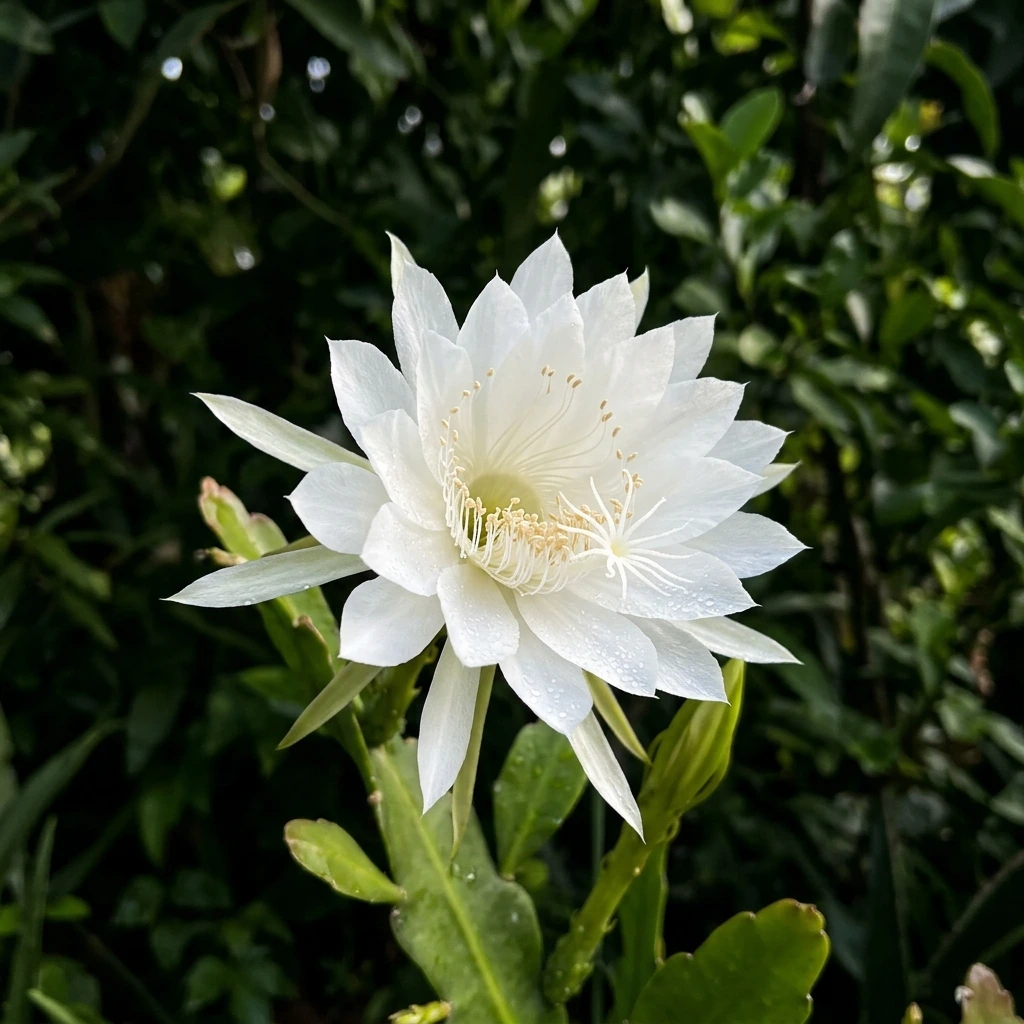
A legendary and hypnotic botanical wonder, the Orchid Cactus (Epiphyllum) is celebrated for its trailing, flat, leaf-like green stems and massive, breathtakingly beautiful night-blooming flowers. Radiating an intense, intoxicating fragrance, its giant, starburst blossoms open rapidly at dusk and fade by dawn, creating a magical, fleeting nocturnal spectacle that gardeners treasure. It is widely celebrated by botanists for its distinct environmental adaptability and structural appeal.


Sunlight Icon
Sunlight Bright Indirect
Watering Icon
Watering Moderate
Soil Mix Icon
Soil Mix Rich, organic
Temperature Icon
Temperature 15°C - 32°C
Toxicity Warning Icon
Toxicity Non-toxic
Botanical macro photography of Orchid Cactus (Epiphyllum) - Plant AI care database

How to Identify Orchid Cactus

A dramatic, trailing epiphytic cactus characterized by long, flat, fleshy, leaf-like scalloped stems that produce massive, fragrant nocturnal blossoms.

  • Key Visual Features: Long, arching, flattened, leaf-like green stems (cladodes) with deeply scalloped or wavy margins and a prominent woody central rib; completely devoid of sharp spines.
  • Color Variations: Enormous glowing white, cream, and pale yellow night-blooming flowers, with modern day-blooming hybrids in electric pink, scarlet red, orange, and purple.
  • Common Confusions: Can be confused with Christmas Cactus (Schlumbergera) or Dragon Fruit stems, but the Orchid Cactus is identified by its much larger, longer, continuous flat scalloped stems and truly colossal (up to 12 inches wide) starburst-like flowers.
💡 Plant AI Tip: If you are not sure, take a photo with Plant AI to identify it instantly.

Complete Care & Cultivation Guide

Follow our detailed scientific care guide to keep your Orchid Cactus thriving and gorgeous all year round.

Orchid Cactus requires a highly measured water supply. Typically, water thoroughly until it drains out of the bottom holes only when the top soil layer becomes dry. Based on its specific characteristics: Moderate (Keep soil damp but never soggy; water when the top 1 inch of soil is dry; do not let the potting mix dry out completely like desert cacti). Never allow the roots to sit in stagnant water as it leads to root decay. Reduce watering significantly during autumn and winter dormant phases.
Regular deadheading is essential for Orchid Cactus. Snip off faded, spent flowers immediately to prevent seed production and redirect the plant's energy into producing fresh new buds. Trim yellowing or damaged foliage near the stem base using sterilized bypass shears.
Feed Orchid Cactus heavily in spring and summer with a fertilizer high in phosphorus to support prolific bud development and rich petal color. Apply a diluted balanced flower liquid fertilizer every 2 to 3 weeks. Avoid excess nitrogen which results in massive green leaves but sparse blooms.
Orchid Cactus requires Bright, indirect filtered light (Unlike desert cacti, it hates intense, direct sun; thrives in filtered light under trees or behind sheer curtains). Provide bright, consistent indirect filtered sunlight daily. Avoid exposing the foliage to harsh direct midday sun which can easily bleach, scorch, or dry out the delicate leaves.
The optimal substrate for Orchid Cactus is a loose, rich, exceptionally fast-draining potting soil. Based on requirements: Rich, organic, highly porous, acidic potting medium (Equal parts orchid bark, peat moss, perlite, and coarse sand; pH 5.5-6.5). A standard high-aeration mix consists of 50% organic peat moss or coco coir, 30% chunky orchid bark or pumice, and 20% coarse perlite to facilitate excellent oxygen circulation.
Easily propagate Orchid Cactus using stem cuttings in spring. Cut a healthy 4-inch stem section just below a node, remove lower leaves, and submerge the node in clean water or moist perlite mix until active roots develop in 3 weeks.
Thrives in standard warm environmental conditions: 15°C - 32°C (60°F - 90°F); requires protection from cold drafts and frost, ceases growth if temperatures drop below 10°C (50°F). Keep the plant safe from cold drafts, drafty windows, air conditioning vents, or direct heaters. Ensure winter protection is maintained to prevent cellular damage and floppy leaf decay.
Choose a heavy unglazed clay or terracotta container with multiple bottom drainage holes. Terracotta allows excess soil moisture to breathe and evaporate safely. Repot the plant every 1 to 2 years in spring, upgrading to a container that is 2 inches wider.
Regularly inspect Orchid Cactus leaves for spider mites spinning fine webs under dusty leaves, cottony mealybugs hiding in leaf joints, or scale insects on stems. Treat immediately by wiping foliage with organic neem oil solution or spraying with mild insecticidal soap every 7 days.
Orchid Cactus can be affected by: • **Stem Rot (Fungal)**: Symptoms include Black, watery, mushy patches spreading rapidly along the flat stems in excessively cold or waterlogged soil conditions.. *Action*: Immediately trim away infected stem parts using sterile shears, apply sulfur powder, and repot in highly porous, warm soil. | • **Cactus Scale (Insects)**: Symptoms include Small, round, flat brown or white armored scales clinging to the flat stems, sucking sap and weakening growth.. *Action*: Gently scrape scales off using a soft toothbrush dipped in rubbing alcohol, or spray with organic insecticidal soap.. Always prioritize soil drainage and proper air circulation. Spray leaves with organic fungicides like copper fungicide or chamomile tea sprays to prevent bacterial leaf spot spreads.
The secret to a gorgeous Orchid Cactus is consistent placement and cleaning. Avoid rotating or moving the plant frequently as sudden environmental shifts can induce shock. Wipe leaves with a damp microfiber cloth monthly to clear dust and enhance natural photosynthesis.

Is your Orchid Cactus foliage turning brown or dropping?

Don't let it wither away. Take a photo with Plant AI to diagnose pests and leaf spots instantly.

Diagnose My Plant

Common Diseases & Treatment

Stem Rot (Fungal)

Symptoms: Black, watery, mushy patches spreading rapidly along the flat stems in excessively cold or waterlogged soil conditions.

Action: Immediately trim away infected stem parts using sterile shears, apply sulfur powder, and repot in highly porous, warm soil.

Cactus Scale (Insects)

Symptoms: Small, round, flat brown or white armored scales clinging to the flat stems, sucking sap and weakening growth.

Action: Gently scrape scales off using a soft toothbrush dipped in rubbing alcohol, or spray with organic insecticidal soap.

Frequently Asked Questions

Why are the stems on my Orchid Cactus flat like leaves?

It is an evolutionary adaptation! Epiphyllum species are epiphytic cacti native to tropical rainforests. Over millions of years, they abandoned true leaves to prevent water loss and developed flat, wide, segmented photosynthetic stems (cladodes) to capture filtered light high in the jungle canopy.

Is the Orchid Cactus safe for my cats and dogs?

Yes! The Orchid Cactus is completely non-toxic to dogs and cats. Unlike desert cacti, it does not possess sharp, painful needles (only tiny, soft bristles when young) and contains no toxic alkaloids, making it a beautiful and safe choice for households with pets.

How do I get my Epiphyllum to produce its giant flowers?

Mature stems, tight roots, and cool winters! First, flowers only form on mature stems that are at least 2 years old. Second, keep the plant slightly rootbound. Finally, provide a cool, dry rest period in late winter (10°C-15°C) with reduced water for 6 weeks to trigger bud initiation.

Why do Epiphyllum flowers open only at night?

To attract nocturnal pollinators! In their native rainforests, Epiphyllum species rely on large night-flying hawk moths and bats for pollination. Opening their giant, highly fragrant, glowing white blossoms under the cover of darkness maximizes their visibility to these specialized nocturnal pollinators.

No more dying plants. Grow healthy greens today!

Get Started for Free