Petunia Care & Identification Guide
Petunias are the undisputed queens of summer containers, offering a cascading waterfall of trumpet-shaped blooms. Thriving in blazing sun, they require regular feeding and strategic summer pruning to sustain their continuous, explosive color output. It is widely celebrated by botanists for its distinct environmental adaptability and structural appeal.




How to Identify Petunia
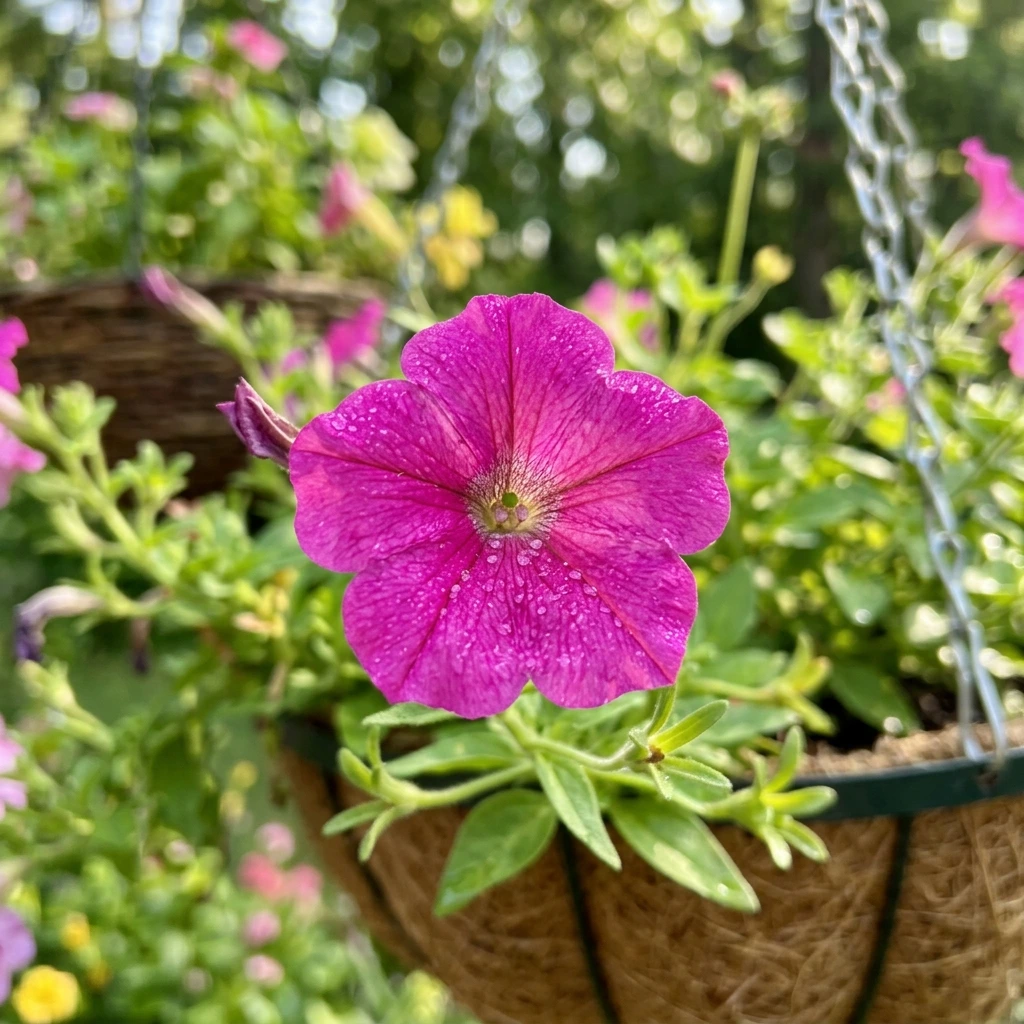
A branching, sprawling, or trailing summer annual with slightly fuzzy, sticky foliage and abundant funnel-shaped blossoms.
-
✔
Key Visual Features: Soft, ovate leaves covered in sticky glandular hairs, and trumpet-shaped blossoms with fused petals and a deep central throat.
-
✔
Color Variations: A vast array including royal purple, bubblegum pink, pure white, deep red, black, and galaxy-striped patterns.
-
✔
Common Confusions: Often confused with Calibrachoa (Million Bells), but Petunias have significantly larger flowers (2-4 inches) and broader, stickier leaves, whereas Calibrachoa flowers are miniature (1 inch) and the plants are more woody.
Complete Care & Cultivation Guide
Follow our detailed scientific care guide to keep your Petunia thriving and gorgeous all year round.
Common Diseases & Treatment
Botrytis Grey Mold
Symptoms: Tissue-thin flowers develop soggy, water-soaked brown spots, followed by a thick fuzzy gray mold after rain.
Tobacco Mosaic Virus (TMV)
Symptoms: Leaves develop yellow mottled mosaic patterns, become severely distorted, and stunt plant growth.
Frequently Asked Questions
Why do my Petunias look sticky and stop blooming in mid-summer?
Petunias naturally produce a sticky resin on their hairy stems to capture small insects. If blooming stops, they are exhausted and overgrown. Cut back the trailing stems by 1/3 in mid-summer (shearing) to stimulate dense new shoots and a fresh wave of flowers.
How do I save my Petunia blossoms after a heavy rainstorm?
Petunias have delicate, tissue-thin petals that rot easily when soaked. Remove any soggy, decaying flower heads immediately (deadheading) to prevent Botrytis gray mold from spreading and killing the healthy stems.
Are Petunias safe to plant around household pets?
Yes! Petunias are 100% non-toxic and safe for cats, dogs, and children. They are perfect choices for low hanging baskets, window boxes, and patio planters where pets can easily reach.
Why are the lower leaves of my Petunias turning yellow?
This is usually a sign of iron deficiency (chlorosis) or overwatering in dense soil. Petunias are heavy feeders that require slightly acidic, fast-draining soil. Apply a liquid fertilizer containing chelated iron once a month.