Plumeria Care & Identification Guide
The legendary flower of Hawaiian leis, Plumeria (Frangipani) is a thick-stemmed tropical succulent shrub. Famous for its intoxicatingly sweet, almond-citrus scent, it requires hot direct sun, gravelly soil, and a strict dry winter dormancy to survive. It is widely celebrated by botanists for its distinct environmental adaptability and structural appeal.





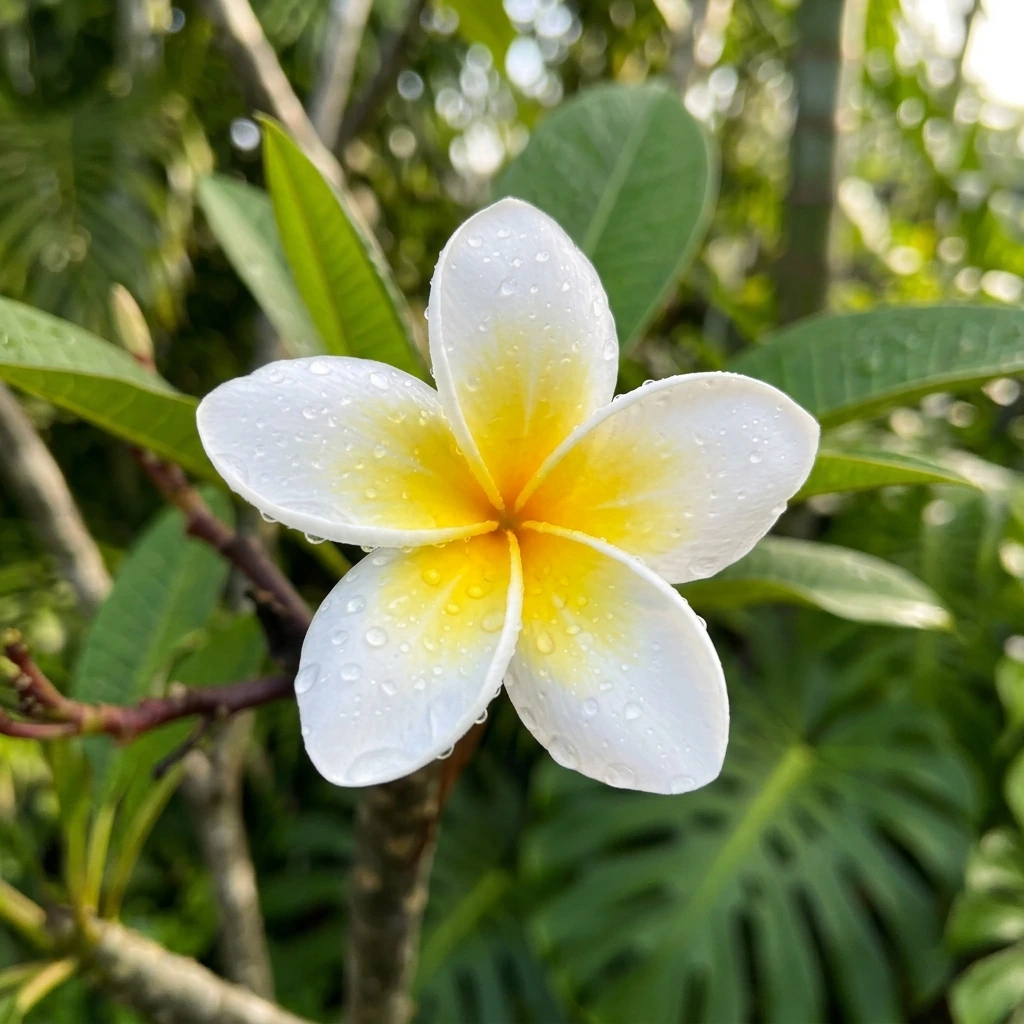
How to Identify Plumeria
A thick, semi-succulent woody tropical tree with large leathery leaves cluster-growing at branch tips, producing highly fragrant spiral flowers.
-
✔
Key Visual Features: Stubby, fleshy gray-green branches, large lance-shaped leathery leaves up to 15 inches, and five-petaled spiral blossoms.
-
✔
Color Variations: Luminous white with bright yellow centers, rich coral-pink, sunset orange, ruby red, and pastel tricolors.
-
✔
Common Confusions: Branching structure can resemble Euphorbia lactea when bare, but easily distinguished by its massive leathery leaves and signature fragrant, non-spiny 5-petaled blossoms.
Complete Care & Cultivation Guide
Follow our detailed scientific care guide to keep your Plumeria thriving and gorgeous all year round.
Common Diseases & Treatment
Plumeria Rust
Symptoms: Bright orange, powdery pustules cover the underside of leaves, causing sudden, complete leaf drop.
Stem Tip Rot
Symptoms: Tips of fleshy branches turn black, soft, and mushy, spreading down and killing the limb.
Frequently Asked Questions
How do I care for my Plumeria during winter dormancy?
When temperatures drop in autumn, Plumerias naturally drop all leaves and enter winter dormancy. Stop watering completely! Store the bare woody stalks in a cool, frost-free room. Do not water until spring sprouts appear.
Why is my Plumeria growing tall and leafy but not blooming?
Insufficient sunlight or too much nitrogen. Plumerias need at least 6 hours of hot direct sun to bloom. Also, feed them with a high-phosphorus bloom booster fertilizer (like 10-30-10) rather than standard high-nitrogen foods.
Is the Plumeria milky white sap dangerous?
Yes, the sap is highly toxic. It contains toxic alkaloids that cause skin irritation in humans and severe oral burning, drooling, blisters, and gastrointestinal inflammation in cats and dogs if chewed.
How do I propagate Plumeria from cuttings?
Take a 12-inch cutting from a mature woody branch. Let the cut tip dry and callus in the shade for 7-10 days (critical to prevent rotting). Dip in rooting hormone and plant in dry, sandy perlite. Water sparingly until rooted.