Poinsettia Care & Identification Guide
The quintessential Christmas bloom, Poinsettias are famous for their fiery red leafy bracts surrounding tiny yellow flowers. Native to Mexico, these festive shrubs are highly sensitive to cold drafts, requiring careful light management to re-redden. It is widely celebrated by botanists for its distinct environmental adaptability and structural appeal.





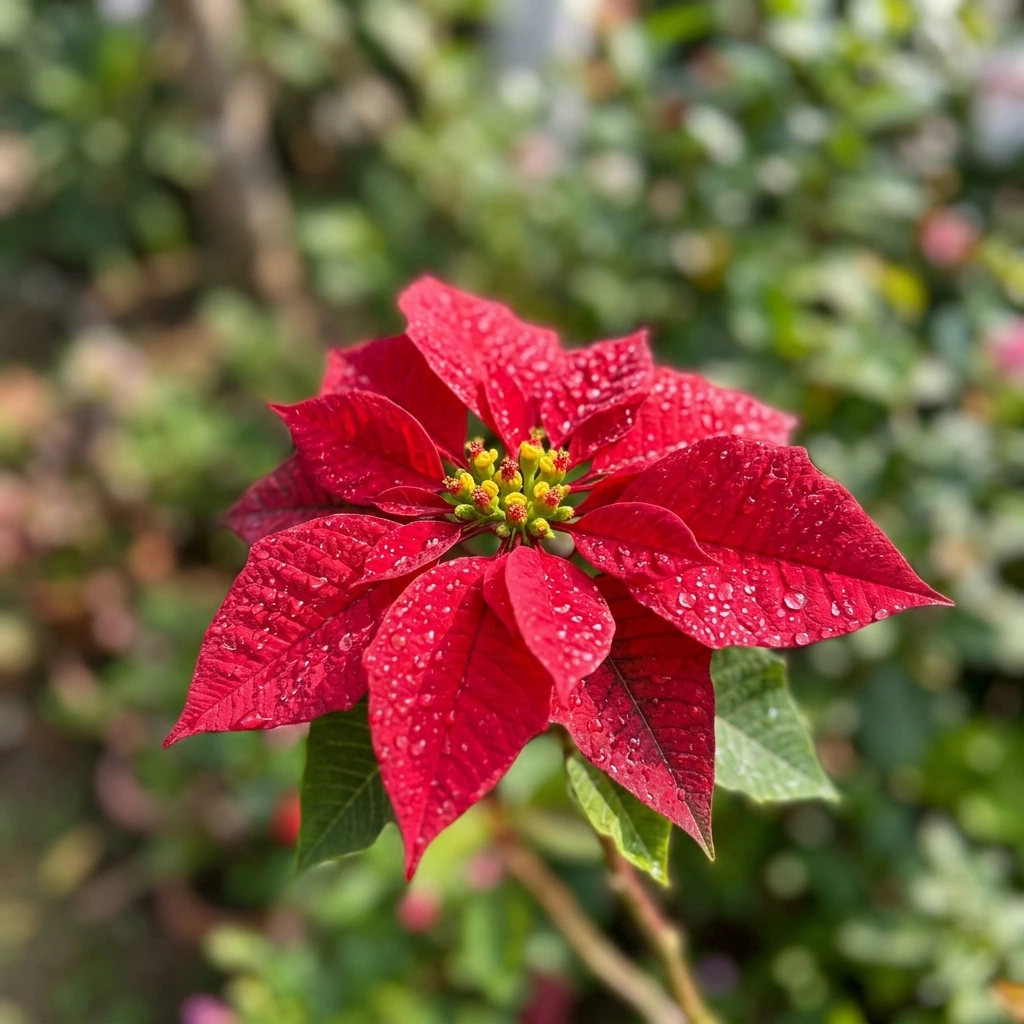
How to Identify Poinsettia
Poinsettia (Euphorbia pulcherrima) is a remarkable botanical species widely appreciated for its unique aesthetic and structural appeal. Recognizing its definitive visual traits is key to distinguishing it from other similar plants.
-
✔
Key Visual Features: Exhibits characteristic growth habits, custom foliage morphology, and plant structure typical of indoor species.
-
✔
Color Variations: Vibrant color variations primarily seen in cultivated or natural wild forms of Poinsettia.
-
✔
Common Confusions: Can sometimes be confused with other low-growing or related indoor plants, but can be quickly identified by its distinct leaf texture and bloom patterns.
Complete Care & Cultivation Guide
Follow our detailed scientific care guide to keep your Poinsettia thriving and gorgeous all year round.
Common Diseases & Treatment
Pythium Root Rot
Symptoms: Stunted growth, severe leaf yellowing, and black, decaying roots, caused by waterlogged soil.
Scab (Sphaceloma)
Symptoms: Circular, raised tan-colored spots with purple margins on the stems and leaves, causing leaf drop.
Frequently Asked Questions
Are Poinsettias highly lethal to pets?
No, this is a common myth. While the milky sap contains latex-like compounds that can cause mild drooling, vomiting, or skin irritation, it is not highly lethal. Keep out of reach to be safe.
How do I get my Poinsettia to turn red again next year?
Starting in October, give the plant 14 hours of absolute, uninterrupted darkness every night (e.g., under a cardboard box or in a closet) and 10 hours of bright light daily for 8-10 weeks.
Why are the green leaves falling off my Poinsettia?
Poinsettias drop leaves when exposed to cold drafts, sudden temperature shifts, overwatering, or underwatering. Keep them in a warm, stable room and check the soil moisture.
Is Poinsettia safe for dogs and cats?
Toxicity and pet safety status: Mildly Toxic to Pets (The milky white sap causes mild irritation, but severe poisoning is a historic myth). Keep out of pets' reach if it is toxic.