Poppy Care & Identification Guide
A symbol of remembrance and delicate beauty, Poppies produce large, paper-thin satin blossoms that sit atop thin, bristly stems. Known for their tissue-paper texture and striking dark-centered eyes, they require cool weather and fast-draining soil to thrive. It is widely celebrated by botanists for its distinct environmental adaptability and structural appeal.





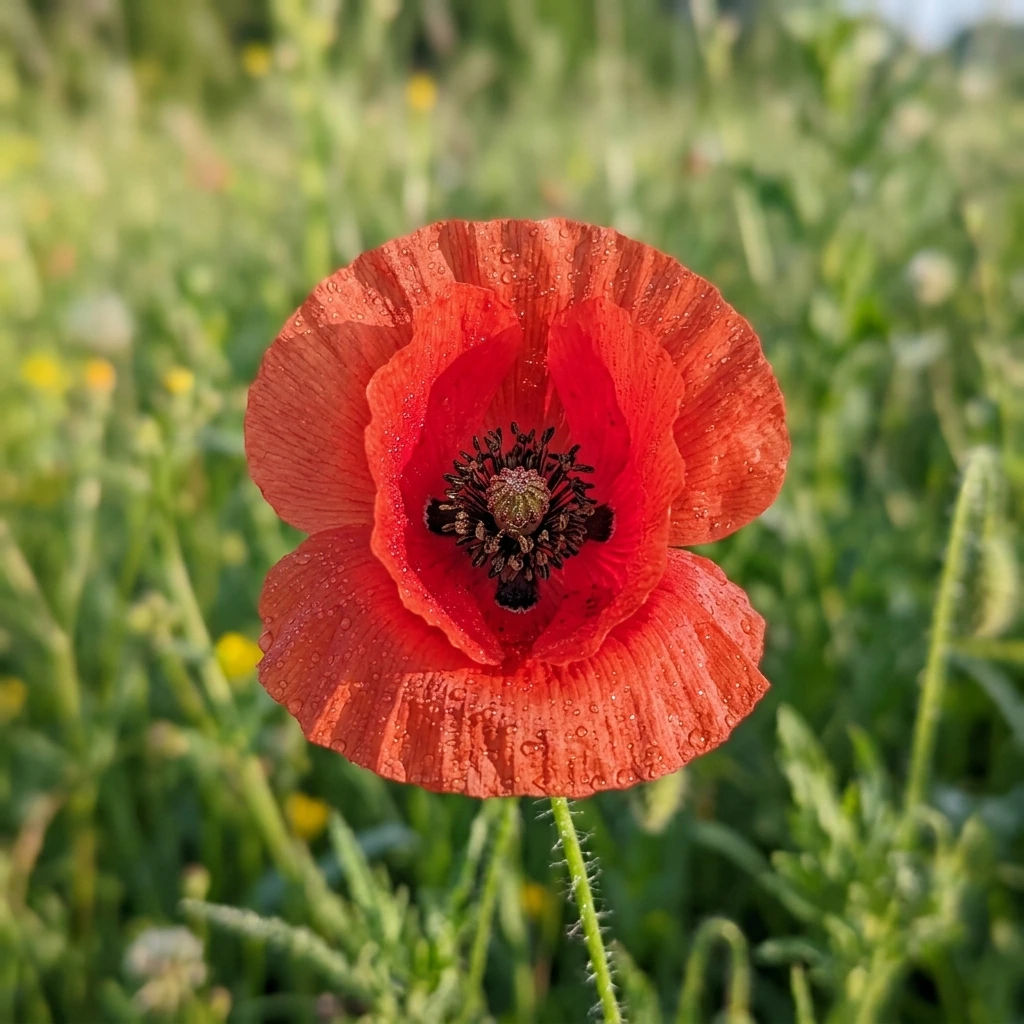
How to Identify Poppy
A erect, bristly, slender summer annual producing single, nodding cup-shaped blooms featuring papery satin petals.
-
✔
Key Visual Features: Thin, wiry stems covered in stiff spreading hairs, deeply lobed or jagged saw-toothed leaves, and delicate paper-thin flat blossoms.
-
✔
Color Variations: Fiery scarlet red, pastel pink, peach, bright orange, yellow, and pure white, often with a deep black-indigo patch at the base of each petal.
-
✔
Common Confusions: Can resemble Anemones due to satin petals and dark centers, but easily distinguished by its hairy, bristly stems and unique fuzzy, nodding flower buds that point straight up only when opening.
Complete Care & Cultivation Guide
Follow our detailed scientific care guide to keep your Poppy thriving and gorgeous all year round.
Common Diseases & Treatment
Downy Mildew (Fungal)
Symptoms: Leaves develop fuzzy grey-purple patches on the undersides, and upper surfaces develop yellow spots, leading to rapid rotting.
Root Rot (Fungal)
Symptoms: Stems turn black and soft at the base, and the entire plant collapses; roots decay into black mush under wet conditions.
Frequently Asked Questions
Is the Poppy plant dangerous to curious household cats and dogs?
Yes! All Poppies (Papaver genus) are highly toxic to pets. The entire plant, especially the white milky sap that flows from cut stems, contains toxic alkaloids (including rhoeadine, papaverine, and protopine). Ingestion triggers extreme drowsiness, dilated pupils, drooling, slowed heart rate, respiratory depression, and coma. Keep pets away!
Why did my beautiful Poppy flowers drop their petals after only a few days?
This is the natural, delicate habit of the Poppy! Individual Poppy blossoms have incredibly thin, papery petals that only last for 2 to 3 days. However, they produce a continuous succession of nodding fuzzy buds. Deadhead the spent green seed pods to keep new blooms coming.
What is the secret to successfully sowing Poppy seeds in the garden?
Sow them in early spring while the soil is still cold, or even in late autumn! Poppy seeds require 'cold stratification' to germinate. Mix the microscopic black seeds with sand, scatter them directly on top of loose soil, and press down lightly. Do not cover them with soil, as they need light to germinate.
How do I use cut Poppies in floral arrangements without them wilting instantly?
You must sear the stem end! When you cut a Poppy, it secretes a sticky white milky latex sap that hardens and seals the stem, preventing water absorption and causing instant wilting. Immediately dip the bottom 1 inch of the cut stem in boiling water for 10 seconds or singe it with a lighter flame before placing it in cold water.