Protea Care & Identification Guide
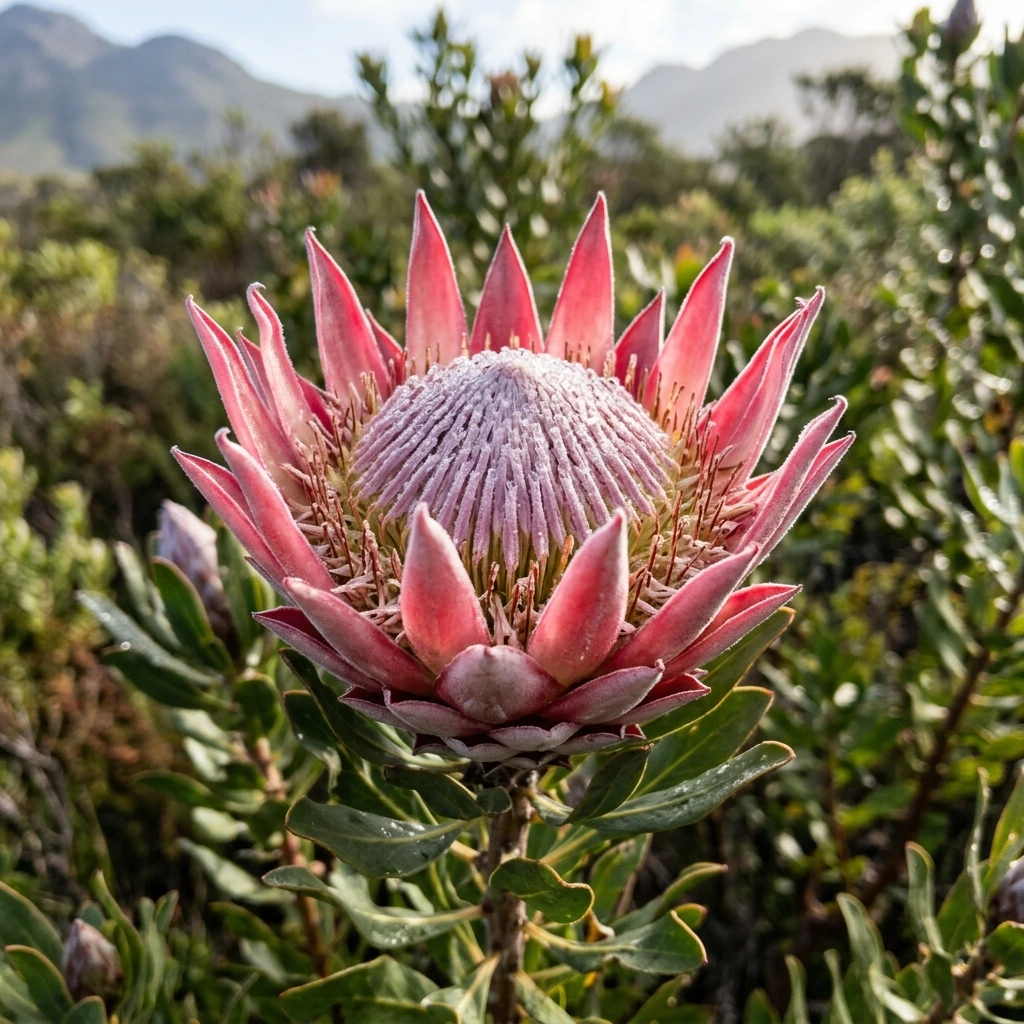
The King Protea is a prehistoric marvel, hailing from the specialized fynbos region of South Africa. Its massive, artichoke-like flower heads are surrounded by stiff, colorful bracts that resemble a crown. Crucial Scientific Fact: Proteas possess highly specialized proteoid (cluster) roots designed to absorb trace phosphorus in barren soils. Feeding them normal fertilizers containing phosphorus will cause phosphorus toxicity, suffocating and killing the plant. It is widely celebrated by botanists for its distinct environmental adaptability and structural appeal.





How to Identify Protea
A primitive, massive woody shrub producing giant artichoke-like flower heads surrounded by stiff, colorful, crown-like bracts.
-
✔
Key Visual Features: Thick, leathery, dark green oval leaves on woody stems, and a giant terminal flower head (up to 12 inches) with pointed, velvety colored bracts.
-
✔
Color Variations: Creamy white, soft pink, deep rose-red, or golden-yellow bracts surrounding a dense central dome of white velvety flowers.
-
✔
Common Confusions: Before blooming, the shrub can resemble a large Eucalyptus, but it is easily recognized by its extremely thick, woody stems and unique, massive artichoke-shaped flower buds.
Complete Care & Cultivation Guide
Follow our detailed scientific care guide to keep your Protea thriving and gorgeous all year round.
Common Diseases & Treatment
Phytophthora Canker
Symptoms: Leaves dry, turn reddish-brown from bottom up, and the main stem develops dark, weeping lesions near the soil line.
Powdery Leaf Spot
Symptoms: Foliage develops dark, velvety olive-green patches in stagnant humid air, leading to leaf drop.
Frequently Asked Questions
What is the most critical rule when fertilizing Proteas?
Never apply phosphorus! Proteas have specialized cluster roots called proteoid roots that absorb phosphorus with extreme efficiency. Normal garden fertilizers with high phosphorus will poison and kill the plant. Use organic fish emulsion or zero-phosphorus formulas.
How do Proteas survive in dry, windy coastal cliffs?
They have evolved thick, leathery, waxy leaves that resist moisture loss under intense sun and wind. They also possess an underground woody swelling (lignotuber) that stores energy and regenerates after wildfires.
Why are the lower leaves of my Protea turning black?
Black leaves are typically caused by poor soil drainage, stagnant humid air, or high soil pH. Proteas require highly acidic, sandy soil with absolute drainage and rapid air movement to survive.
Can Proteas be grown indoors?
Proteas make extremely poor houseplants. They require intense UV sunlight, high wind movement, and very dry, gravelly soil. They are best grown outdoors in dry Mediterranean climates or inside specialized dry greenhouses.