Rhododendron Care & Identification Guide
A spectacular highlight of the spring landscape, Rhododendrons are majestic evergreen shrubs famous for their massive, dome-shaped clusters of bell-like blossoms. They are strict acid-loving woodland plants requiring specialized care and high-acid soils. It is widely celebrated by botanists for its distinct environmental adaptability and structural appeal.





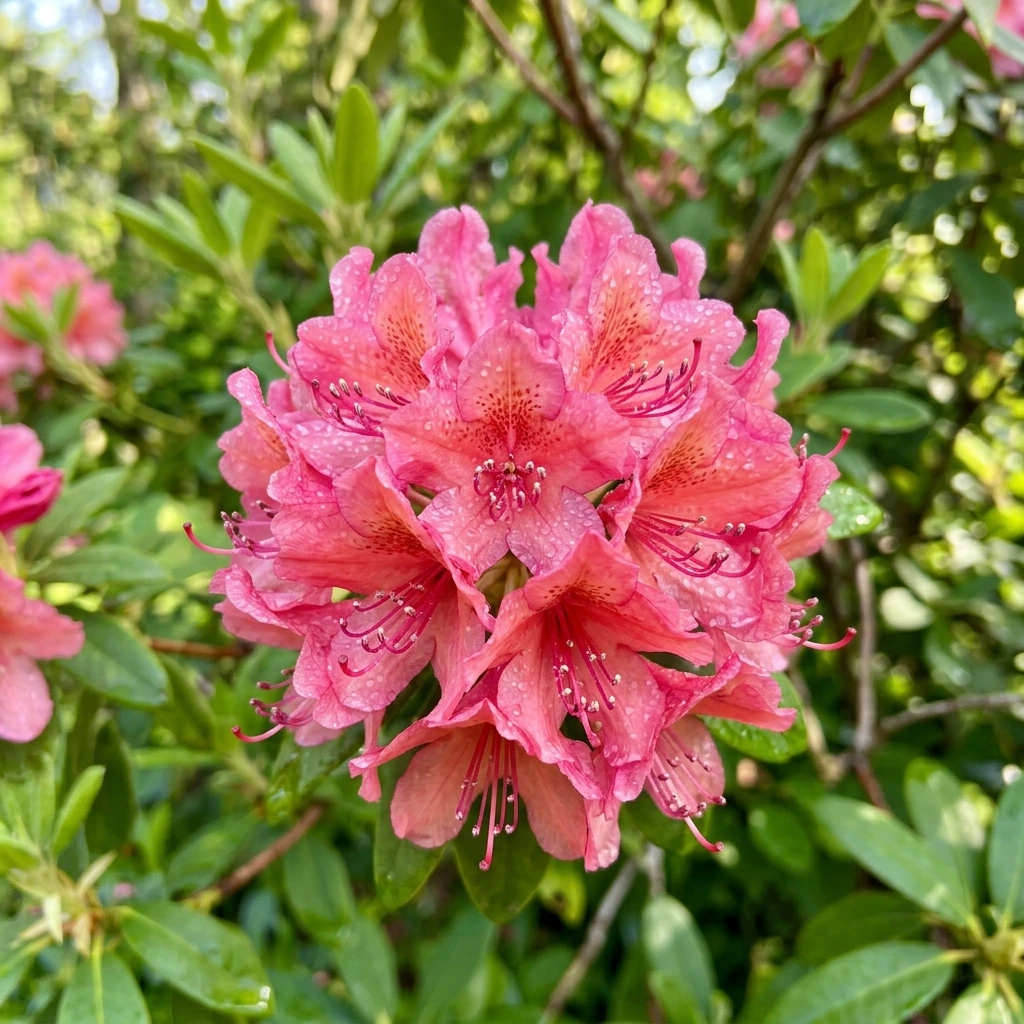
How to Identify Rhododendron
A massive, spreading, woody evergreen shrub recognized by its large, leathery, dark-green leaves and giant dome-like clusters of bell-shaped flowers.
-
✔
Key Visual Features: Thick, leathery, lanceolate evergreen leaves, woody stems, and large dome-shaped compound flower heads.
-
✔
Color Variations: Vibrant shades of magenta pink, deep purple, crimson red, brilliant yellow, peach, and snowy white.
-
✔
Common Confusions: Can resemble Mountain Laurel (Kalmia latifolia) or Azaleas, but recognized by its much larger size, leathery evergreen leaves, and large clusters of 10+ stamen bell-shaped flowers.
Complete Care & Cultivation Guide
Follow our detailed scientific care guide to keep your Rhododendron thriving and gorgeous all year round.
Common Diseases & Treatment
Iron Chlorosis (Physiological)
Symptoms: Leaves turn pale yellow while the veins remain bright green, leading to stunted growth and failure to bud.
Phytophthora Root Rot
Symptoms: Leaves wilt, roll downward like cigars, and turn dull green or brown; roots turn mushy and black.
Frequently Asked Questions
Why are the leaves of my Rhododendron turning yellow while the veins stay green?
This is Iron Chlorosis, a classic sign of high soil pH (alkaline soil). Rhododendrons are strict acid-loving plants. When pH exceeds 6.0, they cannot absorb iron, preventing chlorophyll production. Lower soil pH with sulfur and apply chelated iron.
How dangerous is Rhododendron to household cats, dogs, and horses?
Rhododendron is extremely toxic and highly lethal! Every part, including the leaves, stems, and flowers, contains grayanotoxins. Ingesting just a few leaves triggers severe vomiting, drooling, drop in blood pressure, heart arrhythmia, paralysis, coma, and death. Keep pets away.
What is the key difference between a Rhododendron and an Azalea?
Azaleas are actually a subgenus of Rhododendrons! Scientifically, Azaleas are usually smaller, deciduous, have 5 stamens per flower, and produce single blooms. True Rhododendrons are massive, evergreen, have 10 or more stamens, and produce huge bell-shaped dome clusters.
When is the correct time to prune my massive Rhododendron?
Prune immediately after spring blooming finishes! Rhododendrons form next year's flower buds on 'old wood' during summer. If you wait until autumn or winter to prune, you will cut off all the developing flower buds, resulting in zero blooms next spring.