Helianthus annuus

Sunflower Care & Identification Guide

The Sunflower (Helianthus annuus) is the absolute emblem of warmth, happiness, and summer joy. Native to North America and cultivated for thousands of years, these towering annual plants are famous for their massive, brilliant yellow flower heads that track the sun across the sky—a phenomenon known as heliotropism. Featuring thick, hairy stems and large, coarse, heart-shaped leaves, sunflowers can reach incredible heights of up to 10 to 15 feet. Beyond their spectacular visual beauty, they are highly valued for their nutritious edible seeds and oil.


Sunlight Icon
Sunlight Full Sun
Watering Icon
Watering Moderate
Soil Mix Icon
Soil Mix Deep, nutrient-rich
Temperature Icon
Temperature 20°C - 33°C
Toxicity Warning Icon
Toxicity Non-toxic
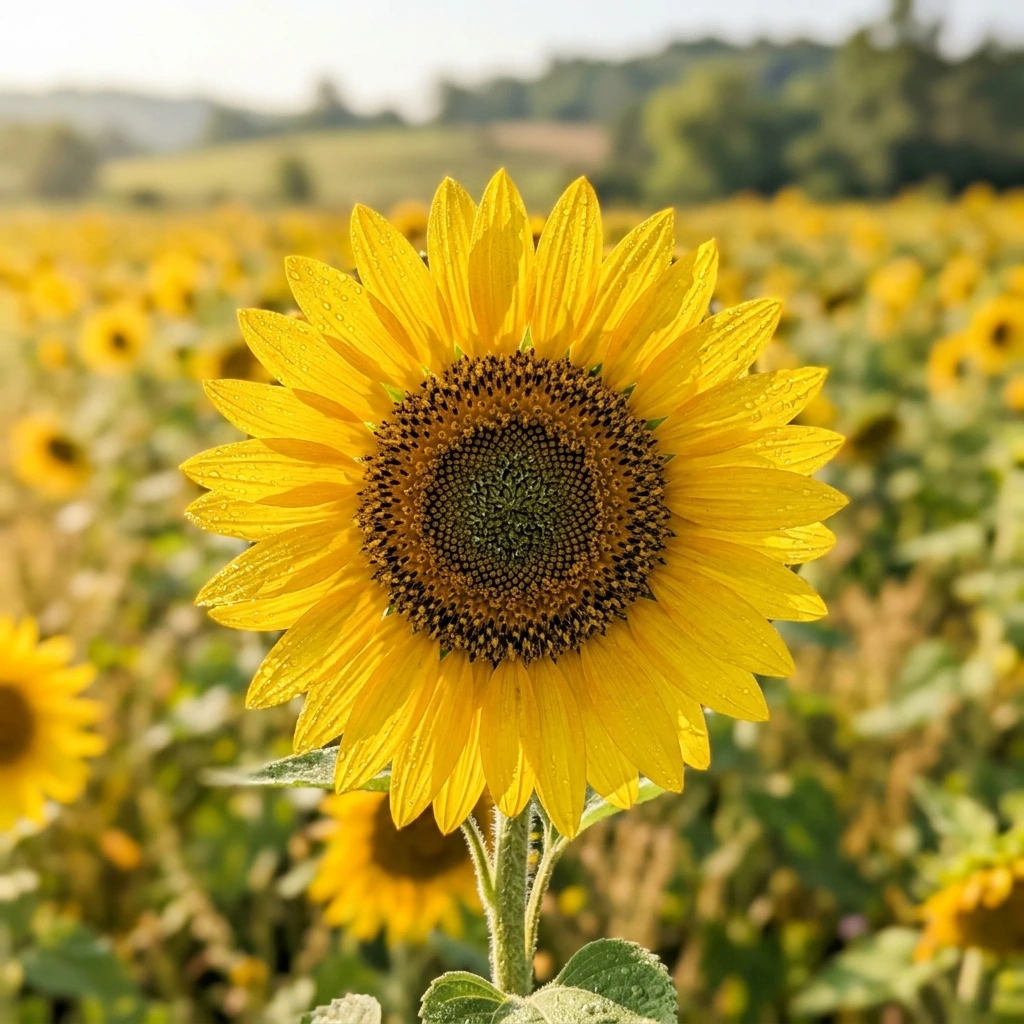
Botanical macro photography of Sunflower (Helianthus annuus) - Plant AI care database

How to Identify Sunflower

Sunflower (Helianthus annuus) is a remarkable botanical species widely appreciated for its unique aesthetic and structural appeal. Recognizing its definitive visual traits is key to distinguishing it from other similar plants.

  • Key Visual Features: Exhibits characteristic growth habits, custom foliage morphology, and plant structure typical of sunny species.
  • Color Variations: Vibrant color variations primarily seen in cultivated or natural wild forms of Sunflower.
  • Common Confusions: Can sometimes be confused with other low-growing or related sunny plants, but can be quickly identified by its distinct leaf texture and bloom patterns.
💡 Plant AI Tip: If you are not sure, take a photo with Plant AI to identify it instantly.

Complete Care & Cultivation Guide

Follow our detailed scientific care guide to keep your Sunflower thriving and gorgeous all year round.

Sunflowers are fast-growing, heavy-drinking plants that require deep, frequent watering. Water deeply at the base of the plant 2 to 3 times a week, ensuring the soil is saturated down to the deep root ball. Established sunflowers have deep taproots and can tolerate brief dry spells, but consistent moisture is essential to support their rapid growth and produce large, heavy flower heads.
Annual sunflowers do not require extensive pruning. However, cutting off any dead or damaged lower leaves near the soil line improves air circulation and prevents soil-borne fungal spores from splashing up onto the plant. If growing multi-branching sunflower varieties, regularly pinch off spent flower heads (deadheading) to stimulate the plant to produce a continuous flush of side blooms.
Sunflowers are heavy feeders that require rich nutrients to support their massive structural growth. Feed them weekly with a balanced organic liquid fertilizer high in potassium and phosphorus during their active growing phase in spring and summer. Dilute the fertilizer to half strength and apply deeply to the root zone. Avoid excess nitrogen, which stimulates huge leaves but small flower heads.
Sunflowers require a minimum of 6 to 8 hours of intense, direct, unfiltered sunlight daily. Full, blazing sun is absolutely essential for them to develop thick, sturdy stems that can support their heavy flower heads and produce vibrant yellow petals. Planting sunflowers in a shaded or semi-shaded spot will lead to weak, thin, leggy stems that easily snap in the wind.
Sunflowers are exceptionally resilient and can grow in various soils, but they thrive in loose, deep, well-draining loamy soil with a neutral pH of 6.0 to 7.5. To support their deep taproot system, dig the soil deeply (at least 2 feet) and amend it with 40% organic compost or aged manure to provide rich, slow-release nutrients and improve drainage.
Sunflowers are propagated exclusively by sowing seeds. Direct-sow sunflower seeds in the garden in late spring once all danger of frost has passed and soil temperatures reach 13°C (55°F). Plant seeds 1 inch deep and space them 6 to 12 inches apart. Keep the soil moist until seeds germinate in 7 to 10 days. Thin seedlings to 18 to 24 inches apart as they grow.
Sunflowers thrive in warm summer temperatures of 20°C to 30°C (68°F to 86°F). They are highly heat-resistant and can easily tolerate hot summer temperatures up to 35°C (95°F) if watered deeply. However, they are highly sensitive to cold; annual sunflowers will be killed by the first hard autumn frost.
While sunflowers are best grown in the ground, dwarf varieties (like 'Teddy Bear' or 'Suntastic') grow beautifully in containers. Choose a large, heavy pot (at least 3 to 5 gallons) to prevent the top-heavy plant from tipping over. Ensure the pot has large bottom drainage holes, and use a rich, well-draining organic potting soil mixed with perlite.
Sunflowers can attract various pests. Cutworms can snip off young seedlings at the soil line, and birds and squirrels frequently raid the heavy flower heads once the seeds mature. Protect seedlings by placing paper collars around stems, and protect mature seed heads by wrapping them in breathable garden mesh or cheesecloth.
Sunflowers are highly vulnerable to powdery mildew (a gray-white fungal coating on leaves) and rust (small orange-brown pustules on leaf undersides) in wet, humid conditions. Prevent these diseases by maintaining wide spacing between plants for air circulation, watering the base of the plant rather than the foliage, and spraying with sulfur fungicides.
Tall sunflower varieties easily become top-heavy and can be blown over by strong winds or summer storms. Always stake sunflowers that grow over 5 feet tall. Drive a sturdy wooden or bamboo stake deep into the ground next to the main stem and tie the stem loosely to the stake using soft twine. Plant them along fences or windbreaks to provide natural shelter and support.

Is your Sunflower foliage turning brown or dropping?

Don't let it wither away. Take a photo with Plant AI to diagnose pests and leaf spots instantly.

Diagnose My Plant

Common Diseases & Treatment

Rust

Symptoms: Small yellow spots on the upper leaves that develop into dark, powdery orange-brown pustules underneath.

Action: Prune lower leaves to improve air circulation. Apply sulfur dust or copper fungicide at the first sign of symptoms.

Sclerotinia Stem Rot

Symptoms: Water-soaked lesions on the stem near the soil line, followed by white mold and stem breakage.

Action: Improve soil drainage and avoid wetting the stems. Remove infected plants and apply crop rotation for future plantings.

Frequently Asked Questions

How tall do sunflowers grow?

Giant varieties like Russian Mammoth can easily reach 10 to 14 feet (3-4 meters) tall, while dwarf varieties only grow to about 2 to 3 feet.

Do sunflowers follow the sun all their lives?

Only young sunflowers display heliotropism. Once the flower heads mature and open, they remain permanently facing east to attract morning pollinators.

How do I protect sunflower seeds from birds?

Once the back of the sunflower head turns yellow-brown, cover the flower head with a breathable mesh bag or cheesecloth to keep birds away.

Is Sunflower safe for dogs and cats?

Toxicity and pet safety status: Non-toxic to dogs, cats, and horses (very safe for gardens with pets). Keep out of pets' reach if it is toxic.

No more dying plants. Grow healthy greens today!

Get Started for Free