Tickseed Care & Identification Guide
An exceptionally bright and carefree wildflower native to North American prairies, Tickseed (Coreopsis) produces a dazzling, non-stop sea of golden-yellow, daisy-like blossoms from early summer to autumn. Unbothered by heat, drought, or poor soil, it is a staple of pollinator-friendly borders and low-maintenance meadows. It is widely celebrated by botanists for its distinct environmental adaptability and structural appeal.





How to Identify Tickseed
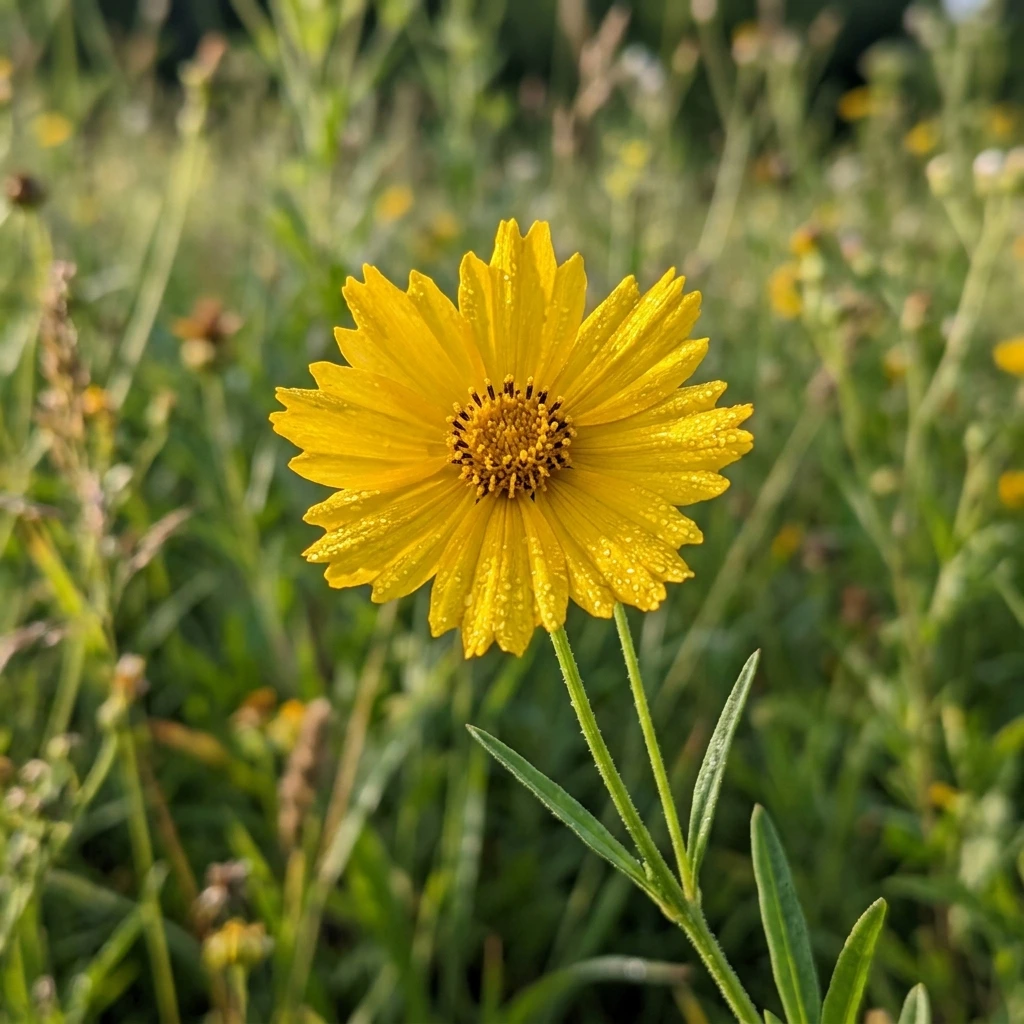
A bushy, clump-forming herbaceous perennial producing hundreds of bright, daisy-like composite flowers on slender, airy, upright stems.
-
✔
Key Visual Features: Deep-green, narrow, lance-shaped leaves (lanceolata) that are primarily clustered at the base of the plant; stems are thin, wiry, and branching.
-
✔
Color Variations: Radiant golden-yellow petals, often featuring a distinct jagged, saw-toothed outer edge, surrounding a matching yellow central disk.
-
✔
Common Confusions: Can resemble wild Daisies or Dandelions, but Tickseed is easily identified by its lance-shaped leaves, its unique flat, tick-like seeds, and its bright yellow petals with characteristic jagged, pinked tips.
Complete Care & Cultivation Guide
Follow our detailed scientific care guide to keep your Tickseed thriving and gorgeous all year round.
Common Diseases & Treatment
Powdery Mildew (Fungal)
Symptoms: White powdery coating on the narrow leaves during humid late summer months, causing foliage to yellow and shrivel.
Crown Rot (Fungal)
Symptoms: Rotting at the base of the plant in wet, poorly draining soils, causing the stems to blacken and collapse.
Frequently Asked Questions
Why is this beautiful flower named 'Tickseed'?
Because of its seeds! The name 'Coreopsis' comes from the Greek words koris, meaning 'bug/tick', and opsis, meaning 'appearance'. The plant's flat, dark seeds are small, curved, and have tiny hooks that make them look exactly like ticks or beetles. These hooks help the seeds cling to animal fur to disperse in nature.
Is Tickseed safe for my household pets?
Yes! Tickseed (Coreopsis) is completely non-toxic to dogs and cats. It is a highly recommended plant for pet-friendly backyard landscaping, allowing you to enjoy vibrant, long-lasting summer color without worrying about the safety of your curious pets.
How do I keep my Tickseed blooming continuously all summer long?
You must deadhead! As the daisy-like flowers fade and their petals drop, use garden shears to snip off the spent flower heads down to the nearest set of leaves. This stops the plant from producing seeds, prompting it to continuously pump out new flower buds.
Why did my Tickseed die over the winter?
The primary killer of Tickseed during winter is wet soil! While they are extremely cold-hardy and can easily survive freezing winter temperatures, their roots cannot tolerate sitting in heavy, soggy, waterlogged clay soil during winter dormancy, which causes lethal crown rot. Always plant them in sandy, well-draining beds.