Wisteria Care & Identification Guide
Wisteria is a majestic, long-lived woody vine renowned for its cascading clusters of highly fragrant, pea-like purple blossoms that drape down like floral waterfalls in spring. Equipped with immense physical strength, its thick, twisting woody trunks can wrap around and crush wood or metal supports over time, requiring incredibly robust structures. It is widely celebrated by botanists for its distinct environmental adaptability and structural appeal.





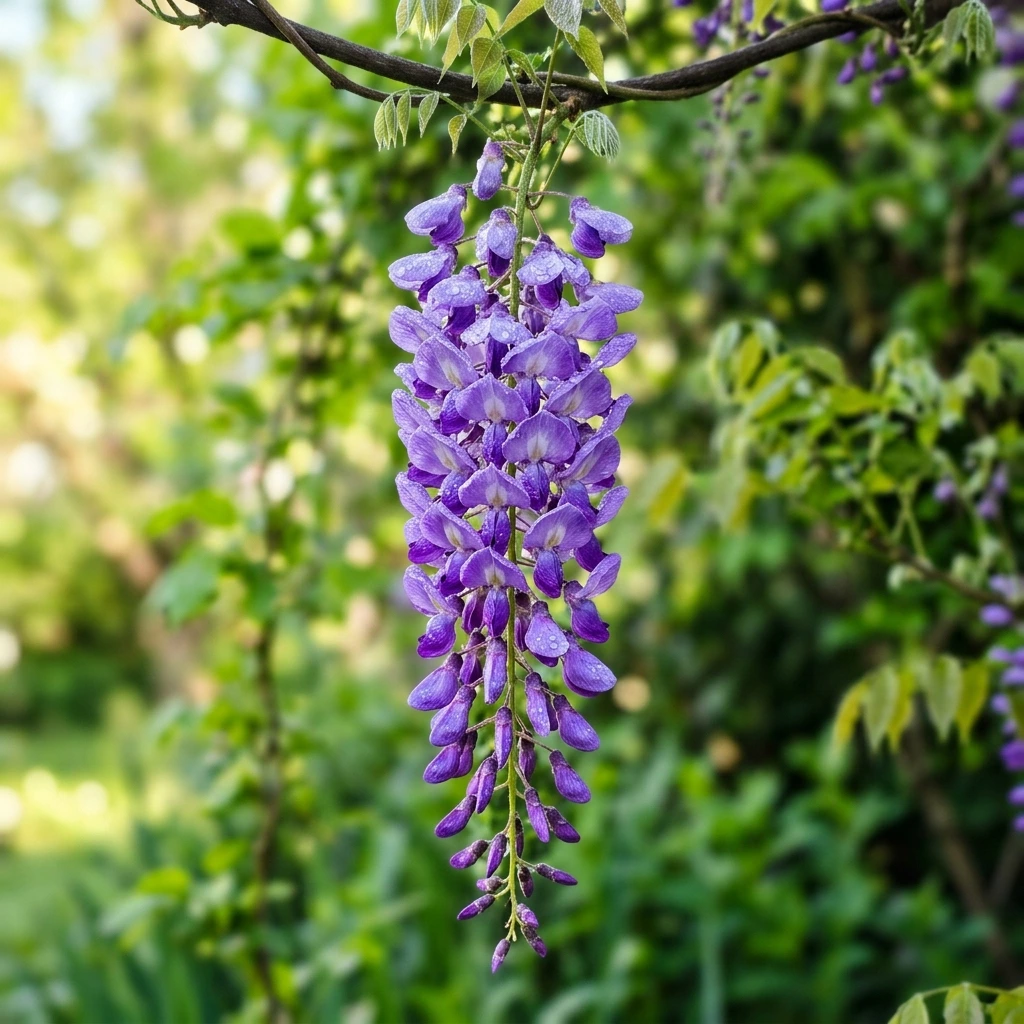
How to Identify Wisteria
A massive, woody deciduous climbing vine producing spectacular cascading racemes of fragrant pea-like blossoms in mid-spring.
-
✔
Key Visual Features: Twining woody trunks, pinnate leaves with 7-19 leaflets, and hanging flower clusters (up to 3 feet long) resembling grapes.
-
✔
Color Variations: Soft lavender, deep violet-blue, pure white, or light rose-pink.
-
✔
Common Confusions: Can be confused with Laburnum (Golden Chain Tree) due to hanging clusters, but distinguished by Wisteria's purple/blue/white palette and vine-like twining woody trunk.
Complete Care & Cultivation Guide
Follow our detailed scientific care guide to keep your Wisteria thriving and gorgeous all year round.
Common Diseases & Treatment
Wisteria Canker (Phomopsis)
Symptoms: Woody vines develop sunken, dark, cracking lesions that girdle the stem, causing foliage beyond the canker to wilt and die.
Crown Gall
Symptoms: Large, rough, swollen woody galls form on the trunk near the soil line, restricting water and nutrient flow.
Frequently Asked Questions
Why is my Wisteria vine growing vigorously but refusing to bloom?
The most common culprit is too much nitrogen! High-nitrogen fertilizers promote lush green leaves but suppress flower buds. Wisteria also requires hard pruning and at least 6 hours of full sun to trigger its spring blooms.
What is the correct 'Double-Pruning' method for Wisteria?
To maximize blooms, prune twice a year. In summer (July/August), cut back the long green whip-like shoots to 5-6 leaves to control size. In winter (January/February), prune those same shoots back to 2-3 buds to encourage flower spikes.
How strong is a Wisteria trunk?
Extremely strong! Wisteria is a heavy, aggressive vine that twists around structures. Its woody trunks can bend iron railings, lift shingles, and crush wooden pergolas. Always plant them against heavy, solid timber or steel supports.
Are the fuzzy seed pods safe to keep around pets?
No, they are highly dangerous. The bean-like seed pods and seeds contain wisterin, a highly toxic saponin that causes severe gastrointestinal distress, vomiting, and cardiovascular depression in cats and dogs. Clean up fallen pods immediately.