Spring Snow Aglaonema Care & Identification Guide
Aglaonema 'Spring Snow', famously known as the Speckled Chinese Evergreen, is an exceptionally robust and elegant tropical plant. Prized for its broad, lush green leaves densely speckled and marbled with cream-white flecks resembling spring snow, it is incredibly tough, highly adaptable, and perfect for office decor.





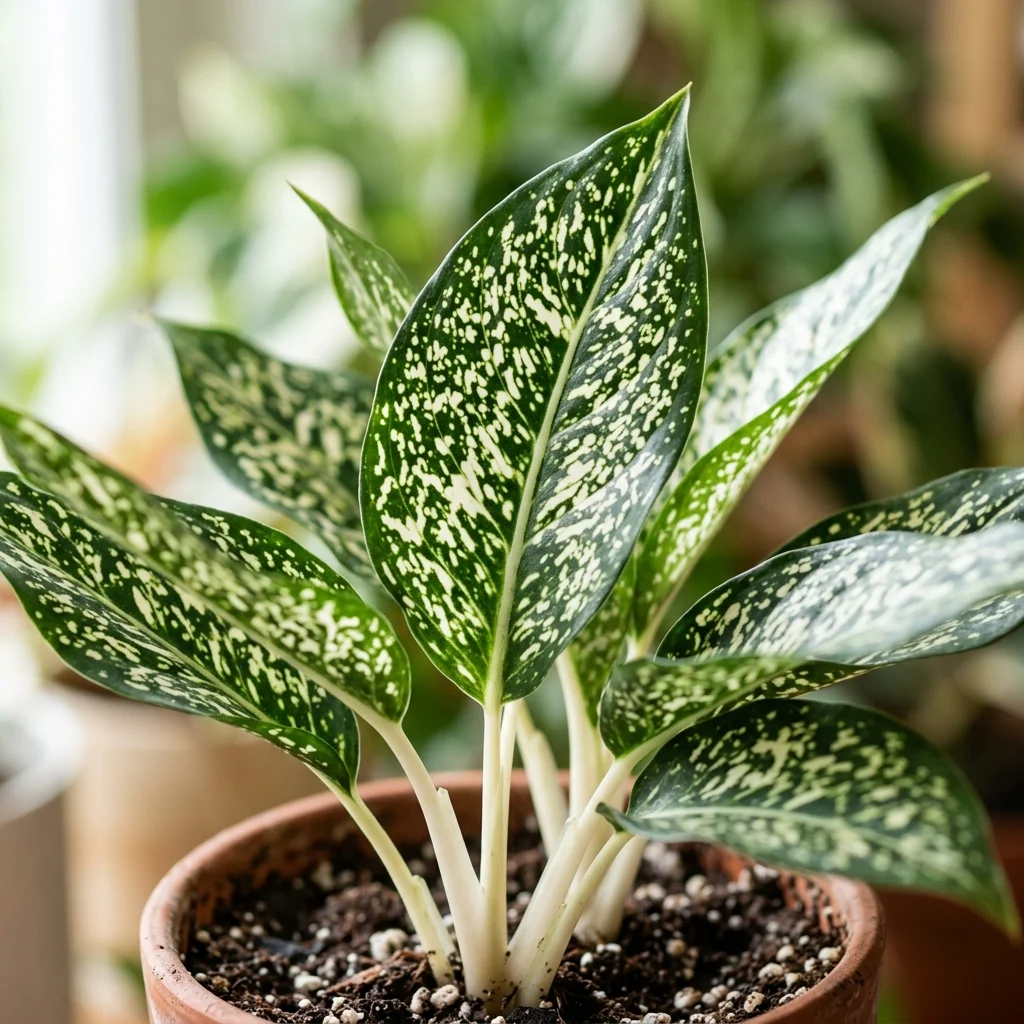
How to Identify Spring Snow Aglaonema
Spring Snow Aglaonema (Aglaonema 'Spring Snow') is a remarkable ornamental species widely appreciated for its unique aesthetic and structural foliage. Recognizing its definitive visual traits is key to distinguishing it from other similar plants.
-
✔
Key Visual Features: Broad, upright green leaves heavily speckled and splashed with pure cream-white spots; leaf stems are pure white.
-
✔
Color Variations: Vibrant emerald-green blades with stark contrasting white-cream speckling; new leaves emerge with very bright white stems.
-
✔
Common Confusions: Confused with Dieffenbachia (which has similar variegation but grows much larger and is far more toxic to chew).
Complete Care & Cultivation Guide
Follow our detailed scientific care guide to keep your Spring Snow Aglaonema thriving and gorgeous all year round.
Common Diseases & Treatment
Root Rot
Symptoms: Leaves turn yellow, drop off, and roots turn black and mushy.
Bacterial Leaf Spot
Symptoms: Water-soaked dark spots expand rapidly on the beautiful white speckled leaves.
Frequently Asked Questions
Why is my Spring Snow Aglaonema losing its white spots?
Inadequate light is the main cause. Move your plant to a brighter spot with plenty of indirect sunlight to enhance speckled white variegation.
How does Aglaonema Spring Snow differ from Dieffenbachia?
Aglaonema has a much slower growth rate, stays more compact, has pure white leaf stems, and is slightly less toxic than Dieffenbachia.
How large does Aglaonema Spring Snow grow?
It typically grows 18-24 inches tall, forming a beautiful, dense clump of colorful speckled foliage.
Is Aglaonema Spring Snow safe for dogs?
No, it contains calcium oxalate crystals. It is toxic to dogs and cats, causing oral irritation and throat swelling.