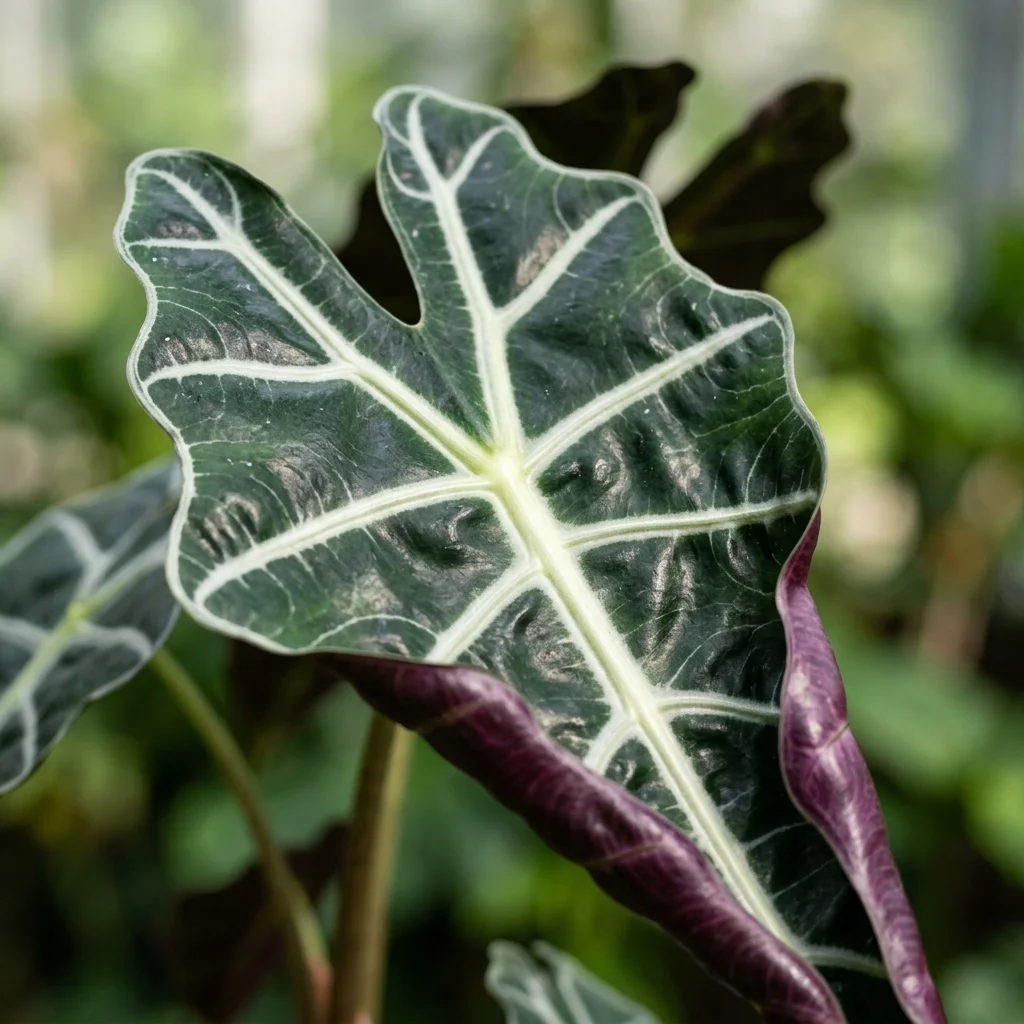
Alocasia x amazonica 'Polly'

Alocasia Polly Care & Identification Guide

Alocasia x amazonica 'Polly', famously known as the African Mask or Elephant Ear Polly, is a dramatic botanical sculpture of the tropical understory. Prized for its arrow-shaped glossy dark-green leaves accented by bold, creamy-white primary veins and wavy margins, it features striking deep purple-burgundy undersides, injecting high-contrast architectural elegance into modern spaces.


Sunlight Icon
Sunlight Bright Indirect Light
Watering Icon
Watering Moderate (Keep evenly moist)
Soil Mix Icon
Soil Mix Highly Aerated Chunky Aroid Mix
Temperature Icon
Temperature 18°C - 27°C
Toxicity Warning Icon
Toxicity Highly Toxic to Pets
Botanical macro photography of Alocasia Polly (Alocasia x amazonica 'Polly') - Plant AI care database

How to Identify Alocasia Polly

Alocasia Polly (Alocasia x amazonica 'Polly') is a remarkable ornamental species widely appreciated for its unique aesthetic and structural foliage. Recognizing its definitive visual traits is key to distinguishing it from other similar plants.

  • Key Visual Features: Arrow-shaped, shield-like dark green leaves with wavy edges and highly distinct, thick cream-white ribs; deep purple undersides.
  • Color Variations: Extremely dark, almost black-green glossy leaf blade surfaces with stark contrasting thick white-silver veins.
  • Common Confusions: Confused with Alocasia Frydek (velvety leaves, not glossy; white veins, not cream) or Alocasia Watsoniana.
💡 Plant AI Tip: Not sure? Take a photo with Plant AI to identify your houseplants instantly.

Complete Care & Cultivation Guide

Follow our detailed scientific care guide to keep your Alocasia Polly thriving and gorgeous all year round.

Water when the top 1-2 inches of soil are dry. Keep soil evenly moist but never saturated. Highly sensitive to fluoride and soggy soil.
Prune naturally yellowing lower leaves at the petiole base in spring. Ensure tool is sanitized to prevent Erwinia bacterial blight.
Feed monthly with an organic houseplant food diluted to half strength during active spring and summer growth. Avoid winter feeding.
Thrives in bright, consistent indirect light. Dapple hot direct sun to prevent sunburning and crispy spots on the broad glossy shield leaves.
Very loose, aerated, well-draining mix: 40% coco coir, 30% perlite, 20% orchid bark, and 10% charcoal/worm castings (pH 5.5-6.5).
Propagated strictly by separating underground corms (bulbs) or offsets during spring repotting. Stem cuttings are not possible.
Consistent warmth (18°C-27°C). Enters dormancy if exposed to temperatures below 15°C; protect from winter drafts and frost.
Prefers snug, slightly tight pots to prevent over-potting and root rot. Ensure ample drainage holes. Repot every 1-2 years.
Highly prone to spider mites in dry rooms, thrips, and mealybugs. Wipe leaves weekly and apply organic neem oil solution.
Extremely susceptible to Erwinia bacterial blight and Pythium root rot if soil is waterlogged or lacks oxygen.
Wipe the glossy leaves monthly with a damp cloth to maximize light absorption. Boost humidity above 60% using a humidifier.

Is your Alocasia Polly leaves turning yellow, dry or brown?

Keep your indoor garden vibrant. Take a photo with Plant AI to diagnose pests and leaf spot diseases instantly.

Diagnose My Plant

Common Diseases & Treatment

Erwinia Bacterial Blight

Symptoms: Wet, mushy, rapidly spreading dark spots on leaf petioles that emit a rotten, fishy smell.

Action: Cut off infected leaves immediately, disinfect tools, isolate the plant, and reduce relative humidity.

Root Rot (Pythium)

Symptoms: Leaves yellow and drop; central stems rot at the base; roots turn mushy and dark.

Action: Repot immediately in a fresh, highly porous, fast-draining potting mixture, cutting away decayed root ends.

Frequently Asked Questions

Why are the leaves of my Alocasia Polly turning yellow and dropping?

This is usually caused by overwatering, root rot, or entering winter dormancy. Check soil moisture and roots, and reduce watering in winter.

How do I wake my Alocasia Polly from dormancy?

Keep the soil barely moist, place the pot in a warm (above 20°C), brightly lit spot, and wait patiently for spring growth to emerge.

Why does my Alocasia Polly exude water droplets from leaf tips?

This is a natural process called guttation, which happens when the soil is wet. It indicates the plant is saturated; reduce watering slightly.

Is Alocasia Polly safe for cats?

No, it contains calcium oxalate crystals. It is highly toxic to cats and dogs, causing mouth swelling, drooling, and vomiting if chewed.

No more dying plants. Grow healthy greens today!

Get Started for Free