Common Asparagus Fern Care & Identification Guide
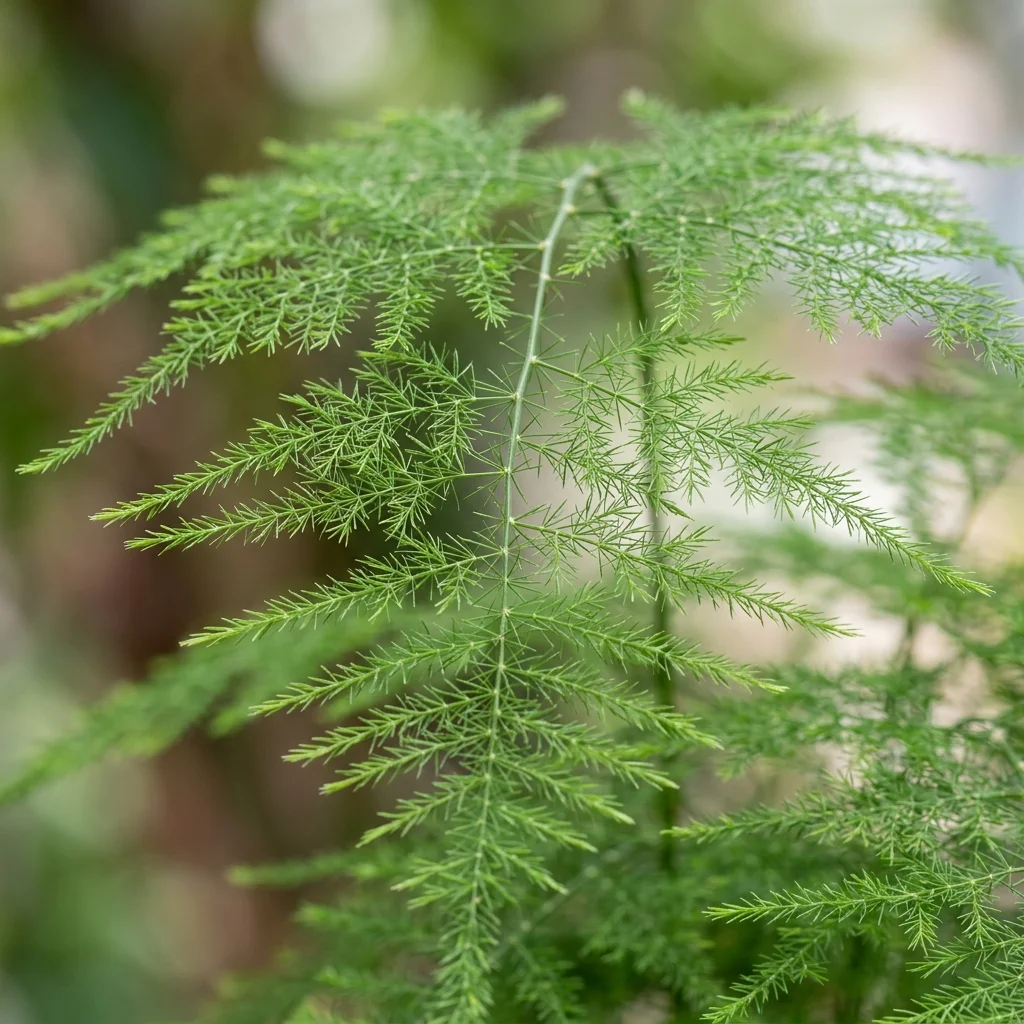
Asparagus plumosus (syn. Asparagus setaceus), the Common Asparagus Fern or Lace Fern, is a legendarily delicate, soft-looking evergreen perennial. Despite its fern-like appearance, it belongs to the lily family. It is highly valued for its elegant, climbing stems lined with ultra-fine, needle-like, flattened green branches (cladophylls) that spread horizontally like fluffy, feather-like misty clouds.





How to Identify Common Asparagus Fern
Common Asparagus Fern (Asparagus plumosus) is a remarkable ornamental species widely appreciated for its unique aesthetic and structural foliage. Recognizing its definitive visual traits is key to distinguishing it from other similar plants.
-
✔
Key Visual Features: Climbing woody stems carrying extremely fine, needle-like flat green branches arranged in a horizontal, feather-like mist.
-
✔
Color Variations: Delicate, light chartreuse to bright grass-green foliage; mature stems develop sharp thorns; produces small green-black berries.
-
✔
Common Confusions: Confused with Sprenger's Asparagus Fern (which has much larger, coarser, needle-like leaves and sprawling trailing stems).
Complete Care & Cultivation Guide
Follow our detailed scientific care guide to keep your Common Asparagus Fern thriving and gorgeous all year round.
Common Diseases & Treatment
Needle Drop (Shedding)
Symptoms: Fine, needle-like green branches turn yellow or pale brown and drop off massively at the slightest touch.
Root Rot
Symptoms: Whole stems collapse at the base, foliage turns yellow-brown, and underground tuberous roots become soft and black.
Frequently Asked Questions
Why is my Asparagus Fern shedding its tiny leaves?
Shedding is almost always caused by dry indoor air (low humidity), underwatering, or keeping it in direct, scorching sunlight. Boost humidity.
Is Asparagus Fern a true fern?
No. Asparagus plumosus belongs to the Liliaceae (lily) family. It reproduces via seeds and flowers, rather than spores like true ferns.
My Asparagus Fern is growing long, leafless thorny vines. What should I do?
This is its natural climbing habit. You can either provide a small trellis for it to climb or prune these long shoots back to keep it bushy.
Is Asparagus Fern safe for cats?
No. The berries and sap of Asparagus plumosus contain sapogenins which are toxic to dogs and cats, causing vomiting and skin irritation.