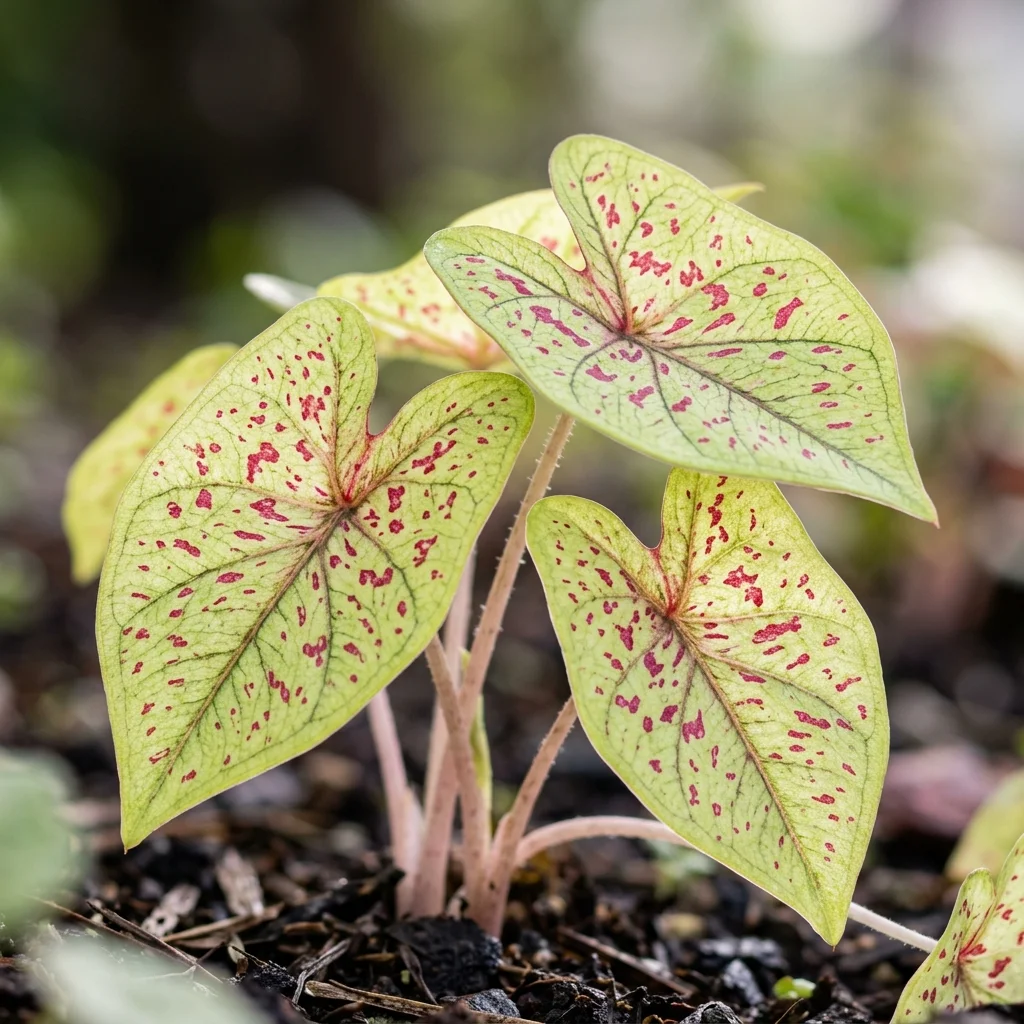
Caladium bicolor 'Miss Muffet'

Miss Muffet Caladium Care & Identification Guide

Caladium bicolor 'Miss Muffet' is a highly unique, dwarf-size ornamental foliage favorite. Highly prized for its compact size and large, heart-shaped leaves of a delicate, glowing chartreuse-yellow or lime-green color, it is spectacularly speckled with vibrant pink and crimson spots, creating a striking and playful statement.


Sunlight Icon
Sunlight Bright Indirect Light
Watering Icon
Watering Moderate to High
Soil Mix Icon
Soil Mix Rich Moist Fast-draining Soil
Temperature Icon
Temperature 18°C - 29°C
Toxicity Warning Icon
Toxicity Toxic to Cats & Dogs
Botanical macro photography of Miss Muffet Caladium (Caladium bicolor 'Miss Muffet') - Plant AI care database

How to Identify Miss Muffet Caladium

Miss Muffet Caladium (Caladium bicolor 'Miss Muffet') is a remarkable ornamental species widely appreciated for its unique aesthetic and structural foliage. Recognizing its definitive visual traits is key to distinguishing it from other similar plants.

  • Key Visual Features: Chartreuse-yellow or lime-green heart-shaped leaves speckled with vibrant pink and crimson spots.
  • Color Variations: Lime-green leaves with deep crimson-pink spots; veins are a pale sage-green; compact dwarf habit.
  • Common Confusions: Confused with Caladium 'Gingerland' (which has creamy-white leaves with green edges, while Miss Muffet has chartreuse-yellow leaves).
💡 Plant AI Tip: Not sure? Take a photo with Plant AI to identify your houseplants instantly.

Complete Care & Cultivation Guide

Follow our detailed scientific care guide to keep your Miss Muffet Caladium thriving and gorgeous all year round.

Water thoroughly when the top inch of potting soil feels dry. Keep the soil consistently slightly moist, but never allow it to become waterlogged.
Trim off older, outer leaves near the tuber base using sharp, sterilized scissors to keep the rosette clean and tidy.
Apply half-strength liquid houseplant fertilizer once every 2 weeks during the active spring and summer growing season.
Requires bright, consistent indirect light. Abundant light is necessary to keep its signature chartreuse color intense.
Rich, loose, organic, and highly porous soil. Mix 2 parts organic potting soil with 1 part peat moss and 1 part perlite.
Division of the tuber clumps during spring potting. Carefully separate tubers with active growing eyes and plant separately.
Thrives in warm, tropical room temperatures (18°C-29°C). Highly sensitive to cold; enters winter dormancy below 15°C.
Plant tubers 2 inches deep in spring with active buds facing upward. Ensure the pot has ample bottom drainage holes.
Prone to spider mites, aphids, and whiteflies. Maintain high relative humidity and treat immediately with insecticidal soap.
Highly susceptible to tuber rot if kept in cold, soggy soil, and leaf spot if foliage remains wet under poor airflow.
Provide moderate to high humidity (above 50%). Miss Muffet does best in warm, humid spaces, which helps the new heart leaves grow larger.

Is your Miss Muffet Caladium leaves turning yellow, dry or brown?

Keep your indoor garden vibrant. Take a photo with Plant AI to diagnose pests and leaf spot diseases instantly.

Diagnose My Plant

Common Diseases & Treatment

Tuber Rot

Symptoms: Leaves droop, stems collapse easily, and the underground tuber turns mushy, soft, watery, and decays.

Action: Trim decayed parts of the tuber, apply a fungicide dust, and repot in fresh, highly porous, dry soil mix.

Fading Crimson Spots

Symptoms: The brilliant crimson spots on the chartreuse leaves turn pale, dull, and slowly disappear.

Action: Move the plant to a much brighter location with indirect sunlight, ensuring it receives abundant light.

Frequently Asked Questions

Why are the red spots on my Miss Muffet Caladium fading?

Fading spots indicate a lack of bright light. Move the plant to a brighter location with abundant indirect light to restore its vibrant colors.

Is the 'Miss Muffet' compact?

Yes! This dwarf cultivar is naturally compact and bushy, making it perfect for smaller indoor tabletops or mixed garden containers.

How do I care for my Miss Muffet in winter?

Reduce watering completely as leaves naturally die back in fall. Cut dead foliage, store the pot dry in a warm closet (above 15°C) until spring.

Is Miss Muffet safe for pets?

No. Caladium 'Miss Muffet' contains insoluble calcium oxalates which are toxic to dogs and cats, causing mouth swelling and pain.

No more dying plants. Grow healthy greens today!

Get Started for Free