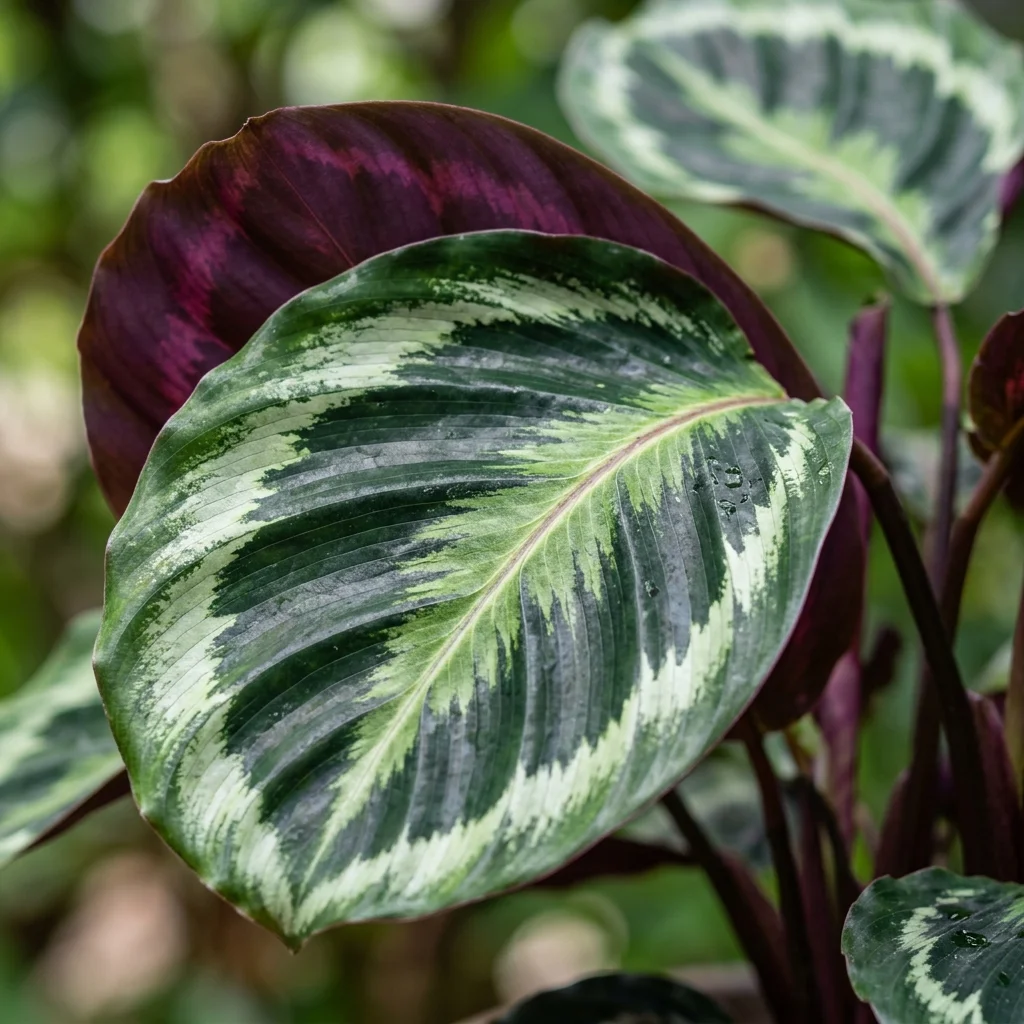
Goeppertia veitchiana 'Medallion'

Calathea Medallion Care & Identification Guide

Goeppertia veitchiana 'Medallion', commonly known as Calathea Medallion, is a breathtaking bold tropical gem. Famous for its large, round medallion-like leaves painted with intricate rings of emerald green, light green, and creamy silver-white, it features brilliant, solid purple-magenta undersides that stand vertically at night, offering a dramatic foliage performance.


Sunlight Icon
Sunlight Medium Indirect Light
Watering Icon
Watering Moderate to High
Soil Mix Icon
Soil Mix Highly Aerated Moist Mix
Temperature Icon
Temperature 18°C - 24°C
Toxicity Warning Icon
Toxicity Non-Toxic to Pets
Botanical macro photography of Calathea Medallion (Goeppertia veitchiana 'Medallion') - Plant AI care database

How to Identify Calathea Medallion

Calathea Medallion (Goeppertia veitchiana 'Medallion') is a remarkable ornamental species widely appreciated for its unique aesthetic and structural foliage. Recognizing its definitive visual traits is key to distinguishing it from other similar plants.

  • Key Visual Features: Large, round, medallion-like leaves with concentric bands of dark emerald, lime-green, and silver; solid dark purple undersides.
  • Color Variations: High-contrast circular banding of green, cream, and silver on top; deep rich crimson-purple leaf backs.
  • Common Confusions: Confused with Calathea roseopicta (which has pink rings instead of silver-cream bands) or Peacock Plant (which has feather blotches).
💡 Plant AI Tip: Not sure? Take a photo with Plant AI to identify your houseplants instantly.

Complete Care & Cultivation Guide

Follow our detailed scientific care guide to keep your Calathea Medallion thriving and gorgeous all year round.

Water when the top inch of soil is dry. Sensitive to fluoride; use distilled or rainwater. Keep soil consistently moist but never soggy.
Prune damaged or old yellowing leaves at the base in spring using sharp, sterilized shears. Clean blade between cuts.
Feed monthly in spring and summer with a balanced organic houseplant food diluted to half strength. Skip winter fertilization.
Thrives in medium to bright, filtered, indirect light. Direct scorching sun will bleach the colors and curl leaf margins.
Very chunky, rich, well-aerating mix: 40% peat moss, 30% perlite, 20% orchid bark, and 10% worm castings (pH 5.5-6.5).
Propagated strictly by clump division in spring. Carefully separate root clumps ensuring each has leaves and healthy roots.
Consistent warm temperatures (18°C-24°C). Highly sensitive to cold drafts, cold window panes, and heaters.
Choose plastic or glazed ceramic pots that maintain moisture. Ensure excellent drainage. Repot every 1-2 years.
Highly prone to spider mites and thrips in dry spaces. Inspect leaf joints regularly and spray with organic neem oil.
Vulnerable to Fusarium rot and fungal leaf spot if soil remains waterlogged or if leaves are misted heavily.
Wipe dust off leaves monthly with a damp cloth. Maintaining relative humidity above 55% is crucial to prevent crisp brown borders.

Is your Calathea Medallion leaves turning yellow, dry or brown?

Keep your indoor garden vibrant. Take a photo with Plant AI to diagnose pests and leaf spot diseases instantly.

Diagnose My Plant

Common Diseases & Treatment

Fungal Leaf Spot

Symptoms: Tan or brown spots surrounded by yellow halos expand on the large round leaf surfaces.

Action: Prune infected leaves, improve airflow, avoid wetting the foliage, and treat with organic copper fungicide.

Fusarium Root Rot

Symptoms: Leaves yellow and wilt; petioles turn mushy and collapse; roots turn dark, soft, and decayed.

Action: Trim rotten roots, sanitize the container, and repot in fresh, highly porous, fast-draining soil mix.

Frequently Asked Questions

Why are the leaves of my Calathea Medallion curling inward?

Curling is a distress response indicating low humidity, underwatering, or too much direct light. Check soil and move away from hot sun.

Can I use tap water for Calathea Medallion?

It is highly sensitive to tap water chemicals, which cause brown crispy edges. Use filtered water, distilled water, or rainwater.

Why are my Medallion's leaves dropping or limp?

This is usually caused by either severe underwatering or root rot from overwatering. Inspect soil moisture and root health immediately.

Is Calathea Medallion toxic to pets?

No, Goeppertia veitchiana 'Medallion' is completely non-toxic and safe for cats, dogs, and other household pets.

No more dying plants. Grow healthy greens today!

Get Started for Free