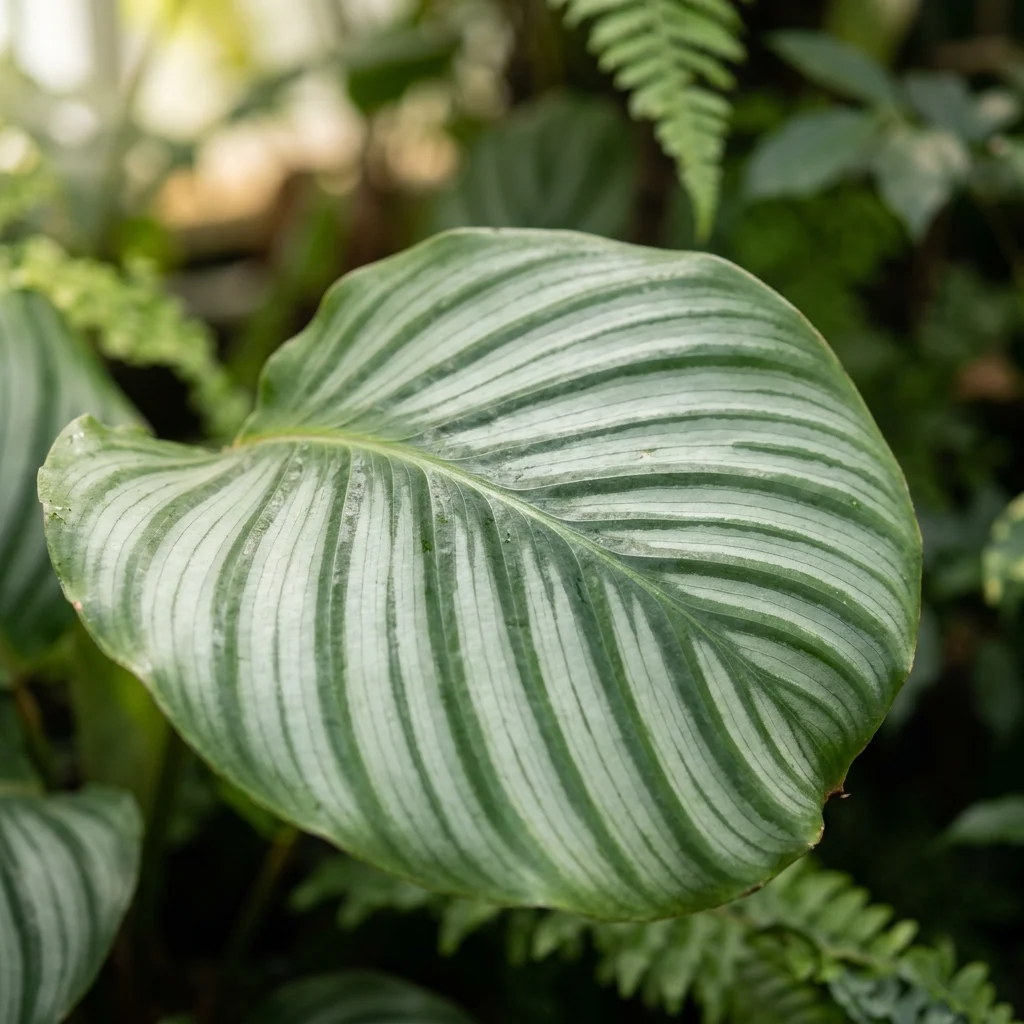
Goeppertia orbifolia

Calathea Orbifolia Care & Identification Guide

Goeppertia orbifolia, commonly known as Calathea Orbifolia, is a breathtaking tropical masterpiece beloved for its massive, round paper-like leaves. Adorned with delicate, silver-gray brushstroke-like bands running across a pale green canvas, this plant exudes a calm, luxury designer charm perfect for softening modern architectural lines.


Sunlight Icon
Sunlight Medium Indirect Light
Watering Icon
Watering High (Keep Moist)
Soil Mix Icon
Soil Mix Highly Aerated Moisture-Retentive
Temperature Icon
Temperature 18°C - 24°C
Toxicity Warning Icon
Toxicity Non-Toxic to Pets
Botanical macro photography of Calathea Orbifolia (Goeppertia orbifolia) - Plant AI care database

How to Identify Calathea Orbifolia

Calathea Orbifolia (Goeppertia orbifolia) is a remarkable ornamental species widely appreciated for its unique aesthetic and structural foliage. Recognizing its definitive visual traits is key to distinguishing it from other similar plants.

  • Key Visual Features: Massive, round, dinner-plate-sized pale green leaves with striking silver-gray parallel veins fanning out from the midrib.
  • Color Variations: Uniform light pastel green leaves with silvery-white stripes; new leaves emerge tightly coiled in a pale green-white cylinder.
  • Common Confusions: Confused with Calathea medallion (darker green, multi-colored circular borders) or Hosta species (thicker, non-patterned leaves).
💡 Plant AI Tip: Not sure? Take a photo with Plant AI to identify your houseplants instantly.

Complete Care & Cultivation Guide

Follow our detailed scientific care guide to keep your Calathea Orbifolia thriving and gorgeous all year round.

Prefers highly consistent moisture. Water when the top inch of soil is dry, using filtered or distilled water. Never let the roots sit in stagnant water to avoid Pythium rot.
Prune brown or dried margins in spring using sterilized scissors. Only trim dead outer leaves at the very base of the petioles.
Feed monthly with a highly diluted organic liquid fertilizer (1/4 strength) during the spring and summer. Avoid synthetic fertilizers that accumulate salts.
Thrives in medium, dappled, indirect sunlight. Direct harsh light instantly bleaches the elegant silver stripes and scorches leaf edges.
Peat-based moisture-retaining but fast-draining mix: 40% peat, 30% perlite, 20% orchid bark, and 10% worm castings (pH 6.0-6.8).
Propagated strictly by careful root division during repotting in spring. Ensure each division has a healthy clump of roots and multiple leaves.
Warm room temperatures (18°C-24°C). Highly sensitive to cold drafts under 15°C and sudden temperature swings.
Repot every 1-2 years into a pot 2 inches wider. Choose plastic or glazed ceramic pots that retain soil moisture evenly.
Vulnerable to spider mites in dry air, and occasionally fungus gnats. Treat with organic neem oil and boost relative humidity.
Prone to Pseudomonas leaf spot and Pythium root rot if soil is waterlogged or overhead misting leaves water sitting on foliage.
Wipe the massive leaves monthly with a damp cloth. Maintaining a high relative humidity (above 60%) is absolutely essential to prevent crisp brown edges.

Is your Calathea Orbifolia leaves turning yellow, dry or brown?

Keep your indoor garden vibrant. Take a photo with Plant AI to diagnose pests and leaf spot diseases instantly.

Diagnose My Plant

Common Diseases & Treatment

Pseudomonas Leaf Spot

Symptoms: Water-soaked, dark brown or black spots surrounded by a yellow halo appearing on broad leaves.

Action: Prune infected leaves, avoid wetting foliage, improve air movement, and apply organic copper fungicide.

Root Rot (Pythium)

Symptoms: Leaves droop and turn mushy yellow; soil emits a sour odor and roots turn black and stringy.

Action: Repot immediately, prune decayed roots, and plant in fresh, highly porous, fast-draining potting media.

Frequently Asked Questions

Why are the edges of my Calathea Orbifolia turning brown and crispy?

This is almost always caused by low relative humidity or tap water high in minerals. Switch to distilled or rainwater, and use a humidifier.

Can Calathea Orbifolia grow in low light?

It can tolerate moderate low light, but very dark spaces will slow down growth and make the striking silver stripes look faded and dull.

Should I mist my Calathea Orbifolia leaves?

While it likes humidity, direct misting can cause fungal leaf spots if water pools on the broad leaves. Using a humidifier is much safer.

Is Calathea Orbifolia safe for cats and dogs?

Yes, it is completely non-toxic to pets. It belongs to the Marantaceae family, which is entirely safe for curious cats and dogs.

No more dying plants. Grow healthy greens today!

Get Started for Free