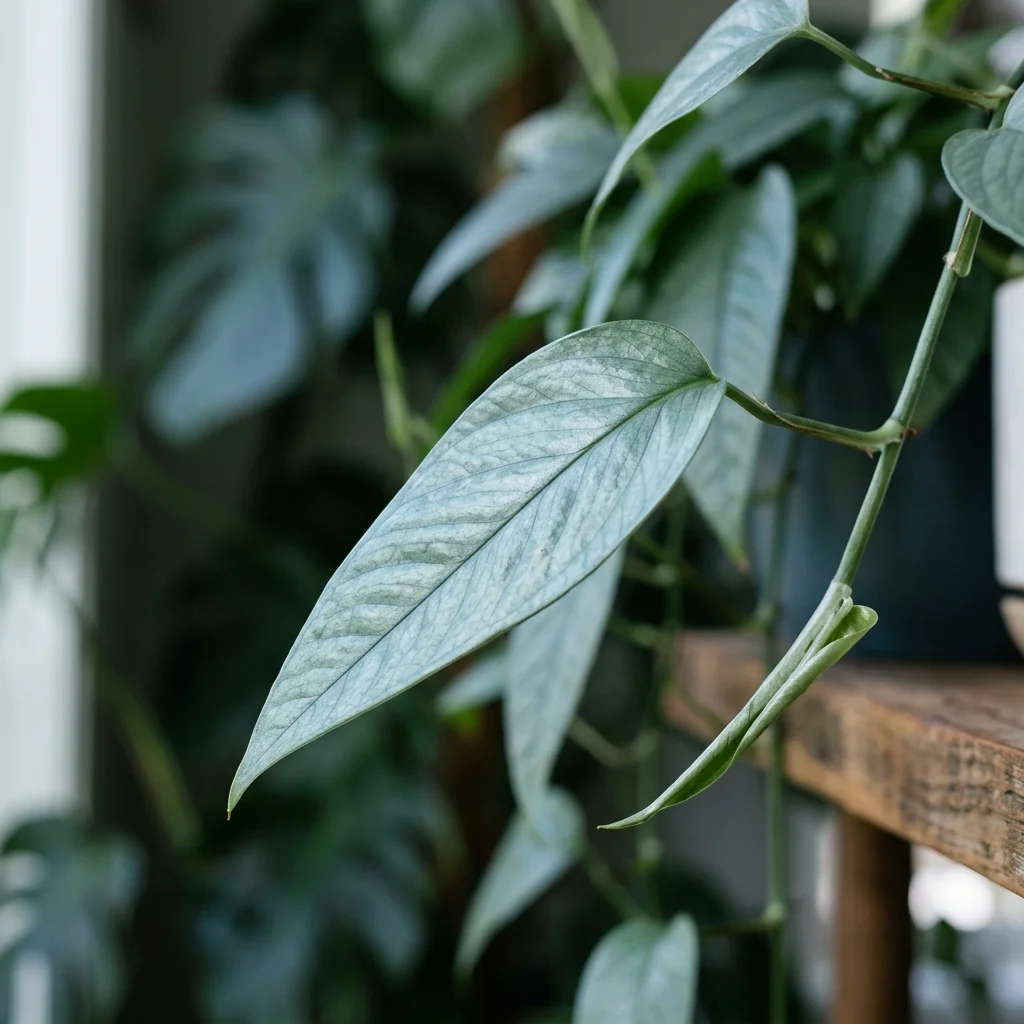
Epipremnum pinnatum 'Cebu Blue'

Cebu Blue Pothos Care & Identification Guide

Epipremnum pinnatum 'Cebu Blue', famously known as Cebu Blue Pothos, is a highly sought-after exotic tropical native. Prized for its unique lance-shaped leaves with a striking metallic, silver-blue sheen, this vigorous trailing vine climbs trellises or moss poles effortlessly, providing a sleek, modern, metallic aesthetic.


Sunlight Icon
Sunlight Bright Indirect Light
Watering Icon
Watering Low to Moderate
Soil Mix Icon
Soil Mix Chunky fast-draining mix
Temperature Icon
Temperature 15°C - 29°C
Toxicity Warning Icon
Toxicity Toxic to Pets
Botanical macro photography of Cebu Blue Pothos (Epipremnum pinnatum 'Cebu Blue') - Plant AI care database

How to Identify Cebu Blue Pothos

Cebu Blue Pothos (Epipremnum pinnatum 'Cebu Blue') is a remarkable ornamental species widely appreciated for its unique aesthetic and structural foliage. Recognizing its definitive visual traits is key to distinguishing it from other similar plants.

  • Key Visual Features: Elongated, lanceolate leaves with a distinct metallic silver-blue sheen and slightly textured, puckered leaf surfaces.
  • Color Variations: Bright metallic silver-blue when young; matures to a slightly deeper bluish-green; mature climbing leaves develop deep splits/fenestrations.
  • Common Confusions: Confused with Philodendron Hastatum (Silver Sword) due to color, but distinguished by much thinner, narrower lanceolate leaves.
💡 Plant AI Tip: Not sure? Take a photo with Plant AI to identify your houseplants instantly.

Complete Care & Cultivation Guide

Follow our detailed scientific care guide to keep your Cebu Blue Pothos thriving and gorgeous all year round.

Water when the top 2-3 inches of soil feel dry. Highly drought-tolerant; avoid letting the roots sit in saturated potting mix.
Prune trailing vines in spring to control length and encourage bushier growth. Cut below a node; cuttings root easily in water.
Apply balanced liquid houseplant food diluted to half strength once every 2 months in spring and summer. Skip winter feeding.
Bright, indirect light is key to maintaining the silver-blue sheen. It tolerates medium light, but foliage color may fade to dull green.
Chunky, organic-rich, fast-draining aroid mix: equal parts peat moss, orchid bark, perlite, and charcoal. pH 5.5-6.5.
Propagates easily from stem cuttings with a node rooted in clean water or moist sphagnum moss; roots show in 7-10 days.
Warm room temperatures (15°C-29°C). Avoid sudden cold temperature drops below 12°C.
Stunning in hanging baskets allowing the metallic leaves to cascade downwards, or trained onto a moss pole which encourages mature fenestrated leaves.
Watch out for mealybugs in leaf joints and spider mites in dry air. Clean leaves regularly and apply insecticidal soap spray.
Vulnerable to root rot and bacterial leaf spot if soil remains waterlogged or air circulation is poor.
Provide a sturdy moss pole early on. As the plant climbs, the leaf shape shifts from small lanceolate leaves to bold, large fenestrated splits.

Is your Cebu Blue Pothos leaves turning yellow, dry or brown?

Keep your indoor garden vibrant. Take a photo with Plant AI to diagnose pests and leaf spot diseases instantly.

Diagnose My Plant

Common Diseases & Treatment

Root Rot

Symptoms: Metallic blue leaves turn soft yellow and fall; stems turn mushy and dark; roots turn black.

Action: Trim rotten roots, sanitize the pot, and repot immediately in fresh, fast-draining chunky aroid mix.

Fungal Leaf Spot

Symptoms: Dark spots with yellow borders form on the metallic silver-blue leaf surfaces.

Action: Prune infected leaves, avoid overhead watering, and spray with organic copper fungicide.

Frequently Asked Questions

Why is my Cebu Blue Pothos losing its blue color?

A dull green appearance is usually due to inadequate light. Move your Cebu Blue to a brighter spot with plenty of indirect sunlight.

Does Cebu Blue Pothos develop split leaves?

Yes! When grown on a sturdy moss pole in bright indirect light, it will mature and produce large, split fenestrated leaves resembling a Monstera.

How fast does Cebu Blue Pothos grow?

With bright indirect light and proper care, it is a fast grower, easily trailing several feet in a single growing season.

Is Cebu Blue Pothos safe for pets?

No, like all Epipremnum varieties, it contains calcium oxalate crystals. It is toxic to pets, causing mouth irritation and throat swelling.

No more dying plants. Grow healthy greens today!

Get Started for Free