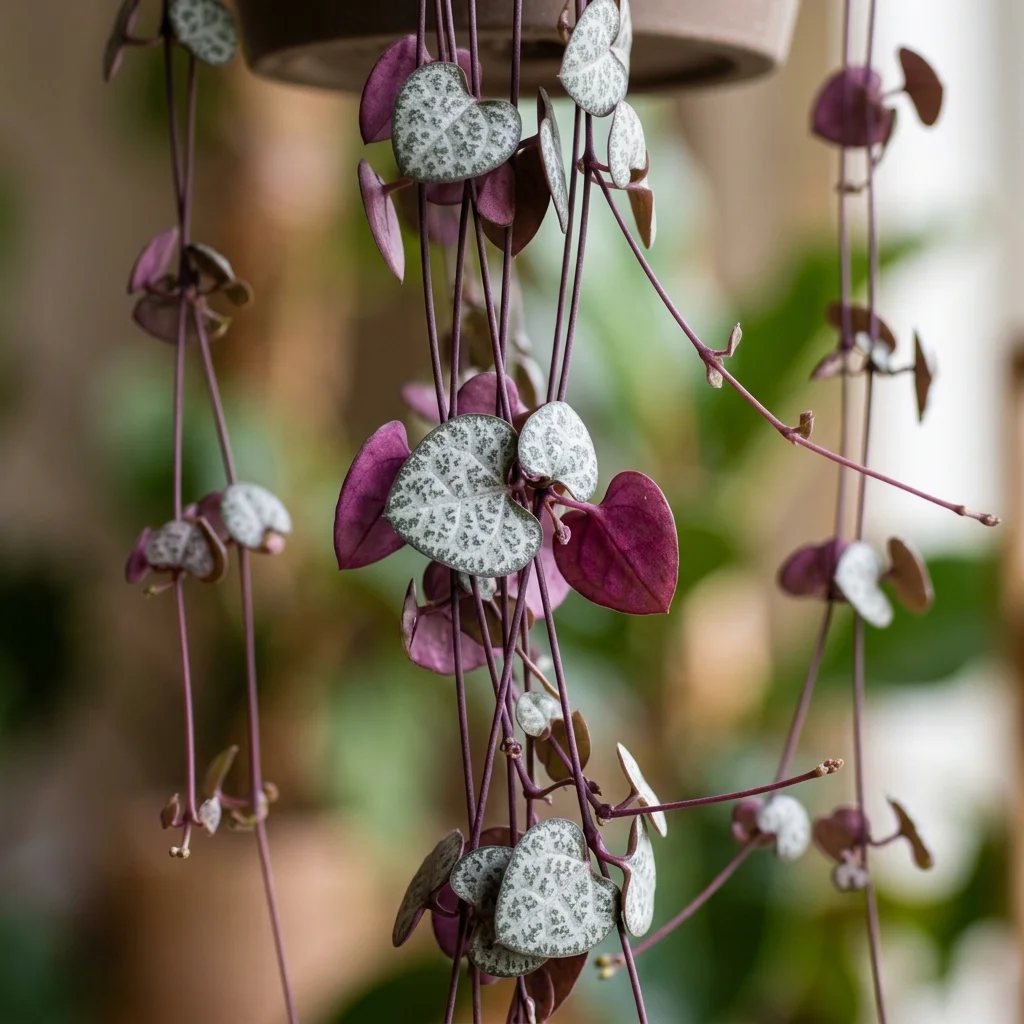
Ceropegia woodii

String of Hearts Care & Identification Guide

Ceropegia woodii, famously known as String of Hearts, Rosary Vine, or Sweetheart Vine, is an exquisitely delicate trailing succulent vine native to South Africa. Prized for its slender, purple thread-like stems draped with small, thick, heart-shaped leaves decorated in a silver-lace pattern, it creates a romantic, cascading curtain of foliage that is incredibly resilient and easy to grow.


Sunlight Icon
Sunlight Bright Indirect Light
Watering Icon
Watering Low to Moderate
Soil Mix Icon
Soil Mix Well-draining Succulent Mix
Temperature Icon
Temperature 15°C - 26°C
Toxicity Warning Icon
Toxicity Completely Non-Toxic
Botanical macro photography of String of Hearts (Ceropegia woodii) - Plant AI care database

How to Identify String of Hearts

String of Hearts (Ceropegia woodii) is a remarkable ornamental species widely appreciated for its unique aesthetic and structural foliage. Recognizing its definitive visual traits is key to distinguishing it from other similar plants.

  • Key Visual Features: Opposite, fleshy, heart-shaped leaves with silver-grey patterns on the top and deep purple-magenta coloring underneath.
  • Color Variations: Dark green leaves heavily marbled with silver; leaves are solid purple beneath; purple stems; produces bulbous tubers along stems.
  • Common Confusions: Confused with String of Spades (which has longer, lance-shaped pointed leaves rather than distinct round hearts).
💡 Plant AI Tip: Not sure? Take a photo with Plant AI to identify your houseplants instantly.

Complete Care & Cultivation Guide

Follow our detailed scientific care guide to keep your String of Hearts thriving and gorgeous all year round.

Water using the 'soak and dry' method. Allow the potting soil to dry out completely between waterings. Fleshy leaves store water.
Prune trailing stems to maintain desired length or shape. Trimmed stems can be easily propagated or coiled back onto the soil.
Feed monthly with a balanced succulent fertilizer at half-strength during the spring and summer. Skip winter feeding.
Requires bright, consistent indirect light. Some morning sun is beneficial and intensifies the purple underside color of the hearts.
Extremely fast-draining, gritty succulent soil. Mix 1 part organic potting soil with 1 part perlite and 1 part pumice or coarse sand.
Very easy to propagate. Root the stem cuttings in water, or press the aerial potato-like tubers (bulbils) directly into moist soil.
Thrives in warm room temperatures (15°C-26°C). Keep protected from cold drafts and freezing winter temperatures below 10°C.
Repot rarely, as it has a small root system and likes to be snug. Use a shallow pot with plenty of drainage holes.
Prone to mealybugs and spider mites. Check the heart junctions regularly and treat with insecticidal soap.
Highly susceptible to root rot and tuber rot if kept in heavy, water-retaining soils or overwatered.
High light levels are key. If the hearts grow far apart (legginess), it means the plant needs more bright indirect light.

Is your String of Hearts leaves turning yellow, dry or brown?

Keep your indoor garden vibrant. Take a photo with Plant AI to diagnose pests and leaf spot diseases instantly.

Diagnose My Plant

Common Diseases & Treatment

Root and Tuber Rot

Symptoms: Leaves turn yellow, translucent, and mushy; the underground tubers turn soft and rot, causing stems to die.

Action: Cut off healthy stems above the rot to propagate, and discard the rotten tubers and wet soil.

Legginess

Symptoms: Stems grow long and thin, but the heart-shaped leaves are spaced very far apart with poor color.

Action: Move the plant to a much brighter location with consistent indirect light, and prune the leggy vines to stimulate new growth.

Frequently Asked Questions

Why is my String of Hearts turning pale green?

A lack of bright light will cause the silver marbling and deep purple undersides to fade into a dull, solid pale green color.

What are the woody balls growing on the stems?

These are aerial tubers or 'bulbils.' They store nutrients and water, and can be pressed into the soil to grow a new, separate plant.

How often should I water my String of Hearts?

Typically once every 10 to 14 days, but always check the soil. Only water when the potting mix is dry all the way through.

Is String of Hearts safe for cats and dogs?

Yes! Ceropegia woodii is completely non-toxic and 100% safe for cats, dogs, and all other household pets.

No more dying plants. Grow healthy greens today!

Get Started for Free